Keibann Meaning: What Is a Kei Van and Why Is It Popular in 2026?
If you’ve tried searching for Keibann, you might have seen that the word isn’t always clear. In Japanese automotive terminology, keibann commonly is used to refer to Qing ban (keiban), meaning the small Kei-van that is designed for efficient transport, deliveries small business, and every day usage. They are part of the renowned kei-car class in Japan which is renowned for their compact dimensions, powerful engines, simple maneuverability and clever use of internal space.
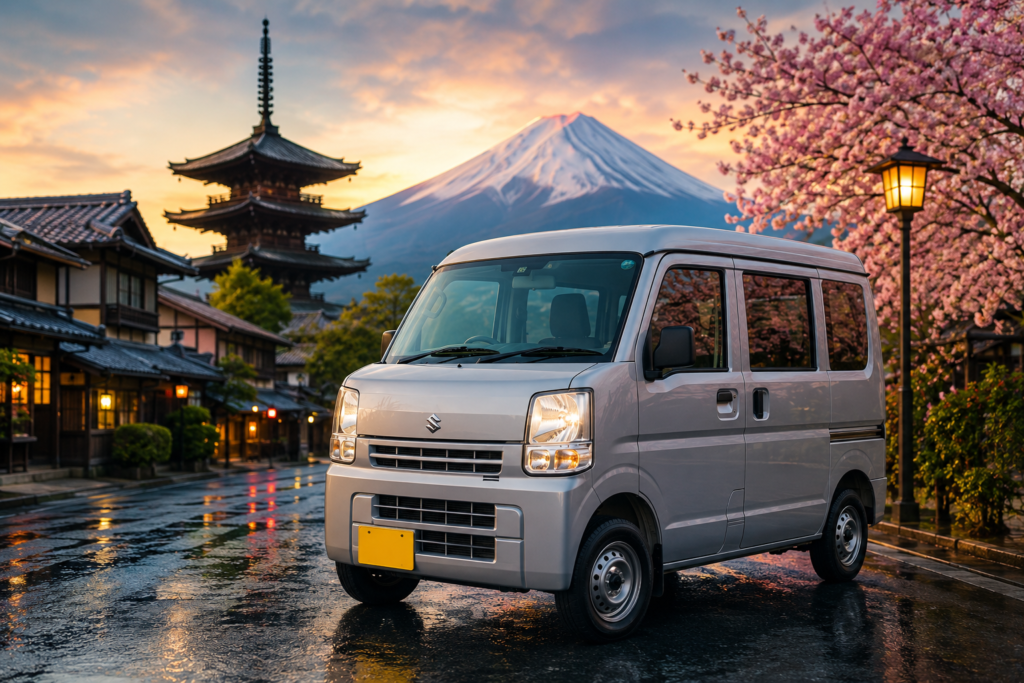
The keibann might appear small in comparison to a typical vehicle, however its style is extremely practical. The long body, small size, sliding doors and a flexible cargo space makes it particularly practical in cities that are crowded and on narrow streets. In Japan the kei van has become a vital component of transport for both personal and commercial use.
This guide will explain the meaning of the word keibann the meaning of keibann, its Japanese roots and how kei vans function with their most popular applications, the benefits and disadvantages, the things to do before purchasing one, and how these tiny Japanese vans will continue to draw worldwide attention by 2026.
What Does Keibann Mean?
Keibann refers to “kei van” and is often translated in the form of Qing ban Japanese. The word blends both the Japanese notion that of “kei,” meaning light”light,” along with “ban,” derived from the English word “van.” In practical automobile usage, it refers to a van for commercial use that is light and constructed within Japan’s kei-vehicle rules.
A kei van differs from a large commercial van due to its design based on the strict dimensions and limitations of engines. Instead of offering massive power or large size, this vehicle is focused on the efficiency, maneuverability, cost and an interior that is usable.
Japanese automotive literature describes a Qing ban as box-shaped light commercial vehicle, based on the kei-car class. Its short front ends and a tall body create an expansive usable cabin as well as cargo space without making the vehicle too large physically.
This is why the word may be confusing to those who come across it outside Japan. “Keibann,” “keiban,” “kei van,” and “Qing ban” may appear in different searches, however they could be referring to the same vehicle class.
What Is a Keibann Van?
A Keibann van is an extremely compact Japanese commercial vehicle that is light in weight specifically designed to transport individuals, tools packages, as well as other items of daily use.
Contrary to the conventional car, the kei has a smaller footprint. Japanese manufacturers have designed the kei van based on a single concept: to maximize the usable area inside while keeping exterior dimensions as small as they can.
The result is a car that is able to squeeze into small parking spaces, maneuver through the streets of a city and weigh considerably more weight than its exterior suggests.
The standard design is long and slender. It’s not likely to attract those seeking an athletic vehicle however, it makes perfect sense for work in commercial. A high roof can be useful for vertical space, and folding or movable seats make a bigger loading space.
Certain models are designed primarily to be used for commercial cargo and others are more geared towards passenger models that include additional convenience features.
Keibann and Japan’s Kei Vehicle System
To comprehend why keibann vehicles are so small it is first necessary to know the Kei vehicle system.
Kei vehicles fall into a specific type of small-sized automobiles that were developed around Japan’s demand for cheap and efficient transport. The category has developed over the years, but contemporary Kei vehicles are still subject to strict rules regarding dimensions and displacement of engines.
Modern kei cars generally have engines with no greater than 660cc and maximum dimensions of the body being approximately 3.4 meters long in length and 1.48 meters wide. Also, power is limited by the Japanese kei classification.
These limitations have a significant impact on how kei vans are designed.
Manufacturers can’t simply put in an engine that is larger or make the body significantly larger. Instead, engineers need to make as much profit as is possible from a tiny size.
This challenge has resulted in amazingly clever designs for vehicles.
Why Are Keibann Vans So Small?
The tiny size isn’t an accident. It is the primary goal of the kei category.
Japan is home to many urban areas, where parking spaces, roads, residential streets, and commercial streets are difficult for larger cars to negotiate. Smaller vehicles are more maneuverable and park with less physical space.
For companies, this could be extremely beneficial.
Imagine the delivery driver making numerous stops through an area with a lot of people. A big van could be able to carry a lot of cargo however, its size may hinder parking, and make maneuvering a challenge. Keibanns can tackle similar tasks from an opposite direction, keeping the vehicle’s dimensions small and use the space available inside effectively.
It makes the van ideal for delivery and business operations in urban areas.
Keibann Features That Make It Practical
The attraction of a keibann is not dependent on a single feature. It’s a result of how many small design elements are able to work together.
The high roof is among the most prominent characteristics. It allows engineers to offer adequate headroom and cargo capacity without making the car too large or long.
The sliding side doors are yet another beneficial feature. They allow you to access and exit tight parking spaces as the door doesn’t have to open outwards as with a traditional hinged door.
A number of kei vans come with high-quality interiors that can be customized. The model you choose will determine whether the rear seats can fold down to make an even bigger cargo floor. This makes the car suitable for work during the week, as well as private activities on weekends.
The smaller turning radius is a further benefit. In a city that is crowded it is important to be able to turn quickly can make it easier and lessen the stress of navigating narrow streets.
Keibann vs. Regular Van: What Is the Difference?
The most significant difference between a keibann van and an ordinary van is the underlying philosophy of the design.
A standard commercial vehicle usually offers more engine power as well as larger overall dimensions, greater capacity for payloads, and usually more performance that is highway-oriented.
The keibann is a unique method. It gives up some of these capabilities to gain small size agility, efficiency, and mobility.
| Feature | Keibann / Kei Van | Conventional Van |
|---|---|---|
| Engine class | Typically, up to 660cc as per rules for kei | Usually, they are significantly larger |
| Size of the exterior | Very compact | Larger overall footprint |
| City mobility | Excellent | Models vary in their models |
| Parking | It is easier to maneuver in tight space | It requires more room |
| Cargo space | Effective for its size | Typically, the capacity is greater in absolute |
| Running and fuel costs | Often economical | The average is higher |
| Best use | Urban delivery, small-scale business small business, utility bills | Large loads, long journeys and larger commercial operations |
| Characteristics driving | Practicality and efficiency are the main focus | Additional power, load capacity |
Both types aren’t necessarily better.
A business owner who has to transport massive equipment over long distances might require the use of a standard van. A local florist, courier or small-sized retailer or tradesperson, or an urban service provider might have a kei vehicle that is more efficient.
The most appropriate choice is contingent on the task the vehicle is actually required to accomplish.
Why Are Keibann Vans Popular With Small Businesses?
Small-scale businesses usually require different transport requirements than larger companies.
A local company may not require a large truck every single day. It might just require enough space to store tools, packages and other supplies as well as keeping costs in check.
This is the place where keibann vans might be a good fit.
A small vehicle may be more maneuverable around the homes of customers and narrow commercial streets residential areas, and even small parking spaces. If a company is making frequent short journeys, these advantages could be more beneficial than having a larger engine.
Kei vans are traditionally utilized for trades, deliveries as well as for agriculture, maintenance, retail support and many other duties in Japan.
Their compact design is also a benefit for businesses that require equipment instead of passengers.
Common Uses for a Keibann
A keibann could serve a variety of functions since its interior is aflable. The most common applications are:
- Deliveries locally, trades, and maintenance small retail stores personal camping, transportation and hobbies.
In the case of a delivery company the vehicle can transport items and parcels. If you are a tradesperson the rear compartment is able to be used to store tools and equipment. For those who love the outdoors seating, folding seats convert the space into an amazingly useful storage space to store gear or sleeping arrangements.
This flexibility is among the main reasons why kei vans have earned such a loyal fan base outside of Japan too.
Keibann for Delivery and Last-Mile Logistics
Last-mile delivery is among the most natural uses for the kei van.
The last stage of delivery is usually in urban areas that are crowded and where large vehicles can be a hassle. Drivers may have to stop often, take fast turns, park next to the building, and travel small roads.
A small van can help with these chores.
The cargo area is also an advantage over a tiny passenger car. Tools, boxes, packages and other items can be stuffed into a designated rear compartment without taking up the compartment for passengers.
For smaller-sized delivery companies, it could be a good alternative to a vehicle for a passenger and a commercial van.
Keibann for Tradespeople
Plumbers, electricians, landscapers, repair technicians installers, and others frequently require an automobile that can be able to carry equipment without growing unnecessarily.
A kei van can work well for smaller tool loads.
The box-shaped interior is a perfect place for shelves as well as storage boxes, tools cases and custom organizers to be built. Some owners customize their vans in accordance with their work.
Plumbing professionals could arrange tools and fittings into storage systems that are compact. An electrician could create special compartments to store cables and other equipment. Mobile service businesses could make use of the rear area as a mini workstation.
The car’s worth lies in its capacity to transport useful equipment, while also being simple to drive through urban environments.
Can You Use a Keibann as a Personal Vehicle?
Yes. While many kei vans were built with commercial usage with commercial use in mind, they’re small size makes them great for personal use too.
A passenger-focused kei van could offer practical storage and seating but still maintain the mobility that comes with the kei category.
For those who spend the majority of their time in cities, a compact car can be much more comfortable to manage than a larger truck or SUV.
Parking can be simpler and narrow roads are less intimidating, and the car is easier to park in busy areas.
The problem is that a smaller Ki van isn’t built to offer the same performance as a larger car.
Keibann for Camping and Outdoor Adventures
One of the more fascinating contemporary uses for Kei vans is micro-camping.
Their tall roof and slender interior provide opportunities for imaginative transformations. Owners can set up simple sleeping platforms as well as storage containers, cooking equipment and lighting as well as mobile power solutions.
The aim isn’t to re-create a motorhome that is large. The idea is to build a small base for shorter trips.
A kei van is especially appealing to those who is looking for a vehicle that is used for normal transport but can also be used for weekend excursions.
However, space remains very limited. Two people could have different experiences based on their configuration of their cabin, the camping equipment, and the amount of luggage they bring.
Main Advantages of a Keibann
The most compelling reason to think about the possibility of a kei van is the space efficiency.
A small car which can provide surprisingly efficient cargo area. This combination is hard to attain with a standard small vehicle.
Mobility is another significant advantage. The tightness of streets and parking spaces are less of a problem when a vehicle is constructed to fit into a smaller footprint.
Operating costs can be appealing, especially in Japan where kei-powered vehicles get a special treatment in the nation’s taxation of vehicles and ownership rules.
The basic, practical design of a lot of models may draw buyers who are more about function than style.
The Limitations You Should Know
Keibanns are not ideal for all drivers.
The same small size that makes the car great in urban areas can be an issue when driving long distances or carrying large loads.
The power of the engine is capped due to the classification kei therefore acceleration and hill-climbing performance might feel tinny compared to larger vans.
Highway driving at high speeds can be uncomfortable based on the car the gearing, engine conditions on the road, as well as the weight.
Another factor to consider is safety. taking note of when comparing old models that are imported. The safety equipment used and the crash performance may differ significantly based on the model year as well as market.
To this end it is important to select an appropriate kei vehicle based on actual driving requirements, not thinking that smaller is automatically more efficient.
Popular Keibann Models to Know
Many Japanese producers have created popular Kei vans.
Suzuki Every Suzuki Every is among the most popular examples. It was designed around the formula for a compact commercial van and is well-known in Japan.
It is the Daihatsu Hijet Cargo is another notable model within the class. The Hijet name has a long-standing history in Japan’s market for small commercial vehicles.
It is the Honda Acty Van is also well-known to Kei-car enthusiasts, especially with older imported and used automobiles.
Mitsubishi Minicab Mitsubishi Minicab represents an additional kei line of commercial vans that is well-established.
Model availability differs depending on the generation and the market, especially because the majority of kei vans were developed for Japan’s market.
What to Check Before Buying a Keibann
When buying a used Japanese kei van takes more than choosing the one with the lowest cost.
Begin by assessing the condition of the vehicle. Age and mileage, the history of maintenance and rust, transmission performance and suspension brakes, tires and engine performance are all important.
For vehicles imported from the United States Parts availability must also be taken into consideration. It is possible for a vehicle to be cheap to purchase, but it is more difficult to maintain when replacement parts are hard to find from your home country.
You should also research local registration and inspection requirements, as well as insurance emissions regulations, import rules and road-use limitations prior to purchasing a vehicle imported from Japan.
The most affordable deal isn’t necessarily the most expensive van. It’s the one that is legally registered, effectively maintained, and dependable for the purpose you intend to use it for.
Keibann Imports: Why Are They Popular Outside Japan?
The interest in Japanese Kei Vans has risen globally due to enthusiasts who appreciate their unique blend of size and functionality.
A small vehicle that can be able to carry heavy equipment, fit into narrow spaces, and provide distinct driving experiences is a great choice for buyers who seek something distinct from standard cars.
Import regulations vary greatly among countries.
The United States, for example in the United States, for instance, older Japanese vehicles are suitable for importation under the well-known 25-year rule. This has led to a surge of an interest in older kei vans among those who are interested.
Different countries have different requirements for age and certification procedures and safety standards. registration regulations.
Anyone thinking of importing should be aware of the regulations applicable to their particular region before making a payment to a buyer or exporter.
Keibann and the Future of Urban Transportation
The growing popularity of small-sized vehicles poses a bigger question about transport.
Do cities really require bigger and more powerful automobiles?
For certain motorists, it could be yes. Families, long-distance travellers and those who carry large loads typically require greater space as well as power.
Most daily journeys involve just one or two persons and light loads of luggage.
In those instances in those situations, a large vehicle may be unproductive from a spatial standpoint. The keibann is a different idea: make use of the amount of vehicle that is needed.
This is especially relevant because cities are becoming increasingly crowded and businesses are looking for effective ways to manage local delivery.
The future might not involve replacing big automobiles completely. It could instead be about using different size vehicles to perform different tasks.
Why Keibann Fits the Small-Business Economy
The rise of small-scale businesses local delivery services, mobile technicians, as well as small online retailers has created a greater demand for transportation that is flexible.
Small businesses often require vehicles before it can just afford the expense of a commercial fleet.
A kei van could help fill the gap.
It is capable of transporting tools, inventory packages, inventory, and other items but still be compact enough to be suitable for city-based use.
This is why the idea is appealing to entrepreneurs who require an efficient vehicle rather than a car that focuses on status.
Is Keibann the Same as Kanban?
No. Both terms may appear at first glance similar however they’re not exactly the same thing.
Kanban Kanban is an established Japanese-originated method that is associated in visual workflow and the management of manufacturing.
Keibann is described by the name of Qing ban, relates to the concept of a Kei van.
Recent websites have utilized the term “keibann” for productivity or workflow concepts, which can cause further confusion when searching. But, this usage shouldn’t be taken as the traditional Japanese automotive definition.
If your search is related to automobiles, Japanese imports, vans cargo space Suzuki Every, Daihatsu Hijet, Honda Acty, or Mitsubishi Minicab, you are most likely in search of Keiban or kei van.
Keibann vs. Kei Truck
Another source that causes confusion concerns the distinction between the kei van and truck called a kei.
Both fall under the category of kei vehicles However, their bodies are made for various purposes.
A kei truck comes with an open cargo bed in the rear. It is especially useful for construction materials, agriculture landscaping, loads that are simpler to transport out of the passenger compartment.
A kei van is equipped with an enclosed cargo space. This makes it more suitable for packaging tools equipment, retail items as well as goods that require protection from the elements.
The most appropriate choice depends on the kind of cargo to be carried.
Is a Keibann Worth It in 2026?
If you are a competent driver, an e-bike can be an extremely useful vehicle by 2026.
The most significant advantages of this product have not gone: its compact dimensions, smart packaging, easy to maneuver, and a useful capacity for cargo.
The most important thing is whether these characteristics are in line with your requirements.
A business in the city that makes frequent deliveries can benefit from the kei van. Someone searching for a small weekend car may find something appealing.
However anyone who is who is frequently driving for long distances and carrying extremely weighty loads, or needing modern features that are available in the latest large-sized vehicles might benefit from a different kind of vehicle.
The most important thing is to assess the car based on the actual driving patterns you use instead of its online popularity.
Frequently Asked Questions About Keibann
1. What does keibann mean?
Keibann typically refers to the word keiban, which is which is written Qing Ban in Japanese that means the kei van. It is a light and compact commercial vehicle that is part of the Japanese kei vehicle category.
2. What can a kei van be is used to do?
A kei van is used for local deliveries trades and small-business transportation transporting equipment, personal transportation outdoor activities, shopping and other instances where small cargo space is beneficial.
3. How big is a Keibann engine?
The kei category is generally restricted to a maximum engine displacement of 666cc. This limitation is one of the most distinctive features of Japan’s kei class.
4. What are the most popular keibann models?
Some of the most well-known models are Suzuki Every, Daihatsu Hijet Cargo, Honda Acty Van along with the Mitsubishi Minicab. The availability of these vehicles is contingent on the model generation and the marketplace in which you’re searching.
5. Do you think a keibann is suitable for driving long distances?
It is suitable for longer journeys, but it is primarily designed for small, efficient transport. Due to its tiny engine, its compact size and power in comparison with larger vans, those who often travel for long distances should consider the quality, comfort, and safety features, and the specific model prior to selecting one.
Conclusion
The meaning of keibann is more clear when you consider what it means in Japanese automobile context. Keibann, also known as Qing ban is a reference to the compact kei van class created in response to Japan’s requirement for a reliable, maneuverable and functional transport.
These tiny vans show how clever engineering can turn the strictest of limitations into valuable design benefits. Their small exteriors make them a breeze to move, as their wide and slender interiors offer plenty of space for cargo.
Small-scale businesses small deliveries in the local area, traders urban drivers, and other enthusiasts the keibann offers a unique combination of practicality and performance. However its small capacity for engines and its compact design make it not the ideal vehicle for every driver, or for every kind of trip.
The enduring interest in the keibann van reflect a bigger movement trend. People are more and more looking for vehicles that can solve particular problems with efficiency instead of simply being bigger in size or stronger. If you’re researching the Japanese kei van, thinking about an import, or just trying to comprehend the concept the fundamental idea behind it is quite simple: keibann is small in terms of size, but extremely practical for its purpose.