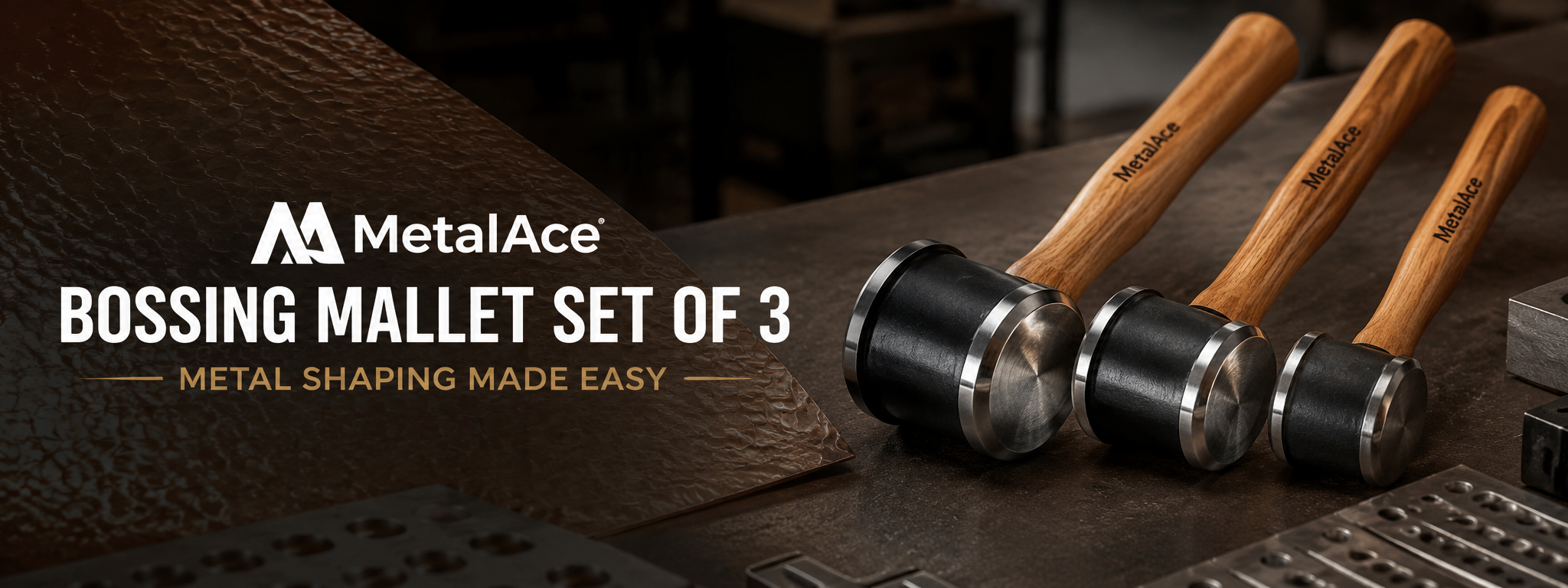
Hand-shaping sheet metal seems easy until you try using the incorrect tools. Metalace bossing mallets set of three solves the issue by offering three distinct sizes designed specifically to shape panels over an empty shot bag. once you are aware of the role each mallet plays in the process, you will see your outcomes will be improved almost immediately.
This guide will cover all you should know prior to purchasing or utilizing an aforementioned bossing mallet set which includes what makes these mallets distinct from regular mallets, how the 3-piece configuration works in actual practice and the methods that distinguish clean, precise shaping from sloppy, dented panels. If you’re setting up an initial metal-shaping bench or reworking an old technique that you’ve employed for years, you’ll discover useful information here that you can apply immediately.
What Is a Metalace Bossing Mallet Set of 3
A bossing mallet is specially designed tool that can shape sheet metal, commonly mild steel or aluminum, to domed or curled forms, without leaving hammer marks on its surface. Metalace bossing mallet set includes three different sizes of mallets together, providing you with the flexibility to go from rough shaping to fine-detail work in a single sheet.
Why Three Sizes Matter
Metal shaping seldom requires one strike force across an entire project. The rougher shape requires larger, more powerful strikes to move the material swiftly while reshaping the curve towards its final appearance requires the use of a more gentle, controlled hammer. The three sizes of mallets you have available means that you’re not looking for a hammer that is either too strong or insufficient to the level of work that you’re in.
Construction and Materials
Every mallet of the standard set has an oak handle that is and a nearly unbreakable polyethylene head, a that was specifically chosen since it won’t scratch or scratch the metal surface while shaping. Every mallet head has two radii that are different that are one at each side, which effectively increases the number of shaping profiles you can choose from without the need for additional tools on your bench.
How Bossing Mallets Work With a Shot Bag
Bossing mallets don’t usually go against a smooth, hard surface. Instead, they’re combined with a shot bag made of leather which is a pliable pouch that’s packed with lead shot, or even sand which provides a slight under every strike.
The Shaping Mechanism Explained
If you hit sheet metal that is resting on a shot bag the bag’s give permits the material to expand and dome over the bag’s surface, instead of falling back flat. The mallet’s domed face is precisely directed by the force and lets you create an elongated curve by one stroke at a time instead of fighting the material.
Recommended Materials for Best Results
These mallets and shot bags combination are ideal for aluminum and medium heavy duty steel. These are the two metals most commonly employed to make automotive parts, custom fabricated and for projects that involve metal shaping for hobbyists. Heavy gauge steel generally requires different tools entirely and so ensuring that your material is matched to the correct mallet set is crucial to both the results and the tool’s durability.
Setting Up Your Metal Shaping Workspace
A bossing mallet is best in a well-equipped shaping station. And getting this set-up right at the beginning will save you a lot of frustration in the future.
Essential Companion Tools
In addition to the mallet set the majority of metal shapers construct their benches around a few regular partners:
- A shot bag in leather that is round is usually offered in 18 or 12 inches, based on the dimensions of the panel
- A radius gauge for checking the consistency of curves against a template
- A sturdy bag stand or a secure bench surface that will prevent the bag from moving in mid-strike
- Basic layout tools to mark the shape you want to strike before you start striking
Workspace Positioning Tips
Set your shot bag at a height that allows you to comfortably strike approximately waist-to-chest at the most common level because repeated strikes at an unnatural angle can result in fatigue and inconsistency of force quicker than an ergonomically-designed setup.
Techniques for Effective Metal Shaping
The right tools can get you a little further. The technique determines whether the panel is in a straight line or is uneven. certain fundamental principles are applicable for nearly all shaping projects.
Starting With Controlled, Overlapping Strikes
Start with the largest mallet, and then work in circular passes that are overlapping instead of hitting the same spot over and over. The result is a uniform stretching of the panel, and prevents an angular, localized dome that is difficult to blend into surrounding metal.
Progressing to Smaller Mallets for Refinement
As your shape reaches its desired curve and curve, you can switch to the medium, and then smaller mallets on your set to adjust the surface, without stretching the material that is already the correct. This transition from small to large is the basic rhythm metal shapers depend on throughout a design.
Checking Your Work Consistently
Utilize a radius gauge or a basic cardboard template for your sheet every couple of passes instead of waiting until the last. Finding an uneven area early is much easier to correct rather than finding it after the surrounding metal has been shaped completely.
Comparing Mallet Types for Metal Shaping
Knowing the way bossing mallets perform against other shaping tools will help you decide when to pick up each.
| Mallet Type | Best Use Case | Material Impact |
|---|---|---|
| Bossing mallet (plastic) | Doming, initial panel shaping | Non-marking, gentle stretch |
| Deadblow mallet | Faster shaping, heavier force | Non-marring, higher impact energy |
| Barrel mallet | Redefining flat or curving sections | Non-marking, adjustable profile |
| Hammer made of metal | Detail work, polishing | Can mark surface if misused |
Bossing mallets continue to be the preferred beginning point for all shape-making projects due to their heads that are not marked let you create a shape quickly and without worrying about causing damage to surfaces that could require additional finish work in the future.
Best Practices for Getting the Most From Your Set
A few common practices consistently distinguish those who create professional, clean results from those struggling with sloppy panels and excessive wear and tear on the tools.
Match Mallet Size to Project Stage
Avoid the temptation to use the size of your mallet you like best across the entire piece. The rotation of all three sizes in the order intended is precisely what the set was designed to do, and skipping that pattern usually leads to an uneven curvature on the final piece.
Maintain Your Shot Bag Properly
A bag that isn’t filled to capacity or not packed properly alters how the metal reacts to each hit, which is why regularly distributing the contents and storing the bag correctly between use helps to maintain the same result in shaping as time passes.
Practice on Scrap Material First
When you are shaping the panel you intend to use, you should spend some time rehearsing your strike consistency and mallet-to-moullet transitions on scrap aluminum. This simple practice is more effective in improving the quality of shaping than any other tip because it creates your muscle memory which the controlled shaping is based on.
Common Mistakes to Avoid
New metal shapers often be prone to a predictable set of mistakes in the beginning that a lack of awareness can easily avoid.
Striking Too Hard Too Early
Applying the most force possible from the first strike usually extends the metal well before you’ve created the desired shape which can cause warping that is difficult to fix later. Making a curve slowly by using moderate, consistent strokes results in more predictable, controlled outcomes.
Neglecting Regular Shape Checks
Making frequent measurements against a gauge or template is among the most efficient ways to result in an unbalanced panel that is apparent only after you’ve gotten too far to make a quick fix. The habit of checking it every few minutes will pay off numerous times over.
Using the Wrong Mallet for the Material
Utilizing a mallet designed to work with aluminum against a heavier gauge steel may cause more wear on the head of polyethylene and cause irregular shape results. Make sure you match your mallet’s set and method to the material you’re working on.
Final Thoughts
A bossing mallet set from metalace of three gives novices and skilled metal shapers the freedom to progress from rough shaping to precise detail work with an all-in-one, well-matched set. Knowing the way that three sizes interact and combining them properly with a shot bag and constructing a consistent, tested techniques will dramatically enhance your results starting even from the first time you start. Considering a metalace bossing mallet set of 3? Learn how the sizes work together, shot bag technique, and mistakes to avoid before you buy.
Frequently Asked Questions
What kinds of materials can I shape using a bossing mallet set of three? These mallets are most suitable for medium-duty steel and aluminum as the most popular metals used for automotive panel work and more general projects involving shaping metal. Steel with a greater gauge typically requires a different, more specific tools that are designed to provide more forceful striking.
Do I require an appropriate shot bag in order to use the bossing mallet set? Yes, bossing mallets are made to work together with a leather shot bag. It will give a little under each strike and permits the metal to expand into an aesthetically-designed dome shape. Utilizing a bossing mallet on the hard surface will not produce the desired form.
What is the reason why this set come with three different mallet sizes instead? Metal shaping progresses through different stages, beginning with more sloppy, broad strikes to define shape before progressing to finer, more controlled strikes to accomplish detail work. The three sizes allow you to align your mallet with each stage, without having to switch tool sets completely.
Does a bossing mallet scratch or scratch the metal of my panels? No, the mallet heads of polyethylene are made to not mark, that’s why they’re preferable over hammers made from metal to begin shaping work. This allows you to create an aggressive shape without creating the surface with damage that needs further finishing.
What is the time it will take to master the bossing mallet set? Most beginners develop an acceptable level of control in a few training sessions with scrap metal. However, obtaining a an efficient, professional-grade technique usually requires ongoing practice over a number of projects. Start with smaller controlled strikes, and then checking your body shape often accelerates the learning curve significantly.
Leave a Reply