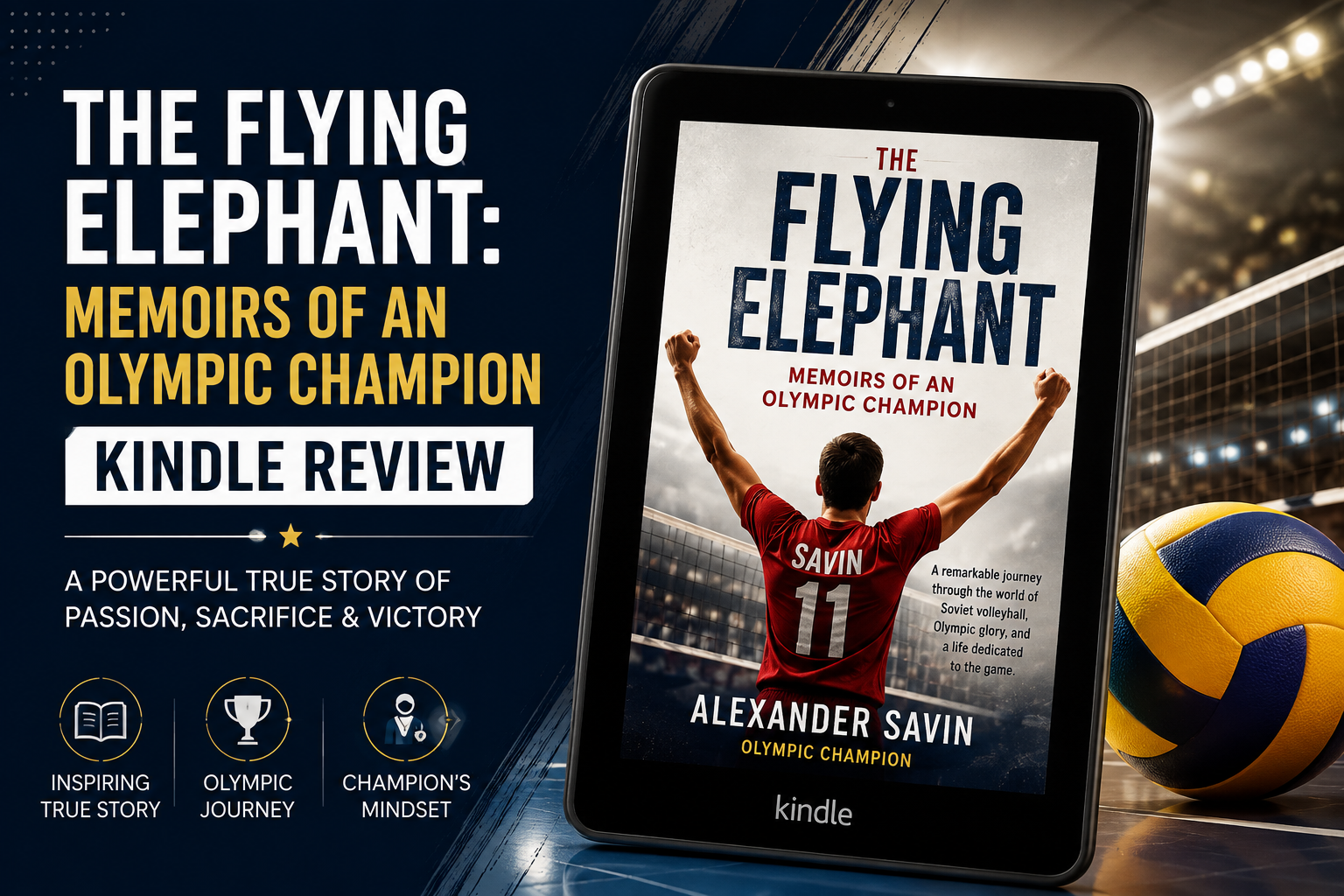
If you’ve ever thought about what actually is behind the scenes of winning an Olympic silver medal besides an anthem, the stage as well as the highlights reel, then this novel will answer this question in a way that few sports memoirs can even manage. The Flying Elephant The Memoirs of a Olympic Champion Kindle Edition is the story of Alexander Savin, one of the most decorated players ever to play for his country in Soviet Union, and it is something that most autobiographies of athletes skip: they reveal the price of being great and not just the joy of it. If you’re looking for an original Olympic memoir or a history of volleyball or simply a real tale of discipline and perseverance This guide will walk you through the essential information you need to know before downloading this Kindle edition.
Table of Contents
- What Is The Flying Elephant: Memoirs of an Olympic Champion About
- Who Is Alexander Savin
- Why the Kindle Edition Is the Smartest Way to Read It
- What Makes This Memoir Different From Other Sports Autobiographies
- Key Themes Readers Will Take Away
- Who Should Read This Book
- The Flying Elephant Compared to Other Olympic Memoirs
- Final Thoughts Before You Buy
- Frequently Asked Questions
What Is The Flying Elephant: Memoirs of an Olympic Champion About
Imagine a young aspiring athlete entering into the most challenging athletic programs around the globe and knowing that failing was never thought of as a possibility. That’s the beginning of this autobiography. The Flying Elephant An Memoirs from a former Olympic Champion is Alexander Savin’s firsthand account of his climb through Soviet volleyball, which culminated with a silver medal in the 1976 Montreal Olympics and the victory in the gold at the Moscow Olympics. Instead of reading like an epic reel of wins The book focuses the majority of its pages focusing on the years of sacrifice, repetition and mental stress that were required before medals ever came within attainment.
The readers who pick up the book expecting a simple celebration of Olympic success will notice something else. Savin doesn’t shy away from discussing the physical strain of training, the loneliness associated with being a part of an entire nation or the doubts that began to creep in after many years of success. This honesty is precisely what sets this memoir apart from the many “inspirational athlete” books that are aplenty in the field of sports and is one of the reasons why this Kindle version has been gaining recognition from those outside of the volleyball community.
Who Is Alexander Savin
The author’s understanding will make the memoir more memorable. Alexander Savin, born July 1st, 1957, is an Russian former player of the volleyball team widely considered to be one of the best middle blockers from his time. He was a member of Russia and the Soviet Union at the 1976 Montreal Olympics and the team won silver after he played in all five games. He returned four years later to the 1988 Moscow Olympics to secure the gold medal, playing every single game towards the gold medal.
Named “The Flying Elephant” by players, Savin earned that unusual title due to the distinction between his massive physical body and the surprising ease that he walked on the court. This contradiction became more than a name over time becoming the primary concept of his life and a symbol of the notion that discipline and repetition could make even the most difficult things seem effortless. Anyone who studies his professional life will see that his involvement working with CSKA Moscow and the USSR national team put him at the heart for one of most fierce eras of volleyball in the history of the sport, providing the reader an intimate access that very few books could match.
Why the Kindle Edition Is the Smartest Way to Read It
For those who are considering between versions that are available, the Kindle edition has a number of benefits that are worth considering before making purchasing. The convenience is the primary and most obvious advantage. Its Flying Elephant runs 514 pages in its English edition, and contains over 240 unique photos of championships, training camps, moments, and behind-the scenes shots of Soviet volleyball culture. All of which are simpler to carry and view quickly via an Kindle device or app than a physical copy.
The ability to search is another benefit that print books do not have. People who are researching Soviet sports the history of coaching, their philosophy or certain Olympic events can quickly jump to relevant pages using the built-in search function. This is particularly useful for coaches, students, and sports historians who intend to refer back to the book often instead of reading it one time and then store it. It is also important for those who live outside of areas that have physical versions readily available as a book like this, which is based on the history of Soviet sports isn’t always available in local bookstores.
What Makes This Memoir Different From Other Sports Autobiographies
The majority of sports memoirs follow the same pattern that includes humble beginnings, dedication, a major victory, and an ebullient end. In The Flying Elephant breaks that mold by refusing to let winning be the main focus of the narrative. Instead of presenting his Olympic victory as the culmination, Savin treats it as just one part of a larger, more complicated and lengthy adventure shaped by pressures and teamwork as well as personal doubt.
This shift in perspective can give this book its lasting power. While many autobiographies of athletes are like long highlight reels This memoir is more of an honest discussion of what it costs to compete at a high levels for years. The training environment within the Soviet sports system, which was often difficult and harsh It is written in enough details to be able to function like a history book providing readers with a glimpse of which of the world’s most effective sports programs of the 20th century actually ran behind closed doors.
This combination of personal narrative and historical documentation is extremely rare. Very few players from that time have written detailed accounts of their experiences. This means that this memoir does more than just tell one man’s story. It preserves a bit of history from the sport that would otherwise be lost.
Key Themes Readers Will Take Away
Every great memoir is built around themes that transcend the events that the book describes and this is no different. Mental toughness is at the core of the book and Savin always returning to the belief that long-term success is based on gradual, steady growth rather than sudden explosions of brilliance. This message is well-received beyond sports, and is a large part of the reason this book continues to draw those who haven’t ever had a ball throughout their lives.
Teamwork is a third thread that runs throughout the entire book. Savin emphasizes that individual success in a team such as that of the Soviet National Team was not truly personal and the book is filled with praise for the teammates and coaches who helped shape his growth, many who did not receive the respect they merited for their work. The emphasis on shared achievement rather than individual fame makes the book a story with emotional depth that other achievement-focused memoirs are often lacking.
The theme of identity after competing is a topic that is explored later in the novel and gives an unexpected dimension to the story. Savin isn’t done with his story with the ceremony for medals. Savin continues to write about the years following and explores what it means to develop a lifestyle and find a significance following the organization and intensity of competition ceases. This is a subject most memoirs of athletes skip completely.
A brief listing of some book’s top concepts includes:
- Discipline is a daily practice rather than a character trait
- Hidden costs of presenting the national program under constant scrutinization
- The importance of coaches and teammates in the success of an individual
- Identity and life even after the spotlight has faded
Who Should Read This Book
The truth is that the memoir goes more than the volleyball-related subject matter suggests. Coaches and athletes will find an immense benefit from the mental and training frameworks Savin talks about that are relevant to today’s high-performance sports despite the many decades that have been passed since his time playing. Researchers and historians of sports also gain an uncommon authentic account of the daily routine in the Soviet athletic system. This topic is better covered through statistics than personal accounts.
Readers who are simply looking for the truthfully told stories of resilience determination, sacrifice, and motivation will find plenty to relate to, as Savin’s main themes can resonate beyond the arena of competitive sport. Anyone who has attempted an impossible goal, wondered whether it would be worth it but continued to push on regardless, will discover a part of their experiences reflected in Savin’s tale.
The Flying Elephant Compared to Other Olympic Memoirs
The choice of what book to next read about sports depends on the kind of experience the person is seeking. The table below outlines the ways The Flying Elephant compares to other popular categories of Olympic as well as sports autobiographies helping you decide which book best will meet your needs.
| Feature | The Flying Elephant | Typical Modern Athlete Memoir | Historical Sports Biography |
|---|---|---|---|
| Focus | Identity, sacrifice, and discipline above medals | Personal branding, celebrity lifestyle | Career timeline and statistics |
| Perspective | First-person first-hand account | First-person, often ghostwritten | Third-person research, conducted by a third party. |
| The historical value | High -documents Soviet sports culture | Low to moderate | Higher, but less personal |
| Emotional depth | Resilient, particularly in post-career reflection | Variable | Limited, fact-focused |
| Photographs | Rare images of 240+ included | A few times, but usually promotional | Archival, less personal context |
| Ideal for | Readers who want authenticity and depth | People who want quick, easy reading | Researchers and historians |
This is the reason The Flying Elephant has carved out its own place in the category of sports memoir. The Flying Elephant offers the emotional authenticity of a person’s account, and the documentary quality normally reserved for biographies of historical significance which isn’t easy to find in one book.
Final Thoughts Before You Buy
Sometimes there is a sports memoir that is published that can be both intimate and historical in the same breath and The Flying Elephant: Memoirs of an Olympic Champion earns that distinction. Alexander Savin’s ability to examine the uncomfortable aspects of competitive sports as well as the triumphs is what sets this book above the crowd of autobiographies about athletes currently available. Anyone looking for a true Olympic story, an evocative piece of Soviet sports past, or just an excellent description of what resilience and discipline really look like in the real world will appreciate the value of this autobiography.
If you’re looking to witness this tale firsthand For those who want to experience it firsthand, the Kindle edition provides the fastest and most convenient way to get started today including the entire collection of rare photos and Savin’s honest narrative of a career that changed the history of volleyball.
Frequently Asked Questions
What is the Flying Elephant: Memoirs of an Olympic Champion about? It is an autobiography written by Alexander Savin, a Soviet volleyball legend who took silver medals at in 1976’s Montreal Olympics as well as gold in the 1980 Moscow Olympics. The book traces the journey of his life through the elite Soviet sport, with a focus on discipline, sacrifice and teamwork instead of celebration of his gold medals.
who are you? Alexander Savin? Alexander Savin is a Russian former volleyball player born on July 1st, 1957. He is widely thought of as one of the best middle blockers of the time. He was a member of in the national teams of Soviet Union, as well as CSKA Moscow, earning his nickname “The Flying Elephant” for his astonishing agility despite his size.
What is the reason why the book is named The Flying Elephant? The title derives from a nickname that was given to Savin by his teammates, referring to the stark contrast between his physique and the surprising speed and agility he demonstrated on the court of volleyball. The memoir uses this contradiction as a illustration of how discipline can make an impossible appear effortless.
Does this Kindle edition worth the price of physical copies? For most readers it is. The Kindle edition provides instant access, an integrated search feature for coaches and researchers, and complete inclusion of the book’s 240+ photographs and illustrations, all in an easier format to carry around and use as a reference tool than a physical 514-page copy.
Who will appreciate this book the best? Athletes, coaches and sports historians as well as general readers who like real, authentic stories about perseverance and sacrifice will benefit from this book. The themes of discipline, teamwork, and the life after the game go well beyond the volleyball world and are accessible for those who aren’t familiar to the sport.
Leave a Reply