
The Las Vegas Grand Prix starting grid tells a story that qualifying alone does not tell. Andrea Kimi Antonelli set the fastest time in qualifying. Yet Max Verstappen will start the race from pole position.
In addition, several drivers face long fights back through the field on a street track where overtaking takes care and timing.
1. Verstappen Takes Pole as Antonelli Loses the Top Spot
Verstappen starts the Las Vegas Grand Prix from pole position, even though Antonelli went fastest in qualifying. Antonelli set a time of 1:33.893 in Q3. Verstappen followed with 1:34.151, so the gap stood at 0.258 seconds. Antonelli carries a five-place grid penalty for power unit changes. Therefore he drops from first to sixth on the grid.
Verstappen moves up one place and takes pole as a result. George Russell also moves up one place and joins Verstappen on the front row. For the full official report, see the Formula 1 qualifying report.
2. How Qualifying Shaped the Las Vegas Grand Prix Starting Grid
Qualifying set the raw order, and then penalties moved several drivers from their earned spots. First, Antonelli led Q3 with 1:33.893. Next, Verstappen took second with 1:34.151. Then Russell followed at 1:34.224, and Lando Norris followed at 1:34.244. After that, Isack Hadjar completed the top five with 1:34.592.
Penalties then changed the start for Antonelli, Oscar Piastri, and Carlos Sainz. As a result, the Las Vegas Grand Prix starting grid looks very different from the qualifying timesheet. If you want the full session format first, read How Formula 1 Qualifying Works: Q1, Q2, Q3 and Sprint Explained.
Q3 decided the front, penalties decided the start
Q3 gave the fastest drivers a clear order. Yet the stewards then applied the penalties that the rules require. In other words, a driver can win the session and still lose the pole.
3. The Front of the Las Vegas Grand Prix Starting Grid
The front of the grid now reads Verstappen first, Russell second, Norris third, and Hadjar fourth. After them, Arvid Lindblad starts fifth, and Antonelli starts sixth. Russell gets a clear view ahead and a strong chance to fight into Turn 1.
Meanwhile, Norris and Hadjar sit on row two with clean air in front of them. In addition, Lindblad gains a place and starts inside the top five. Antonelli, by contrast, starts sixth and faces traffic from the start. The first lap will test every driver at the front, because the gaps are small and the braking zones are long.
4. Antonelli Was Fastest, So Why Does He Start Sixth?
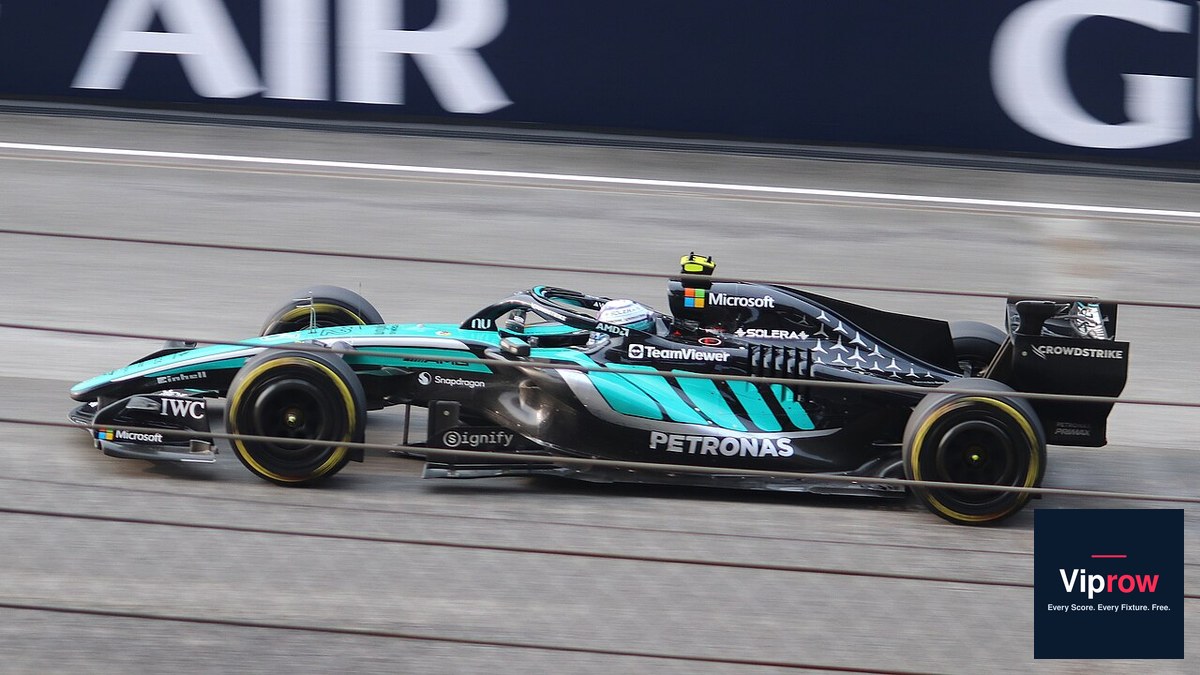
He earned the fastest lap, yet he starts sixth because his grid penalty moves him back five places. His time of 1:33.893 was the best lap of the session by a clear margin. He beat Verstappen by 0.258 seconds, Russell by 0.331 seconds, and Norris by 0.351 seconds.
Formula 1 limits power unit parts across a season. When a team fits new parts beyond the limit, the driver takes a grid penalty. In this case, Mercedes made power unit changes on Antonelli’s car. As a result, the rules give him a five-place drop. So he moves from first to sixth, and every driver behind him moves up one place.
5. What a Five-Place Grid Penalty Means in Practice
A five-place grid penalty drops a driver five spots from the place he earned in qualifying. It changes where he lines up on the grid. For Antonelli, that change means a start from sixth, not first.
In addition, he must pass fast cars in front of him before he can fight for the lead. The driver behind a penalty can still win, but the path gets harder. He must manage his tyres, pick the right moments to attack, and avoid contact in the opening laps. It simply changes his plan from defence to attack, and it gives his rivals a head start they did not earn on pace alone.
Grid penalties are a normal part of Formula 1, and they apply in several ways. The rules limit how many power unit parts a driver can use in one season. When a team fits a new part beyond that limit, the driver takes a grid drop. The size of the drop depends on the part, so a new engine often brings a five-place drop. In addition, the stewards can give grid penalties for other offences, such as blocking another driver in qualifying. These rules keep costs under control, because teams cannot fit fresh parts at every race. As a result, teams plan their part use across the season and often take penalties at tracks where overtaking is easier.
6. Verstappen on Pole Changes the Race Outlook
Verstappen starts from pole with a clear track ahead and a strong chance to control the opening laps. He qualified second with 1:34.151, only 0.258 seconds behind Antonelli.
From pole, he can brake later into Turn 1 with less risk, because no car sits ahead of him. He can also manage his tyres in clean air, while the cars behind him fight in dirty air. Still, he cannot relax. Russell starts beside him, and Norris starts close behind. So Verstappen must make a strong start, hold the lead through the first corners, and then build a gap before the pit stops begin.
Pole also gives Verstappen the best line into Turn 1. He starts on the clean side of the grid, where the rubber from earlier sessions gives more grip. In addition, he controls the pace of the field into the first corner, so he can brake at his own point and block the inside line. Russell must react to him, not the other way round. If Verstappen makes a clean start, he can pull clear before the DRS zones open, and that early gap can shape the whole race.
7. Russell Joins Verstappen on the Front Row
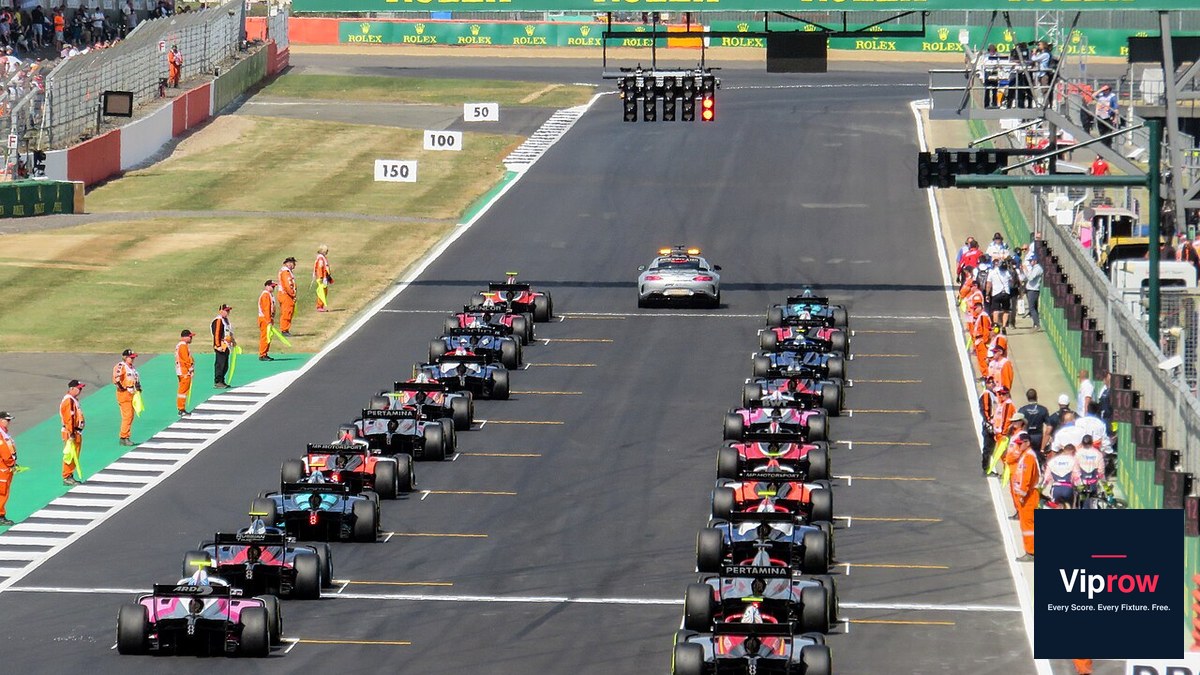
Russell starts second after he qualified third with a time of 1:34.224. His lap sat only 0.073 seconds behind Verstappen and 0.331 seconds behind Antonelli. That pace puts him right in the fight at the front. From the front row, he gets a clean launch and a direct view of Verstappen ahead.
In addition, his Mercedes showed strong speed across Q3, so his race pace should hold up over 50 laps. He must also stay calm through the first corners, because a small error there can cost several places in a close field.
8. Norris and Hadjar Fill the Second Row
Norris starts third after he qualified fourth with 1:34.244. Hadjar starts fourth after he qualified fifth with 1:34.592. Norris starts on the clean side of row two, so he can attack Russell ahead if the start goes his way. His lap was only 0.020 seconds behind Russell, so the pace gap at the front is tiny.
Hadjar starts beside him with a fine result in qualifying. His time put him within seven tenths of Antonelli, and it earned him a top-four start. In addition, both drivers can use the long straights in Las Vegas to test the cars ahead. If they make clean starts, they can stay in the lead fight through the first stint.
9. Piastri Drops from Seventh to Seventeenth
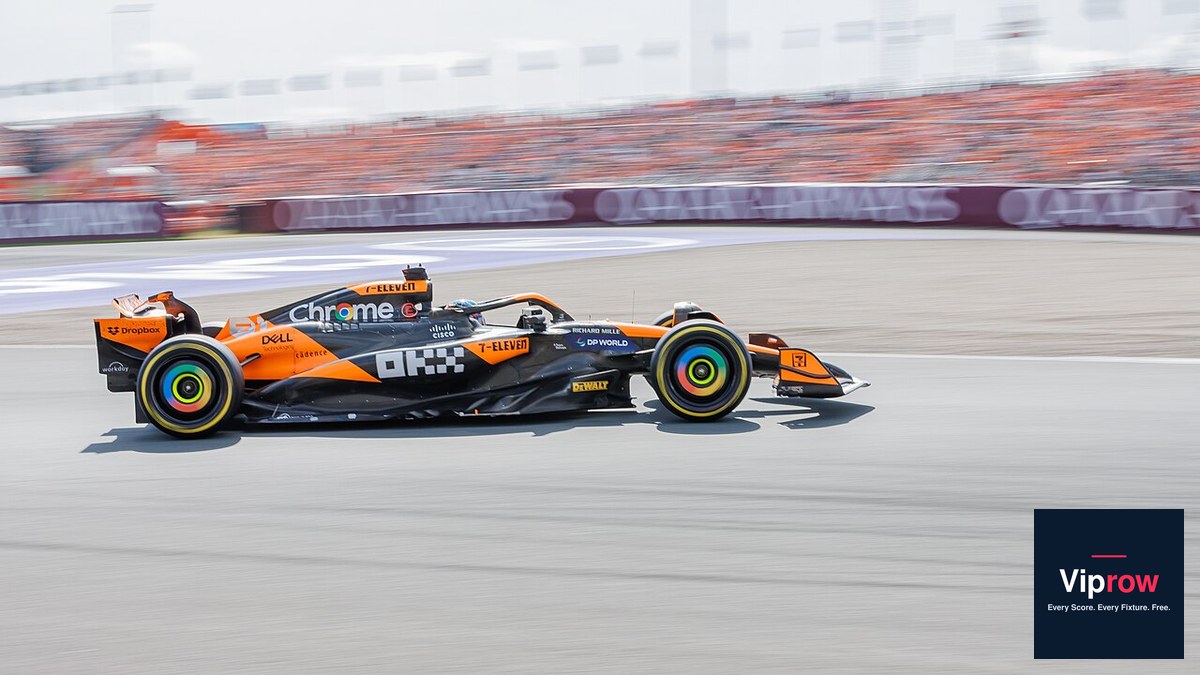
Piastri faces the biggest fall on the grid after he qualified seventh and drops to seventeenth. He takes a ten-place penalty, so he loses ten spots from his earned place. That drop changes his whole race. Instead of starting near the front, he starts deep in the midfield.
In addition, his drop helps other drivers. Lawson, Gasly, and Colapinto all move up as a result of his penalty. For Piastri, the race now needs patience and clean moves. He must avoid trouble on lap one, keep his tyres in good shape, and use the pit stops to gain track position.
10. Leclerc and Hamilton Start from the Midfield
Charles Leclerc starts eleventh, and Lewis Hamilton starts twelfth. Both drivers went out in Q2, so they never reached the final shootout for pole. From eleventh and twelfth, they face traffic, dirty air, and a long fight to reach the front.
In addition, they start behind cars that may run slower race pace, so they must overtake to show their true speed. They must make clean starts, avoid contact in the first corners, and then pick off cars one by one. The long straights in Las Vegas can help them, because DRS gives a speed boost on the main straight. To see how that tool works, read How Formula 1 DRS Works: Zones, Detection Points and Overtaking Explained.
11. Sainz Drops to the Back of the Grid
Carlos Sainz starts twentieth after his penalty drops him to the last place on the grid. He faces the longest fight of any driver in the race. From twentieth, he must pass the whole field to reach the points.
In addition, he starts behind every other car, so he must watch for trouble ahead in the opening corners. A safety car could help him, because it would close the gaps and give him a fresh chance. His team can also use pit stop timing to move him up the order. For Sainz, the goal is simple: stay clean, keep moving forward, and take every point chance that the race gives him.
12. What the Las Vegas Grand Prix Starting Grid Means for the Race
The Las Vegas Grand Prix runs for 50 laps on Saturday 21 November 2026 at 20:00 PST. That start time means Sunday 22 November at 04:00 UTC and 09:00 PKT. The grid sets up a race with a clear leader, a close front fight, and fast cars out of place through the field.
Antonelli can attack from sixth with the fastest car in qualifying. In addition, Piastri, Leclerc, Hamilton, and Sainz can all climb if they stay clean. The street circuit adds risk at every corner, because the walls sit close and the braking zones punish small errors. As a result, the first lap may shape the result more than pure pace.
The Las Vegas street circuit is 6.201 km long and has 17 corners. It runs through the heart of the city and down the famous Strip, past the Sphere and the big hotels. The long straight along the Strip gives drivers a top-speed run and a strong chance to overtake. After that, the track turns into a tight sequence of slow corners, where braking and traction matter more than top speed. Walls sit close all the way round, so a small error can end a race in seconds.
Night racing and cool desert air
Night racing adds more tests for the drivers. Under lights, the race runs while the desert air cools fast after sunset. Cool track temperatures make it harder to warm the tyres, so the first laps on a new set can feel slippery. In addition, the long straights cool the brakes and tyres, while the heavy braking zones heat them again. Teams must find a balance, because a car that is quick on the straight can still struggle in the slow corners if the tyres are not in the right window.
Tyre calls and pit timing will shape the order
Pit stops can change the race in a few seconds. A clean stop gains places, while a slow stop loses them. To learn the basics, read How Formula 1 Pit Stops Work: Strategy, Tyres and the Two-Second Stop.
DRS and tyre wear will test every driver
Tyre wear will also test every driver over 50 laps. The cars slide through slow corners and brake hard into tight turns, so the tyres work hard. For the full tyre rules, read How Formula 1 Tyre Strategy Works: Compounds, Pit Windows and the Two-Compound Rule Explained.
13. How to Follow the Las Vegas Grand Prix
Fans can follow the Las Vegas Grand Prix through live timing, live blogs, and the official Formula 1 channels. The race starts at 20:00 PST on Saturday 21 November 2026, so fans in Pakistan can watch from 09:00 PKT on Sunday 22 November.
During the race, watch the start most of all, because the first corners often decide the early order. After that, watch the pit stops, the DRS fights on the straights, and the climbs from Piastri, Leclerc, Hamilton, and Sainz. For the wider season picture, read The Final Three Races of 2026: Las Vegas, Qatar and Abu Dhabi.
1 thought on “Las Vegas Grand Prix 2026 Starting Grid: Verstappen on Pole After Antonelli Penalty”