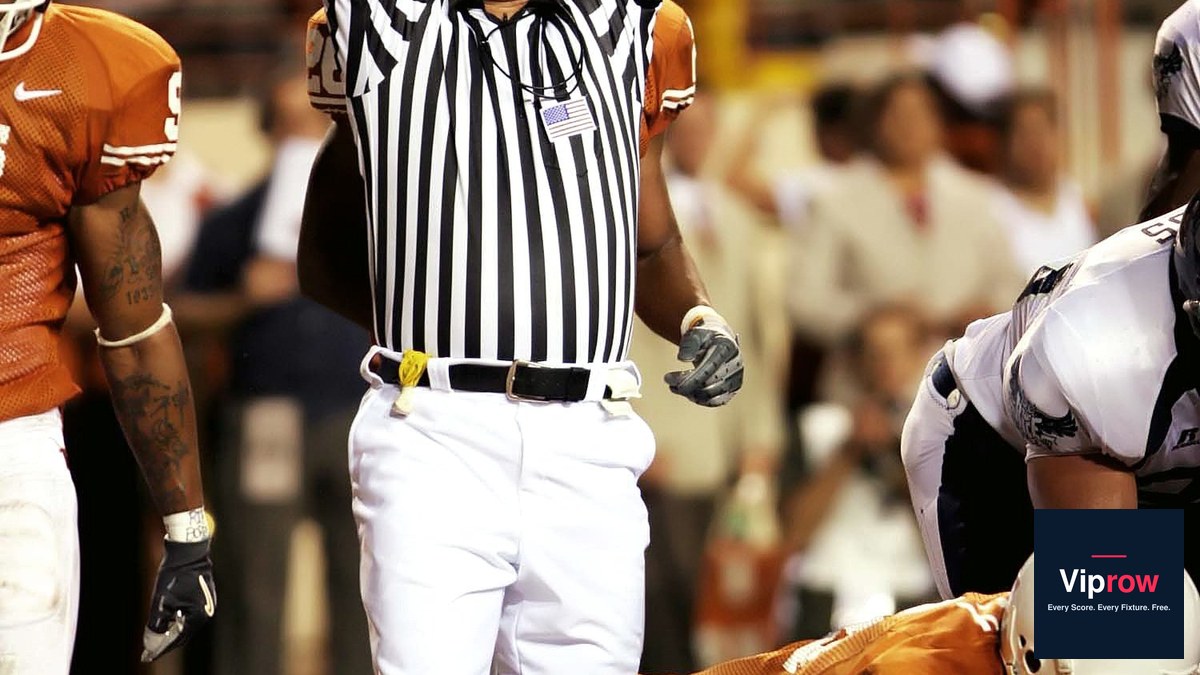
An NFL touchdown is the biggest single score in American football, and it is worth six points. In short, a team scores one when a player carries the ball into the other team’s end zone, catches a pass there, or recovers a loose ball there while in possession. For example, the ball must break the plane of the goal line, and a receiver must finish the catch in bounds. This guide explains each rule in plain words. In addition, the offence, the defence, and the special teams unit can all score one.
What Is an NFL Touchdown?
A touchdown happens when a team gets the ball into the opponent’s end zone under the rules. First, the ball must be on, above, or behind the plane of the goal line. Next, the player who holds the ball must have legal possession. In addition, the player must not be down by contact before the ball crosses the line. The end zone is the ten-yard area past each goal line, and the official NFL rulebook sets out these points in Rule 11. You can read the full text in the official NFL rulebook.
How Many Points Is an NFL Touchdown Worth?
A touchdown is worth six points, and it is the highest-value score in the game. By contrast, a field goal is worth three points, and a safety is worth two points. So a touchdown nearly doubles the value of a field goal. In addition, the scoring team gets one more play after the touchdown, called a try, for one or two extra points. As a result, most touchdowns end up worth seven or eight points in total.
Breaking the Plane: The Key Rule
The most famous touchdown rule is called breaking the plane. In plain words, the ball only needs to touch the invisible wall that rises from the front edge of the goal line. The whole ball does not need to cross the line. In fact, even the tip of the ball is enough, as long as some part of it is on, above, or behind the plane. The moment the ball breaks the plane in possession, the play is dead and the touchdown counts at once.
The Ball, Not the Player, Must Cross the Line
Many new fans watch the player’s feet, but the officials watch the ball. A runner can dive, stretch, or reach the ball forward, and the score counts as soon as the ball touches the plane. If a defender then pushes the runner back out of the end zone, it does not matter, because the ball was already dead.
What Counts as Possession and Control?
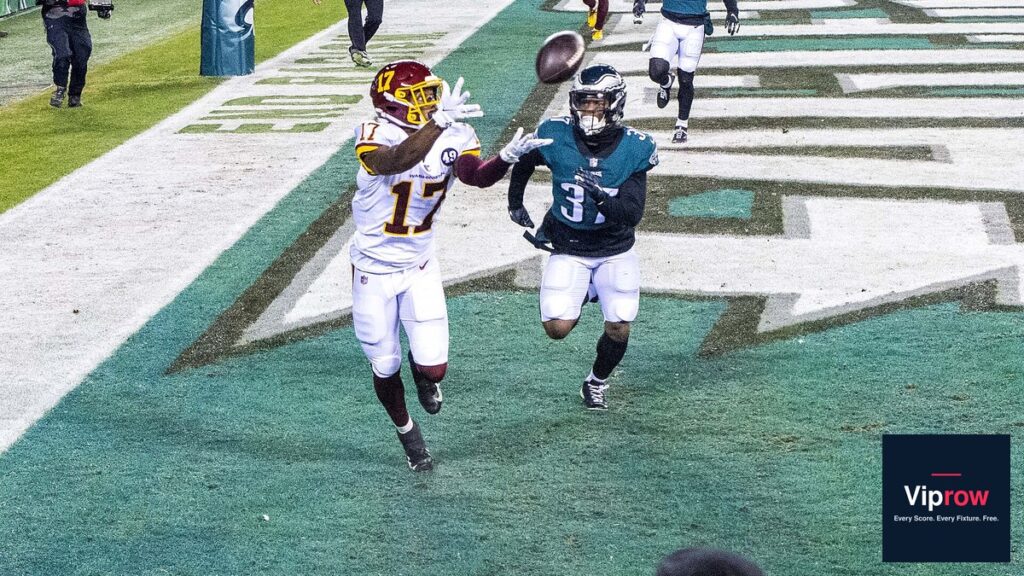
Possession means the player has firm control of the ball with his hands or arms. First, he must secure the ball and not be juggling it. Next, he must hold it long enough to show clear control. However, a runner who already has possession in the field of play faces a simpler test. For him, the touchdown counts the instant the ball breaks the plane. By contrast, a receiver who is trying to catch the ball in the end zone must finish the whole catch first. A catch is not complete until the player shows control, gets two feet down, and makes a football move.
The Catch in the End Zone: Two Feet Down
A touchdown catch follows the same catch rules as any other pass, with one key difference: the catch must be completed in the end zone. First, the receiver must secure control of the ball. Next, he must get two feet down in bounds, or another body part other than his hands. In addition, he must make a football move, such as taking a third step, tucking the ball away, or turning up the field. Only when all three steps are done is the catch complete. If the receiver drops the ball during any of those steps, the pass is incomplete and there is no touchdown.
The Pylon Rule for Airborne Players
The pylon is the small orange marker at each corner of the goal line, and it sits in the end zone. If a player jumps from the field of play and the ball passes over or inside the pylon while he holds it, that is a touchdown. As a result, diving players often aim for the pylon.
Rushing Touchdowns
A rushing touchdown happens when a player runs the ball into the end zone. Most often, a running back takes a handoff and powers through the defence. However, a quarterback can also score on the ground, often on a short sneak from very close to the line. He must also protect the ball while defenders try to strip it away. For context, a sack can push an offence backwards and ruin a scoring chance, so teams guard their quarterback carefully on passing downs. You can learn how that pressure works in our guide to how NFL sacks work.
The Quarterback Sneak and the Dive
The quarterback sneak is one of the most reliable short-yardage plays in football. First, the quarterback takes the snap and drives forward behind his blockers. Next, the whole line pushes together to gain a yard or two. In addition, the play works best when only a few inches are needed. However, defences now expect it, so they stack players at the line to stop it.
Passing and Receiving Touchdowns
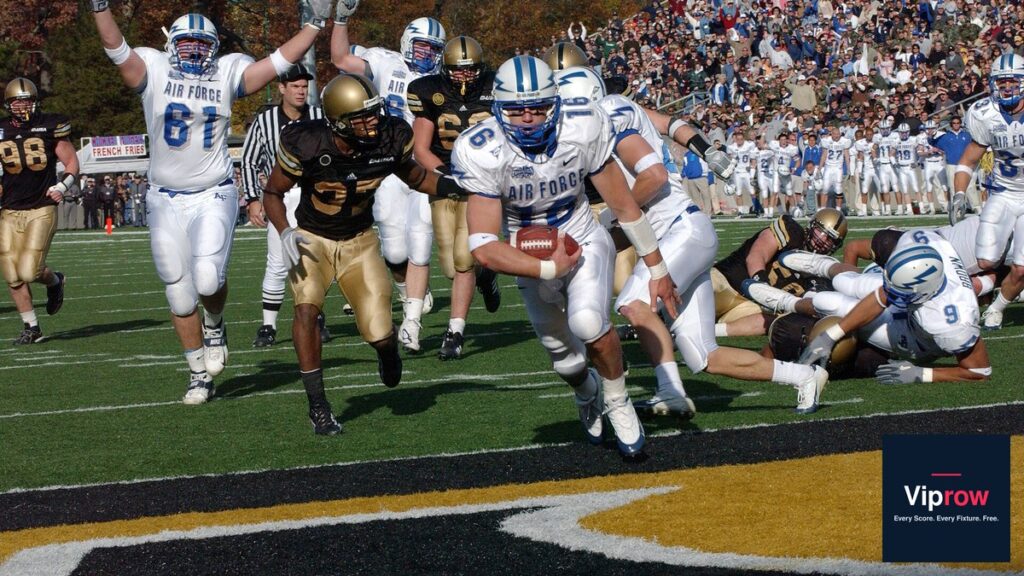
A passing touchdown is the most common way to score through the air. First, the quarterback throws the ball toward the end zone. Next, a receiver catches it in bounds and completes the catch. In addition, the receiver can be a wide receiver, a tight end, or a running back. The quarterback earns credit for a passing touchdown, while the receiver earns credit for a receiving touchdown. However, the score still counts as one touchdown worth six points for the team. For example, a short pass near the goal line can become a touchdown if the receiver breaks a tackle and crosses the plane.
What a Quarterback Gets Credit For
A quarterback earns a passing touchdown when his throw leads directly to a score. First, the pass must be a legal forward pass. Next, the receiver must catch it and complete the catch in the end zone, or catch it and then run it in. In addition, a lateral or backward pass does not count as a passing touchdown, even if it ends in a score.
Return Touchdowns
A return touchdown happens when a player scores without his team’s offence taking a normal snap. First, the most common return scores come on kickoffs and punts. Next, a returner catches the kick, finds a lane, and runs it into the other end zone. In addition, return touchdowns can come from a recovered fumble or an interception that is run back. However, the returner must keep the ball secure, because one fumble can end the chance at once. You can learn how the play starts in our guide to how NFL kickoffs work.
Kickoff and Punt Returns
Kickoff returns start after the scoring team kicks the ball away. First, the returner fields the kick deep in his own end zone or in the field of play. Next, his blockers form a wall to open a running lane. In addition, the returner must decide fast whether to run or take a knee for a touchback. By contrast, punt returns give the returner less space, because the coverage team is already close.
Touchdowns After a Turnover
A defence can also score a touchdown, and it does so after winning the ball back. First, a defender can catch an interception and run it into the other end zone. Next, a defender can recover a fumble in the opponent’s end zone, and that counts at once. However, the same possession rules apply: the defender must have clear control of the ball. For example, an interception is only complete when the defender secures the ball and gets two feet down in bounds, just like a receiver. You can learn the full rules for that play in our guide to how NFL interceptions work.

What Happens Right After an NFL Touchdown?
After a touchdown, the game pauses for a short celebration, then the scoring team lines up for a try. First, the officials confirm the score and the replay booth checks the play. Next, the scoring team chooses between an extra point kick and a two-point conversion. After the try, the scoring team kicks off to the other team, and play goes on. In overtime, the rules differ slightly, and our guide to how NFL overtime works explains how a touchdown affects the extra period.
The Try: One More Play for Points
The try is a single scrimmage play after a touchdown, and it is the only chance to add points before the kickoff. First, the scoring team lines up for one down. Next, they either kick for one point or run a play for two points. In addition, the defence can score on a returned try in some cases, but the usual result is one or two points for the offence, or nothing.
Extra Point or Two-Point Conversion?
After every touchdown, the coach must choose between a safe point and a risky two. The extra point is a kick from the 15-yard line, and it is worth one point. By contrast, the two-point conversion starts from the 2-yard line, and the offence must run or pass the ball into the end zone again. It is worth two points, but it fails more often than the kick. As a result, coaches usually take the kick, unless the score or the clock demands the extra point. You can compare the kick in detail in our guide to how NFL field goals work, and you can study the two-point play on its own in our guide to how NFL two-point conversions work.
Touchdown Celebrations: What Is Allowed?
Players love to celebrate a touchdown, and the rules now allow far more fun than they once did. Since 2017, the league has relaxed the celebration rules after talking to more than 100 players. First, players may use the football as a prop, and they may celebrate together as a group. Next, they may go to the ground as part of a short celebration. However, some acts are still banned. For example, players may not use the goalposts as a prop, use any outside prop, or make lewd or violent gestures. Taunting an opponent and mimicking a weapon also draw a flag.
Group Celebrations and the Ball as a Prop
Group celebrations are now a normal part of the game. First, team-mates can gather in the end zone and celebrate together after a score. Next, they can use the ball in the act, such as spiking it or holding it up. In addition, choreographed group dances are allowed, as long as they stay brief. However, the celebration must not delay the game for long, because a 40-second clock runs after a touchdown to keep the extra point on time. If the delay goes too far, the officials can flag the team for unsportsmanlike conduct, which costs 15 yards.
How Replay Review Checks an NFL Touchdown
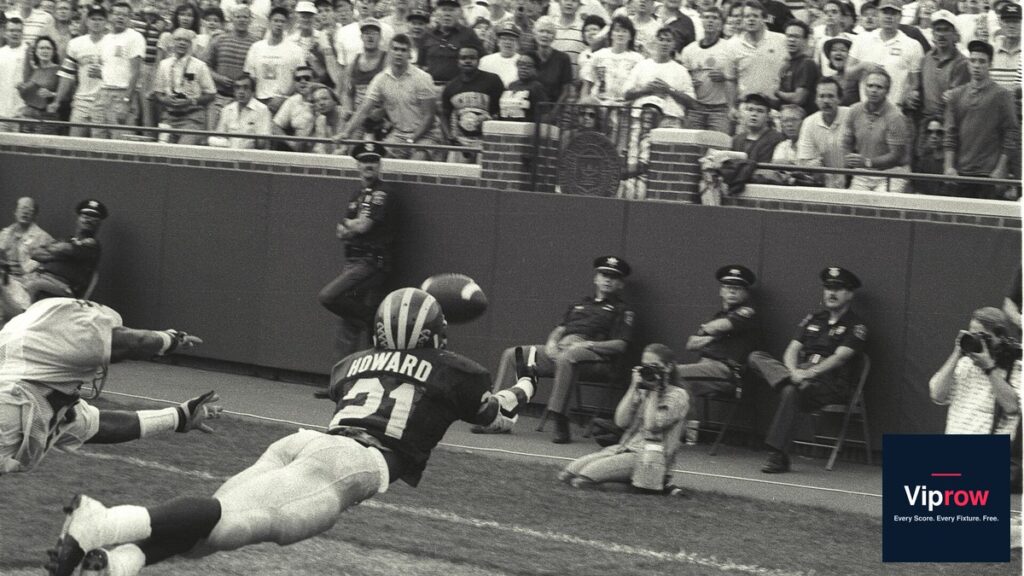
Every scoring play in the NFL is reviewed automatically, and that includes every touchdown. First, the replay booth checks the play while the teams line up for the try. Next, officials look at whether the ball broke the plane, whether the player had possession, and whether the catch was complete in bounds. In addition, they check whether any part of the player stepped out of bounds before the score. However, the review needs clear visual proof to overturn the call on the field. If the video is not clear, the original call stands.
What Replay Can and Cannot Change
Replay can confirm or overturn a touchdown, but it has limits. First, it can rule on the position of the ball, the feet of the receiver, and whether possession was kept. Next, it can check whether a player stepped out of bounds or the ball touched the ground during a catch. In addition, it can review whether a fumble happened before the ball crossed the line. However, replay cannot judge effort, intent, or most penalties that were not called.