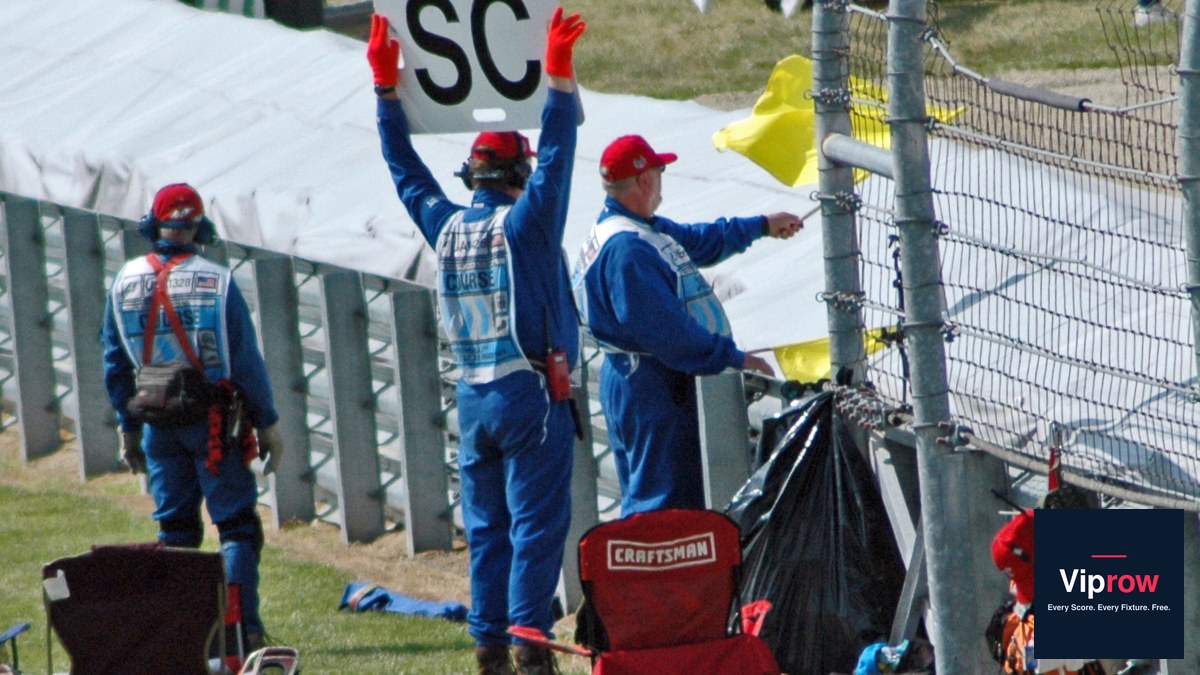
Formula 1 flags are the sport’s sign language. They tell drivers what is happening on the track ahead, and they do it in seconds. As a result, every fan who learns the flags can follow a race with much more understanding. First, we look at who waves the flags. Then we cover each flag one by one. For the official guide, see the beginner’s guide to Formula 1 flags on Formula 1’s own website.
1. What Are Formula 1 Flags and Why Do They Matter?
Formula 1 flags are coloured signals that give drivers orders and warnings. Marshals wave them from posts around the circuit. Each colour has one fixed meaning, and every driver learns that meaning before they race. Therefore, a flag leaves no room for doubt. A yellow flag always means danger. A green flag always means the track is clear. A red flag always means stop. In fact, flags work even when radios fail. So flags are a safety net for the whole sport. Without them, drivers would not know about a crash around the next corner. They would not know about oil on the track. In short, flags keep drivers safe and keep the race fair. They also help fans, because the same flags appear on television.
2. Who Waves the Formula 1 Flags?
Marshals wave most Formula 1 flags. Marshals are trained volunteers who stand at posts around the circuit. When something happens in their sector, the marshals show the right flag. Meanwhile, race control watches the whole circuit from a control room. Race control decides on the big calls, such as a red flag. The race director leads race control and makes the final decision. In addition, the stewards decide on some flags, such as the black flag. Marshals also use light panels. These panels show the same colours as the flags, and they help at night or in rain. As a result, a driver gets the same message from a flag and from a light. The system has two layers: marshals watch their own corner, and race control watches the full race.
3. The Yellow Flag: Danger Ahead
The yellow flag is the flag you will see most often. It warns drivers that there is danger ahead. When drivers see a yellow flag, they must slow down. They must not overtake. They must also be ready to change direction. The yellow flag applies to one sector of the track. Once a driver passes the next marshal post and sees a green flag, normal racing starts again. A driver who ignores a yellow flag can be punished by the stewards. Therefore, drivers treat every yellow flag with respect.
What a Single Yellow Flag Means
A single waved yellow flag means there is a hazard beside the track or partly on the track. The driver must slow down and must not overtake. In addition, the driver must be ready to change direction. The single yellow flag tells the driver to take care, but the track is not fully blocked. The key point is simple: slow down, stay alert, and do not pass another car.
4. Double Yellow Flags: Slow Down Even More
Double yellow flags mean the danger is much worse. Two yellow flags are waved together at the same marshal post. This tells drivers to slow down a lot more. They must also be ready to stop. In qualifying, the rule is even stricter. A driver who passes through a double yellow sector has that lap time deleted. This rule stops drivers from taking risks when marshals are in danger. To understand how a lost lap can change a whole weekend, read our guide on how Formula 1 qualifying works.
What Double Yellow Flags Mean for Drivers
When double yellow flags appear, drivers must lift off the throttle at once. They must not overtake any car. In addition, they must be ready to stop if the track is blocked. Therefore, drivers slow down early and clearly. They do not take chances. The rule protects the marshals, who may be on the track clearing debris or helping a driver.
5. The Green Flag: All Clear
The green flag means the track is clear. It tells drivers that the danger has passed and normal racing can start again. Marshals wave the green flag at the post just after the incident. As a result, drivers know exactly where the danger zone ends. The green flag is also waved at the start of a session. In that case, it means the track is open and cars can go out. Green is the flag every driver wants to see. The green flag only clears the danger in that sector. Another sector may still have a yellow flag. In this way, the flags build a clear picture of the whole track, corner by corner.
6. The Red Flag: The Race Stops
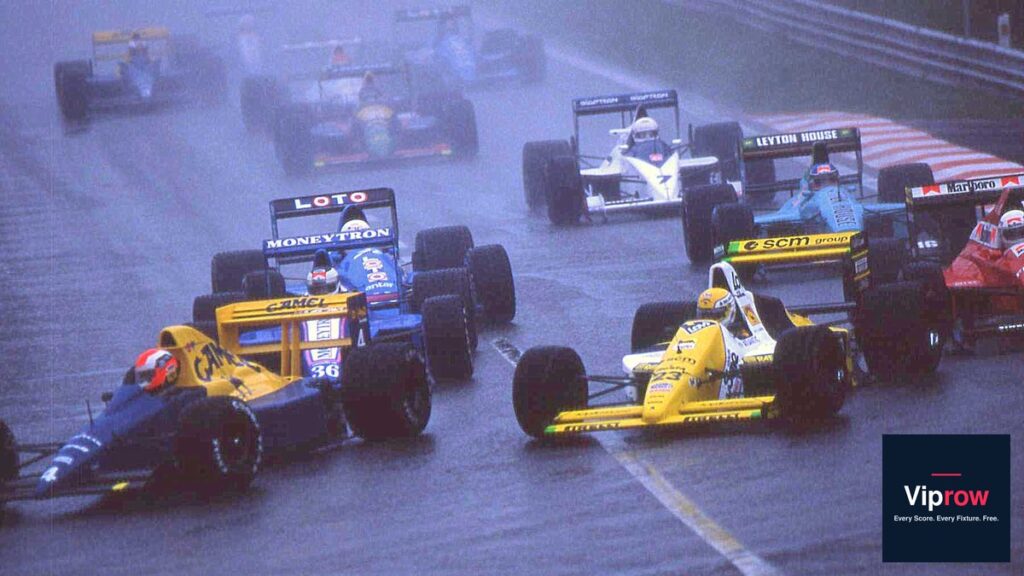
The red flag is one of the most serious signals in Formula 1. It stops a session or a race. Only race control can decide to show it. The red flag is waved at the start line and at every marshal post around the circuit. When the red flag appears, drivers must slow down at once. They must not overtake. Then they must return to the pit lane. The reasons for a red flag include a serious crash, a blocked track, or weather that is too bad to race in. The race can restart once the track is safe again.
What Happens After a Red Flag
After a red flag, the cars wait in the pit lane. For example, they can often change tyres. To see why tyres matter so much, read our guide on how Formula 1 tyre strategy works. The race only restarts when race control is sure the track is safe.

7. The Blue Flag: Let the Faster Car Through
The blue flag tells a driver that a faster car is coming up behind them. The driver must let the faster car pass. The blue flag is shown as a waved flag. The driver who sees it must move off the racing line when it is safe to do so. Instead, they should let the faster car through at the earliest safe chance.
Blue Flags in Practice and in the Race
In the race, a blue flag means a faster car is about to lap you. You must let it pass within a reasonable distance. The rule is fair. It stops slower cars from changing the fight at the front. For more on how drivers pass each other, read our guide on how Formula 1 DRS works. In short, the blue flag is about respect and safety. The slower car moves aside, the faster car goes through, and the race goes on.
8. The White Flag: A Slow Vehicle Ahead
The white flag warns drivers that a much slower vehicle is on the track ahead. The flag is waved to give drivers early warning. As a result, they can slow down before they reach the slow vehicle. The white flag is not seen very often. A Formula 1 car travels at huge speed, so a slow truck on the track is a real danger. The white flag is often shown with a yellow flag. In addition, the white flag is sometimes seen at the end of a practice session. The white flag warns other drivers that a slow car is ahead. In short, white means slow traffic. Drivers must take care and be ready to pass safely.
9. The Yellow and Red Striped Flag: Less Grip Ahead
The yellow and red striped flag warns drivers that grip levels have dropped on the track ahead. The flag is held still, and it is never waved. This is important. So the striped flag stays motionless. Drivers who see it must take care. They must slow down a little and be ready for a slippery surface. Oil on the track can send a car off in a second. For that reason, the striped flag is a vital warning. It is less common than the plain yellow flag, but it can prevent a crash. In addition, it tells teams that the track surface has changed. In short, stripes mean slippery. Slow down and stay alert.
10. The Black Flag, the Black and White Flag, and the Black Flag with an Orange Disc
Three flags are aimed at one driver only. They are shown with the driver’s number, so everyone knows who they are for. Race control and the stewards decide when to use them.
The Black Flag
The black flag means disqualification. It orders the driver to return to the pits at once. The driver must stop racing. The black flag is shown with the driver’s number. The black flag is very rare in modern Formula 1. It ends their race on the spot.
The Black and White Flag
The black and white flag is a warning. It is split in half by a diagonal line, with black on one side and white on the other. It warns a driver about unsportsmanlike behaviour. The flag is shown with the driver’s number. It means one more offence will bring a punishment.
The Black Flag with an Orange Disc
The black flag with an orange disc means the car has a mechanical problem. The problem is likely to endanger the driver or other drivers. The driver must return to the pits as soon as possible. This flag is about safety, not punishment. To see what happens in a normal stop, read our guide on how Formula 1 pit stops work. In short, the orange disc means your car is not safe. Come in now.
11. The Chequered Flag: The End of the Race
The chequered flag is the most famous flag in motorsport. It is black and white in a checked pattern. It marks the end of a session or a race. The first driver to cross the line after it appears is the winner. After that, drivers slow down and return to the pit lane. The chequered flag also ends practice and qualifying sessions. In qualifying, it means no more flying laps can start. The chequered flag is a happy sight for the winner. Points are scored at the chequered flag, and the result shapes the championship. To learn how those points add up, read our guide on how Formula 1 points and the championship work. In short, the chequered flag means the race is done. The result is set.
12. Flag Panels, Lights, and the Safety Car
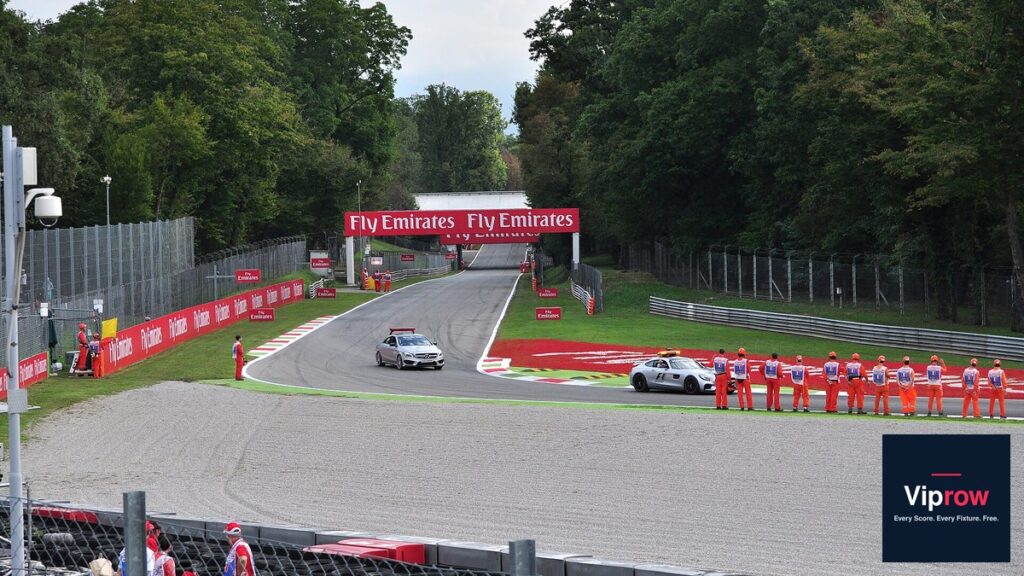
Flags are not the only signals in Formula 1. Light panels sit at marshal posts around the circuit. They show the same colours as the flags. Drivers also see signals on their steering wheel display. In addition, the safety car and the virtual safety car work with the flags. When the safety car comes out, yellow flags are shown too. The virtual safety car does the same job without a physical car on track.
Safety Car and Virtual Safety Car
The safety car is a real car that leads the field at a safe speed. Drivers must form up behind it and must not overtake. Under the virtual safety car, drivers must slow down to a minimum time in each sector. The green flag shows when the safety car period ends and racing starts again. To learn more, read our guide on how Formula 1 safety cars work. In short, flags and safety cars work as one team. The flags warn, and the safety car controls the pace.

13. How to Watch Formula 1 Flags Like a Fan
You can enjoy a race much more when you know the Formula 1 flags. First, watch the top of the screen for flag symbols. Next, listen to the commentators. They will tell you which flag is out and why. In addition, watch the pit lane after a red flag. Finally, remember the simple code. Green means go. Yellow means danger. Red means stop. Blue means move aside. White means slow traffic. Black means trouble for one driver. Chequered means the race is over. With these meanings in mind, you will spot the story of the race as it happens. Flags turn a fast blur of cars into a clear story.