How Football Transfers Work: Windows, Fees and Free Agents Explained
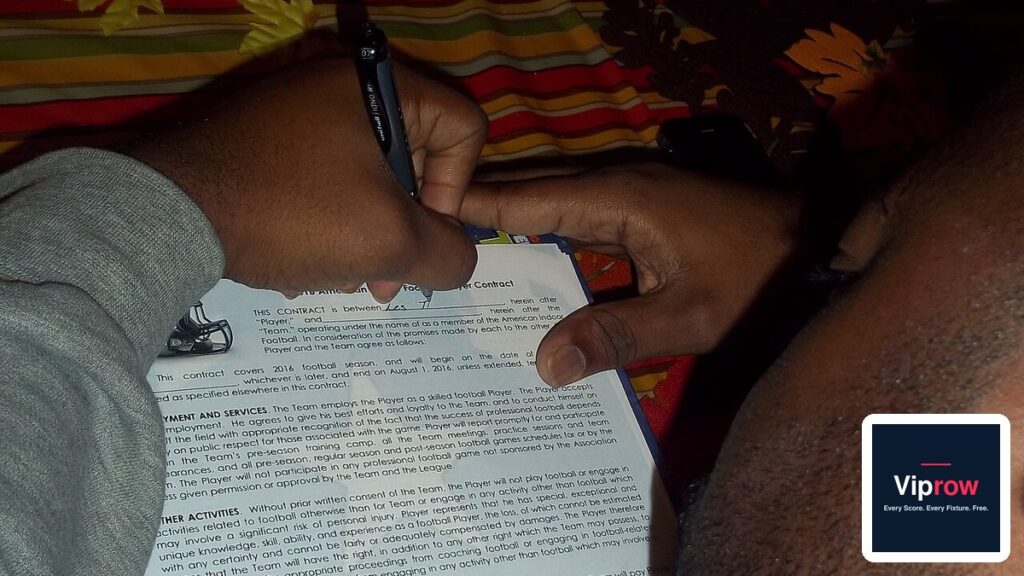
How football transfers work is a question every fan asks. Every summer and winter, clubs buy and sell players, and the news moves fast. First, a club agrees a fee with another club. Next, the player agrees personal terms. Then, the player passes a medical and signs a contract. In this guide, we explain each step in plain English. You will learn about transfer windows, fees, agents, loans, and free agents. By the end, you will follow transfer news with confidence.
How Football Transfers Work: The Basics
A football transfer is the move of a player from one club to another. The player is under contract to the first club. The second club must agree a deal to take over that contract. The deal often includes a transfer fee. That fee is paid to the selling club. It is not paid to the player. The player then signs a new contract with the buying club. The transfer is complete only when the deal is registered with the league.
Transfers happen for many reasons. A club may need a striker to score more goals. A club may need a defender to stop conceding goals. A player may want more playing time. A player may want to play in a better league. A club may need to sell a player to raise money. In addition, a manager may want to change the style of the team. Every transfer has a story behind it, and the story is often complex.
How Football Transfers Work in the Transfer Windows
Clubs cannot sign players at any time. They can only sign players during a transfer window. There are two main windows each year. The summer window is the long one. It opens in the summer and closes at the end of August or early September. The winter window is the short one. It opens in January and closes at the end of the month. Outside these windows, clubs cannot register new players.
The windows exist to keep the season fair. If clubs could sign players at any time, a rich club could buy a star in the final week to win the title. The windows stop that kind of late change. They also give managers time to plan. In addition, they give players a clear time to move. A player knows when he can leave and when he must stay. The exact dates can change each year, so check the league rules for the current season.

How Football Transfers Work: How a Transfer Fee Is Agreed
The first step in most transfers is a fee. The buying club makes an offer to the selling club. The selling club can accept it, reject it, or ask for more. This process can take days or weeks. Clubs may make several offers. They may also add extra terms to the deal. For example, the fee may include extra payments if the player scores a set number of goals. It may also include a share of a future sale.
Fees vary a great deal. A young player with little experience may cost a small fee. A star player in his best years may cost a very large fee. The fee depends on age, skill, contract length, and demand. If a player has only one year left on his contract, the fee is often lower. If he has four years left, the fee is often higher. In addition, if several clubs want the same player, the price can rise fast.

How Football Transfers Work: The Role of Agents
Most players have an agent. An agent is a person who acts for the player in talks with clubs. The agent helps the player get the best contract. The agent also talks to clubs that want to sign the player. In return, the agent earns a fee. That fee is often paid by the club. Agents play a big part in modern football. A good agent can help a young player find the right club at the right time.
Agents can also cause problems. Some agents push for a move when the player is happy to stay. Some agents ask for very high fees. Some clubs refuse to deal with certain agents. As a result, talks can break down. However, most transfers need an agent to work. The player cannot do all the talks alone. The agent knows the market, the clubs, and the rules. That knowledge helps both sides reach a deal.
How Football Transfers Work: Personal Terms and Contracts
After the clubs agree a fee, the player talks about personal terms. Personal terms include wages, bonuses, and the length of the contract. Wages are the weekly pay. Bonuses are extra payments for goals, wins, or trophies. The length of the contract is often three, four, or five years. A longer contract gives the player more security. It also gives the club more value if it sells the player later.
Contracts also include other details. There may be a release clause. That is a set fee that lets another club buy the player if it pays that amount. There may be a signing bonus. That is a one-off payment when the player signs. There may be image rights. Those rights cover how the club can use the player in adverts. All these terms must be agreed before the player signs. If they are not agreed, the transfer can fail at the last stage.
The Medical and the Announcement
Before a transfer is complete, the player usually has a medical. A medical is a health check by the club doctors. The doctors check the heart, muscles, joints, and old injuries. They want to know if the player is fit to play. If the medical finds a serious problem, the club may change the deal. It may ask for a lower fee. It may also walk away from the deal. Most medicals pass without a problem.
After the medical, the player signs the contract. The club then registers the player with the league. The club also announces the signing to fans. The announcement often includes photos and a short video. The player may wear the new shirt for the first time. He may also give a short interview. At this point, the transfer is done. The player can train with his new team and play in the next game, if he is registered in time.
How Football Transfers Work: Loans, a Temporary Move
A loan is a temporary transfer. A player moves to another club for a set time, often six months or one season. The player stays under contract to the first club. The loan club often pays part of the wages. Sometimes it also pays a loan fee. Loans help young players get game time. They also help clubs cover an injury without a long deal. In addition, they help a player who needs a fresh start.
Loans have rules. A player may not be able to play against his parent club. That rule stops a conflict of interest. Some loans include an option to buy. That means the loan club can buy the player at the end of the loan for a set fee. Some loans include a duty to buy. That means the loan club must buy the player if certain terms are met. Fans should check the terms, because a loan can turn into a full transfer.

How Football Transfers Work: Free Agents Explained
A free agent is a player who is out of contract. He has no club, so no fee is needed to sign him. He can sign for a new club at any time, even outside the transfer window. Free agents are often older players or players who were released by a club. They can be a good deal for a club with little money. They can also be a risk, because the player may not have played for some time.
Free agents can sign after the window closes. That is a key rule. If a club loses a player to injury after the window, it can sign a free agent to cover the gap. The player must be free, not under contract to another club. In addition, the club must have space in its squad. Free agents often train alone while they wait for a club. They stay fit and hope for a call. When a call comes, they must be ready to sign fast.

Why Some Transfers Fail
Many transfers fail at the last stage. The clubs may fail to agree a fee. The player may fail to agree wages. The medical may find a problem. The agent may ask for too much money. A rival club may make a late bid. The player may change his mind. Any of these steps can stop a deal. That is why transfer news is full of rumours that never become real deals.
Fans should be careful with transfer rumours. Some rumours are true. Some are planted by agents to raise a price. Some are guesses by reporters. A transfer is only real when the club announces it. Until then, it is only talk. In addition, a deal can fail even after a medical. Paperwork can be late. A form can be filed after the deadline. If that happens, the transfer does not count, and the player stays put.
How to Follow Transfer News
First, follow the official club channels. They give the true news. Next, follow trusted reporters who have a good record. Then, check the league rules for the window dates. After that, look at the squad needs of each club. Ask which positions need a new player. This simple routine helps you judge a rumour. You will know if a deal makes sense or if it is only noise.
You can follow football on Viprow with live scores and fixtures. You can also read our guide to how to watch the Premier League free in the UK legally in 2026 and our guide to how to watch the EFL Championship free in the UK legally in 2026. For cup games, read our guide to how to watch the Carabao Cup free in the UK legally in 2026. These guides help you follow the teams and players you care about.
Frequently Asked Questions
When can clubs sign players?
Clubs can sign players only during the transfer windows. The summer window is long, and the winter window is short and runs in January each year.
Who gets the transfer fee?
The transfer fee is paid to the selling club, not to the player. The player earns wages and bonuses under his new contract with the buying club.
What is a free agent?
A free agent is a player who is out of contract. No fee is needed to sign him, and he can sign for a new club even outside the transfer window.
What is a loan move?
A loan is a temporary move, often for six months or one season. The player stays under contract to his parent club and returns when the loan ends.
Where can I check official transfer rules?
You can check the official rules on the Premier League official website. It explains the windows and registration rules. You can also follow live scores on Viprow.
Now you know how football transfers work. First, remember the windows. Next, remember the fee, personal terms, and medical. Then remember loans and free agents. In addition, remember that a deal is only real when the club announces it. As a result, you can follow transfer news with a clear head and enjoy the drama of each window.