How NBA Trades Work: Trade Deadline, Salary Matching and Exceptions Explained
If you want to learn how NBA trades work, start with one simple idea. A trade is a deal between teams. It must follow the rules in the league’s Collective Bargaining Agreement, known as the CBA. Teams cannot just swap any players they like. Instead, they must match salaries, respect key dates, and stay inside spending limits. This guide explains each rule in plain English.
What Is an NBA Trade?
An NBA trade is an agreement in which teams exchange players, draft picks, or both. For example, one team may send a guard to another team. It may receive a forward and a future pick in return. However, every trade must be approved by the league office. So the deal is not final until the NBA checks the salaries, the contracts, and the dates.
Trades can involve two teams. But they can also involve three or four teams. In a multi-team trade, each team must still meet the salary rules. It must meet them on its own side of the deal.
Teams trade for many reasons. First, a contender may need one more scorer or defender for a playoff run. Second, a rebuilding team may trade a veteran for young players and draft picks. Third, a team over the spending limits may trade a big contract to save money.
The NBA Trade Deadline Explained
The trade deadline is the last day in the regular season when teams can make trades. For the 2026-27 season, the deadline falls on Thursday, February 11, 2027, at 3 p.m. Eastern Time. After that moment, no team can complete a trade until the day after the NBA Finals end.
The deadline matters because it forces teams to decide. In other words, a team must choose. Whether it is a buyer or a seller. Buyers add talent for a playoff push. Sellers move veterans for picks and young players. Meanwhile, teams in the middle often wait until the last days.
Before the deadline, two other dates shape the market. First, December 15 is the day most players become eligible to be traded. They signed as free agents in the summer. Second, January 15 is the date when most of the remaining summer signings become tradeable. Therefore, the real trade season starts in mid-December and peaks at the February deadline.
Why Salary Matching Is the Heart of Every Trade
Salary matching is the rule that makes NBA trades so complex. In simple terms, the salary a team takes in must be close to the salary it sends out. This rule exists because the NBA has a salary cap. It limits how much each team can spend on players. For the 2026-27 season, the salary cap is about 165 million dollars. However, most teams are already over the cap. So they cannot just absorb a new salary.
Teams under the cap have the most freedom. For example, a team with cap space can take in a player. The new salary must fit inside its room. On the other hand, teams over the cap must follow the matching bands. They are in the CBA. In general, the bands work like this.
A team that sends out a small salary can take back up to twice that amount, plus a small extra sum; a team that sends out a mid-range salary can take back its outgoing salary plus a fixed extra amount. A team that sends out a very large salary can take back up to 125 percent of that salary. Plus a small extra sum. The exact dollar cut-offs for these bands change each season. They are tied to the salary cap. Draft picks do not help with matching. A pick counts as zero dollars in a trade. Our guide to how NBA salaries and the salary cap work in 2026 explains the wider cap system.
The First and Second Aprons
The 2023 CBA added two extra spending lines above the luxury tax. These lines are called the first apron and the second apron. For the 2026-27 season, the luxury tax line sits at about 200.4 million dollars. Above it, the first apron sits at about 209 million dollars. The second apron sits at about 221.7 million dollars.
A team above the first apron faces strict limits. First, it can take back no more than 100 percent of the salary it sends out in a trade; second, it cannot receive a player in a sign-and-trade deal; third, it cannot sign a player who was bought out during the season if that player earned more than the mid-level exception before the buyout.
A team above the second apron faces even tougher rules. First, it cannot combine two or more player salaries to match one bigger salary; second, it cannot send cash in a trade; third, it cannot use any traded player exception. Fourth, it loses access to the taxpayer mid-level exception. So it can only sign outside free agents to minimum contracts. Finally, its first-round draft pick seven years in the future is frozen and cannot be traded.
Trade Exceptions: The Traded Player Exception
A traded player exception, often called a TPE, is a tool. It lets a team take in a player without sending matching salary back. Here is how it works. When a team trades a player away and takes back less salary than it sent out, the league gives that team an exception. It is equal to the difference.
The team can then use that exception within one year to absorb a player whose salary fits inside it. It does not need to send salary back. However, it cannot be combined with another player’s salary to take in a bigger contract. And it cannot be used to sign a free agent. It only works in a trade. Finally, teams above the first apron cannot use an exception created in a previous season. Teams above the second apron cannot use one at all.
The mid-level exception works in a similar way. It lets a team over the cap sign a free agent for a set amount. Even without cap space. However, its size shrinks as a team climbs the apron ladder. Teams below the first apron get the full version. And teams between the aprons get only the smaller taxpayer version. Teams above the second apron get none at all. To see how these rules shape the season, read our guide to how the NBA regular season works: 82 games, two conferences and the race to the playoffs.
Draft Picks in Trades and the Stepien Rule
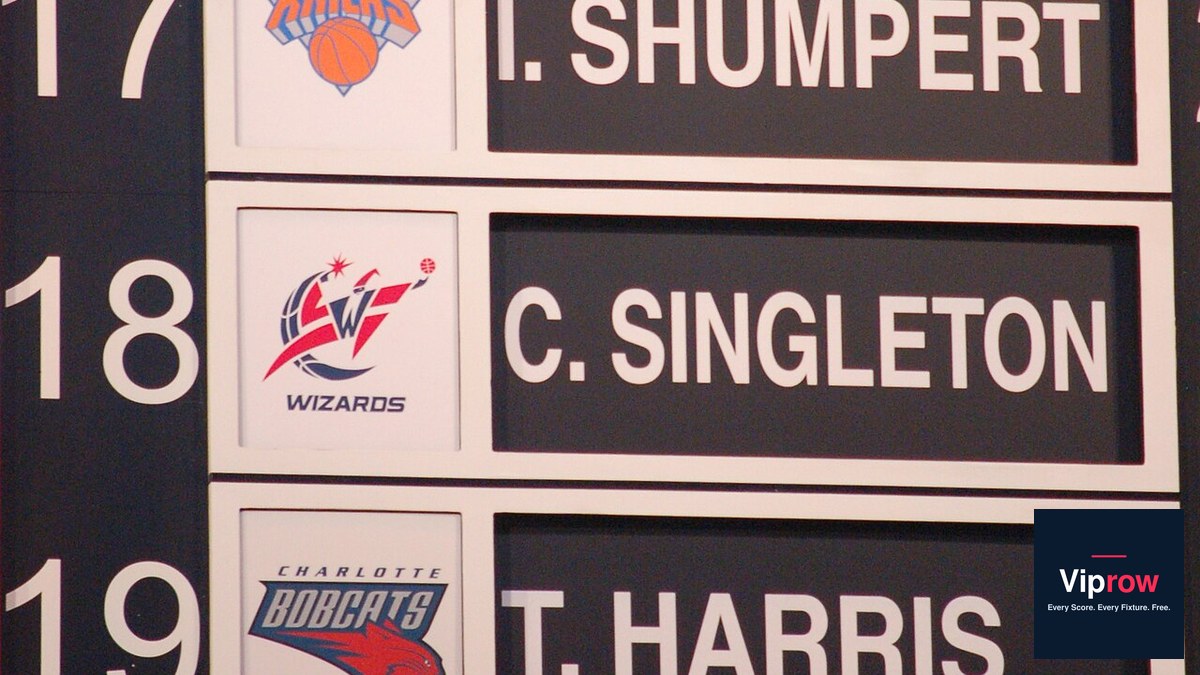
In NBA trades, draft picks are the future currency. Teams can trade first-round and second-round picks up to seven drafts into the future. In addition, they can trade pick swaps. They give one team the right to swap draft positions with another team in a given year.
The most famous pick rule is the Stepien rule. It is named after Ted Stepien. He owned the Cleveland Cavaliers in the early 1980s. He traded away several future first-round picks for veterans who did not deliver. As a result, the league made a rule. A team cannot be left without a first-round pick in two straight future drafts. In other words, a team can trade its first-round pick this year. But it must keep its pick next year. Unless it owns another team’s pick for that year.
Teams also protect picks. For example, a top-ten protected pick stays with the team if it lands in the top ten. The other team gets it only if it falls outside that range. However, all protections must still satisfy the Stepien rule. If a protected pick does not convey in one year. It often rolls over to a later year. Our guide to how the NBA draft works: picks, the lottery and trades explains picks and the lottery in full.
Who Can Be Traded and When
Not every player can be traded at any time. First, a player who signs a new contract as a free agent cannot be traded for at least three months, or until December 15. Whichever is later. For example, a free agent usually becomes tradeable on December 15. He signed in the summer. In the 2026-27 season, a player who signs from November 12 onward cannot be traded before the February 11 deadline. The three-month wait runs past it.
Second, a rookie who signs his first contract must wait 30 days before he can be traded. Similarly, a player on a two-way contract must wait 30 days after signing.
Third, a player who was just acquired in a trade can be traded again on his own right away. But he cannot be combined with another player’s salary in a new deal for two months.
Fourth, some players have extra protection. A player can only have a no-trade clause in his contract if he has played at least eight seasons in the NBA. He must also have played at least four seasons with the same team. If he has that clause, the team needs his consent before any trade. In addition, a player on a one-year contract can veto a trade. He will hold Bird rights with his team. Bird rights let a team re-sign its own player. Even when it is over the cap.
Sign-and-Trade Deals Explained

In a sign-and-trade, a team signs its own free agent to a new contract and then trades him to another team. This helps both sides. The player gets a bigger contract than the new team could offer on its own. His old team can use Bird rights to pay him more. Meanwhile, the old team gets players or picks back. Instead of losing him for nothing.
However, sign-and-trade deals have strict limits. First, only unrestricted free agents can be part of one. Second, the deal must be completed before the regular season starts. Third, the team that receives the player becomes hard-capped at the first apron. It cannot spend above that line for the rest of the season. Fourth, a team above the first apron cannot receive a player by sign-and-trade at all. As a result, these deals are mostly a summer tool, not a deadline tool. When you follow them, check the NBA scores today page. It shows how the new arrivals fit into their teams.
How to Read Trade News and Use a Trade Machine

Fans often test trade ideas on a trade machine. It is an online tool that checks whether a deal follows the CBA rules. The user picks the players and picks in the deal. The tool checks the salaries, the aprons, and the trade dates for each team. If the numbers work, the deal is legal. If they do not, it shows which rule fails.
However, a trade machine only checks the money and the dates. It cannot judge whether a deal is smart. For example, it will not tell you if a player fits a team’s system. It will not tell you if his contract becomes a problem in two years, or if a draft pick is likely to be high or low. Therefore, use the trade machine as a first check, not as a final verdict.
Trade news moves fast, so it helps to know what to look for. First, check the salaries. If the report says a team took back far more salary than it sent out. Ask how the deal passed the matching rules. Often the answer is cap space, a trade exception, or a third team that took on salary. Second, check the date. If a player signed in the summer, make sure December 15 has passed. Third, check the apron. If a team is above the second apron, it cannot aggregate salaries. So a two-for-one deal for a star is not possible.
When the postseason arrives, trades also shape the story. A deadline deal can turn a good team into a contender. Or it can break a team’s chemistry. To understand what those teams are chasing, read our guide to how the NBA playoffs work: play-in, seeds and the Finals explained. For the league’s official key dates and announcements, see NBA.com. In the end, every trade is a balance of talent, money, and timing. Keep five rules in mind: salary matching, the deadline, the aprons, one-year trade exceptions, and the Stepien rule. Then the next trade story you read will make far more sense.