How NFL Field Goals Work: Kicks, Extra Points and Two-Point Conversions Explained

An NFL field goal can win a game in the last seconds. It can also change a whole season. Yet many fans still ask how it works. This guide explains NFL field goals in plain words. You will learn what a field goal is worth. This guide also shows when teams kick and when they go for it. Extra points, two-point conversions, blocks, and wind are all covered too.
What Is an NFL Field Goal?
An NFL field goal is a kick through the goalposts. The kicking team scores three points when the ball passes between the uprights and above the crossbar. The ball sits on the ground, and a holder steadies it while the kicker strikes it. As a result, the play needs three players to work as one unit. If any part fails, the kick can miss or fall short.
Most field goals are placekicks. That means the holder places the ball on the ground and the kicker drives it through the air. In fact, the placekick is faster, safer, and far more exact. If you want the full picture of the sport first, read How the NFL Works: 32 Teams, 17 Games and the Road to the Super Bowl. You can check the kicking rules in the NFL rulebook.
How Many Points Is an NFL Field Goal Worth?
A made field goal is worth three points. That is less than a touchdown, which is worth six points. However, three points still change games. For example, a team that trails by two points can take the lead with one good kick.
The point total also shapes the scoreboard. A touchdown plus an extra point gives seven points. A touchdown plus a two-point conversion gives eight points. In contrast, a field goal gives only three points. Yet teams kick field goals often because drives stall. When an attack reaches the red zone but fails to score a touchdown, three points beat zero points. As a result, good teams bank field goals and keep pressure on the other side. That is why kickers matter so much.
The Kick: Snapper, Holder and Kicker
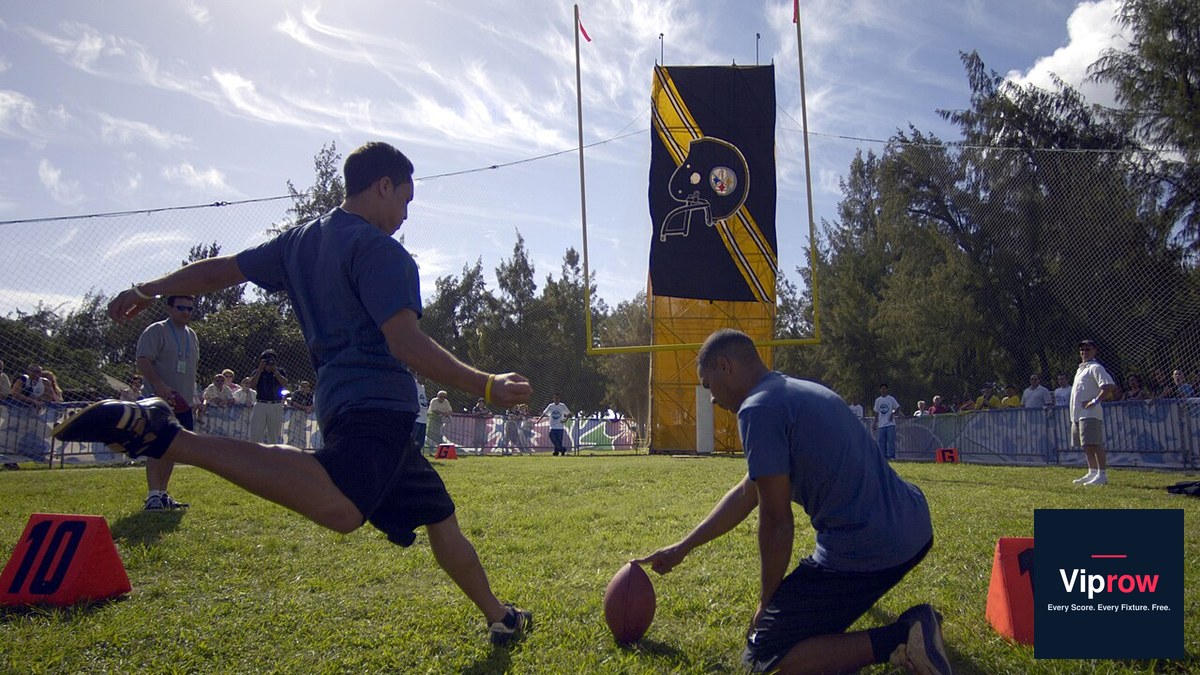
A field goal looks simple on television. In truth, it is a team play with three jobs. The long snapper snaps the ball back. Next, the holder catches it and places it down. Then the kicker runs up and strikes it. All three steps take about one second. If the snap is slow, the defence can rush in. A poor hold can tilt the ball. A rushed kicker can send the kick wide. Therefore, teams practise this unit every week.
The Snap and the Hold
The long snapper starts the play. He snaps the ball about seven or eight yards back to the holder. The snap must arrive fast and on target. Next, the holder catches the ball with both hands. He sets it on the ground with the laces facing forward. Finally, he holds one finger on top to keep it still.
The Kicker’s Steps
The kicker takes two or three steps back from the holder. Then he watches the snap and starts his run-up. He plants his non-kicking foot beside the ball. After that, he swings his kicking leg through the ball. As a result, the ball rises fast and flies straight.
When Teams Kick an NFL Field Goal
Teams kick a field goal when they are close enough to score but too far from the end zone to trust a touchdown play. In most cases, that means the ball sits inside the other team’s 35-yard line. From there, the kick is short enough to make. The down also matters.
The score and the clock shape the call too. If a team trails by three points late in the game, a field goal can tie it. If a team leads by one point, a field goal can stretch the lead to four. On the other hand, a team that trails by four points late in the game needs a touchdown, not three points. So coaches weigh the score before they send the kicking team out.
Fourth Down: Kick, Punt or Go for It?
Fourth down forces a choice. The team can kick a field goal, punt the ball away, or try to gain the yards it needs. Each choice has a clear purpose. A field goal tries to score three points. As a result, coaches think in terms of risk and reward.
Distance to the first down line is the first factor. If the team needs only one yard, going for it looks strong. If the team needs ten yards, a kick or a punt looks safer. Next, field position matters. Near the other team’s end zone, a field goal is the common call. For example, a team that trails late in the game may go for it on fourth down even from its own half. If a game goes past the end of regulation, the stakes change, so read How NFL Overtime Works: Possession Rules, Ties and Playoff Changes Explained to see how late kicks work in extra time.
How Distance Changes the NFL Field Goal Call
Distance is the biggest limit on NFL field goals. To work out the kick distance, add 17 yards to the line of scrimmage. So a kick from the 25-yard line is a 42-yard field goal.
Most kickers make short kicks with ease. Kicks under 30 yards succeed almost every time. Kicks from 40 to 49 yards are still strong chances. However, kicks from 50 yards and beyond test even the best kickers. The ball must travel further, so it spends more time in the air. As a result, wind has more time to push it off line. For that reason, coaches often punt or go for it when the kick would pass 55 yards. But a miss from long range gives the other team good field position. So the call is a balance between the chance to score and the cost of a miss.
Extra Points After a Touchdown
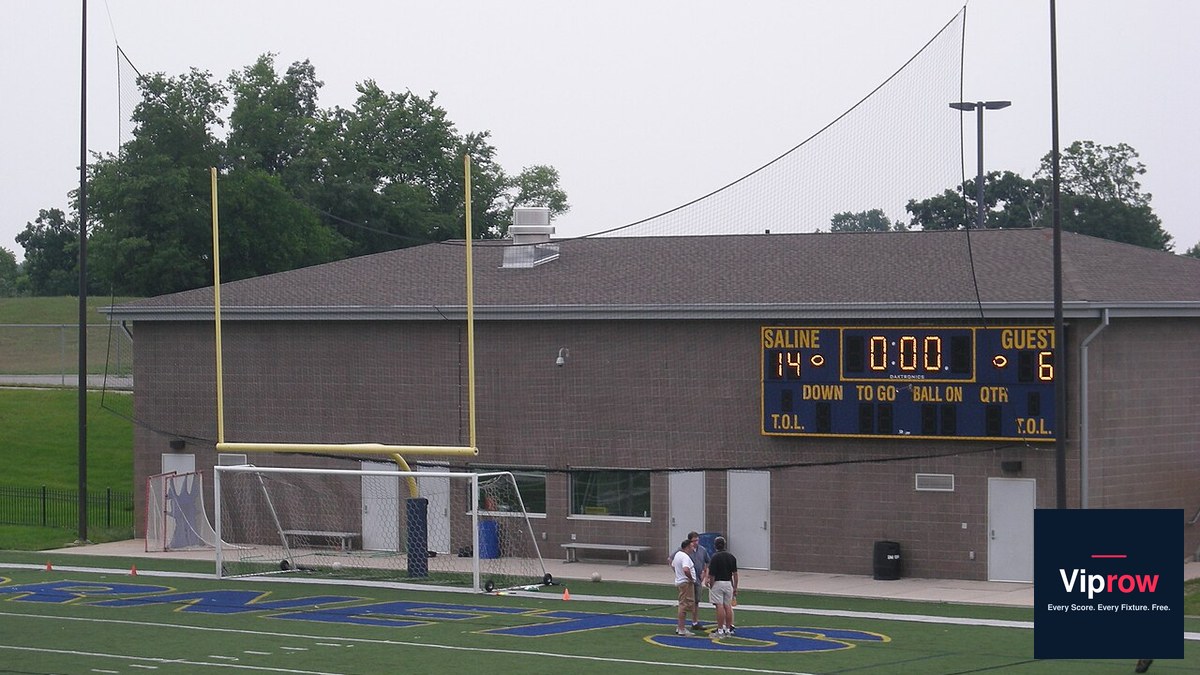
After a touchdown, the scoring team gets a try. It can kick an extra point for one point. The ball is placed at the 15-yard line, so the kick is 33 yards long. As a result, kickers now miss extra points more often than before. Still, most extra points succeed, and coaches treat the kick as the safe choice.
The try uses the same snap, hold, and kick as a field goal. The only difference is the distance and the stakes. A made extra point takes a touchdown from six points to seven. That total matters because seven points force the other team to match a touchdown, not just a field goal. However, coaches sometimes skip the kick. They may go for two points instead when the score demands it.
Two-Point Conversions: The Riskier Choice
A two-point conversion is a play from the two-yard line after a touchdown. The team runs one play from scrimmage. If it reaches the end zone, it scores two points instead of one. If it fails, it scores nothing extra. As a result, the conversion is a gamble.
Teams run or pass on the conversion. Coaches still choose it when the score makes two points more useful than one. For example, a team that trails by two points late in the game may need eight points from a touchdown to take the lead. In that case, the risk is worth it.
When the Two-Point Try Makes Sense
The scoreboard decides most two-point calls. A team that trails by eight points can tie the game with a touchdown plus two points. A team that leads by one point can stretch the lead to three with a conversion, but that is a small gain for a big risk. As a result, coaches often take the extra point when they lead. In contrast, a team that trails by two points late in the game has little to lose. It needs the lead, so it goes for two.
What Happens When an NFL Field Goal Misses?
A missed field goal does not always end the play. The result depends on where the kick lands. If the ball sails wide and crosses the end line, the play ends. Then the other team takes over at the spot of the kick or at its own 20-yard line, whichever helps it more. As a result, a long miss can hand the other team fair field position.
If the ball falls short and lands in the field of play, it stays live. The defending team can catch it and run it back. That is why the kicking team sends players downfield to tackle the returner. Still, coaches think about it before they call a long kick. A miss from 55 yards gives the other team the ball near midfield. That is a steep price.
Blocked Kicks and Returns
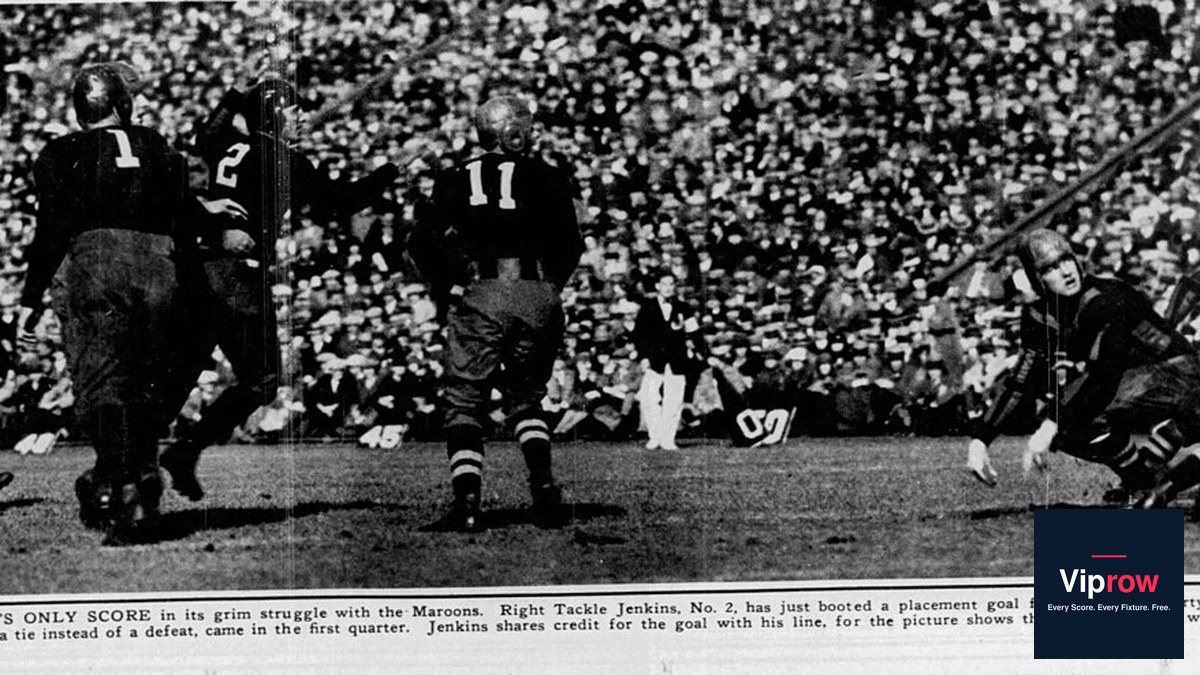
A blocked kick happens when a defender gets a hand on the ball as it leaves the holder. In most cases, the defence times its rush to jump the gap at the snap. If the block works, the ball drops short and stays live. Then either team can pick it up and run with it. As a result, a blocked kick can turn into a touchdown for the defence.
The kicking team tries to stop this with good protection. Up front, the line must hold its ground for about one second. Speed matters for the snapper too, so he must snap fast. Likewise, the holder must set the ball fast. And the kicker must kick fast. If any step is slow, the rush can reach the kick. On the other side, the defence studies the kicking team on film. A block is rare, but it is one of the most dramatic plays in football.
The Uprights, the Crossbar and the Goalposts
The goalposts sit at the back of each end zone. The crossbar sits 10 feet above the ground. Two uprights rise from the ends of the crossbar. They stand 18 feet 6 inches apart. The ball must pass between the uprights and above the crossbar to count.
The uprights also create strange bounces. A ball can hit an upright and still go through. That counts as a good kick. In contrast, a ball can hit an upright and bounce back into the field. That counts as a miss. Referees watch the flight of the ball with care. They stand under the posts and judge whether it passes inside the uprights. They are the final judge of every kick.
Icing the Kicker and Other Mind Games
Icing the kicker is a tactic, not a rule. Before the kick, the defending coach calls a timeout. The kicker must wait, think, and then kick again after the break. The aim is to break his focus. However, the tactic does not always work. Some kickers use the extra time to calm down. In fact, some kickers make the kick more often after a timeout.
The kicker also faces noise, weather, and pressure. A loud crowd can shake his focus. Wind can also move the ball. Pressure grows when the score is close. Yet the best kickers follow the same routine every time. That routine blocks out the noise. In addition, coaches can ice the kicker only once per kick in most cases, because each team has a small number of timeouts. Teams save it for the biggest kicks. For that reason, fans see icing most often in the last seconds of a close game.
Onside Kicks and the Kick After a Score
After a field goal, the scoring team kicks off to the other team. That kickoff starts the next drive. However, teams can try a surprise onside kick instead. An onside kick is a short kick that the kicking team tries to recover. The ball must travel at least 10 yards before the kicking team can touch it.
Onside kicks are rare and risky. Teams use them when they trail late and need the ball back fast. Every score leads to a kickoff, and every kickoff shapes the next drive. If you want to see how teams are built for these moments, read How the NFL Draft Works: Picks, Rounds and Trades Explained. And if you want to know how the season ends for the best teams, read How the NFL Playoffs Work: Seeds, Wild Card and the Road to the Super Bowl. Finally, if you want to watch the next game live, see How to Watch NFL Games Live Online Free in 2026.