How the Offside Rule Works in Football: Explained in Plain English
The offside rule in football explained in one minute
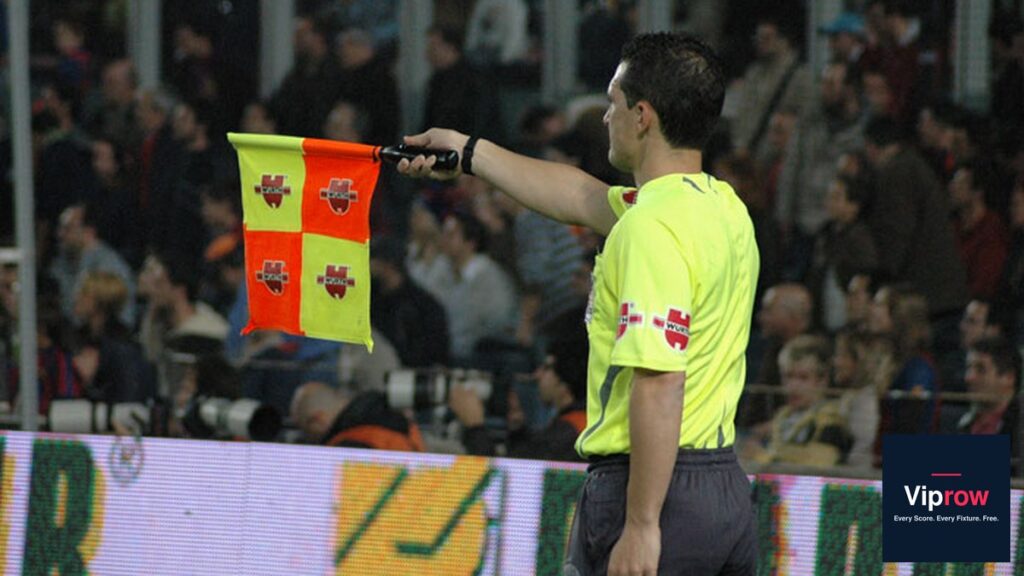
The offside rule in football explained in the simplest way is this. A player cannot wait behind the defence and then run on to a pass. You must be onside at the moment your team-mate plays the ball. If you are ahead of both the ball and the second-last opponent at that moment, and then you get involved, the referee stops play.
Yet the rule is not that simple. Standing in an offside position is not an offence on its own, and the referee judges the position at the moment of the pass, not when you receive the ball. As a result, many fans shout for offside at the wrong time. This guide works through Law 11. By the end, you will know when the flag should go up, when play should carry on, and why VAR takes so long over tight calls.
What counts as an offside position

Football’s rules come from the International Football Association Board, known as IFAB. Law 11 is the offside law, and every major competition uses the same text. Law 11 asks two separate questions. First, was the player in an offside position? Second, did they then commit an offence? Both answers must be yes before the whistle. That two-step test is the key to the whole rule. Position alone is never enough.
A player is in an offside position when three things are true at once. First, some part of the player’s head, body, or feet is in the opponents’ half. Second, that part is nearer to the opponents’ goal line than the ball. Third, it is also nearer to the goal line than the second-last opponent. If any one of them fails, the player is onside. All of this is judged at the moment a team-mate plays the ball, not when the attacker receives it.
The second-last opponent
The second-last opponent is usually the last outfield defender, because the goalkeeper is normally the last opponent. But the law counts people, not shirts. If the goalkeeper has rushed out, two outfield defenders may be the last two opponents. In that case, the attacker must stay behind the second of them.
Which body parts count
Only body parts that can legally score count: the head, torso, legs, and feet. Hands and arms do not count for any player, including the goalkeeper. So a striker cannot be offside by a hand.
Level means onside, and your own half is safe
If any scoring body part is level with the second-last opponent, the attacker is onside. If the attacker is behind the ball when the pass is played, the attacker is onside too. A player cannot be in an offside position in their own half, and the halfway line counts as your own half.
Why being in an offside position is not an offence
Law 11 states this point in plain terms. Being in an offside position is not an offence in itself. A player can stand behind the whole defence and break no law at all, as long as they stay out of the play. The whistle only comes when that player becomes involved in active play. This is sometimes called passive offside.
Think of a winger standing near the far post while the ball is on the other side of the pitch. The winger is in an offside position. Yet the winger touches nothing and blocks nobody. Play goes on. The moment the ball is played towards the winger, the winger is involved, and the offence is complete. Until that moment, the position alone means nothing.
This rule also protects attacking football. Without it, a striker who drifted offside for one second would kill every attack, even if the ball went nowhere near them. Instead, the law lets play flow until the offside player truly affects the game.
The three ways a player commits an offside offence
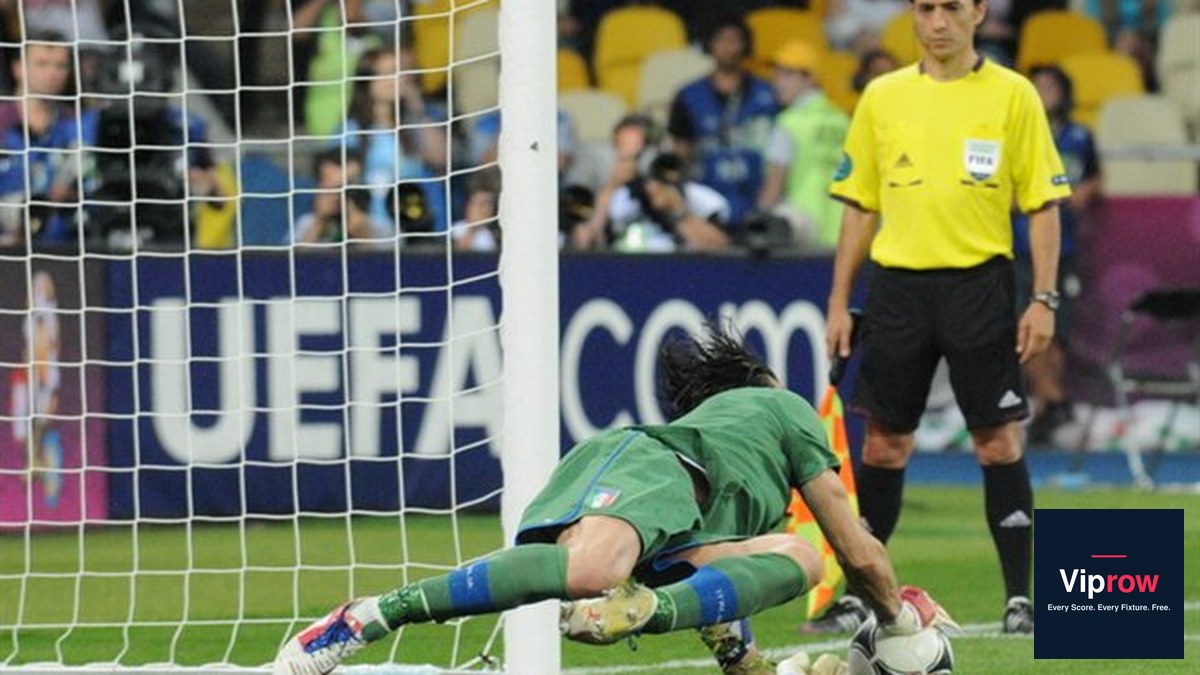
A player in an offside position commits an offence by becoming involved in active play in one of three ways: interfering with play, interfering with an opponent, and gaining an advantage.
Interfering with play
This is the most common type, and the easiest to spot. The player in an offside position plays or touches a ball passed or touched by a team-mate. A striker runs on to a through ball, takes a touch, and shoots. The flag goes up, and the goal does not count.
Interfering with an opponent
This type is harder, because the player may never touch the ball. A player interferes with an opponent in four ways under Law 11. First, they block an opponent’s line of vision. Second, they challenge an opponent for the ball. Third, they clearly try to play a ball close to them, and that affects an opponent. Fourth, they make an obvious action that affects an opponent’s ability to play the ball.
A clear example is a striker standing in front of the goalkeeper when a shot comes in. The striker does not touch the ball, but the goalkeeper cannot see it. That is an offence. If the action clearly affects the opponent, the flag goes up.
Gaining an advantage
The third type covers rebounds and saves. A player in an offside position gains an advantage by playing a ball that has rebounded or been deflected off the goalpost, the crossbar, a match official, or an opponent. The same rule applies after a deliberate save. Picture a striker in an offside position when a team-mate shoots. The keeper saves, the ball falls to the striker, and the striker scores. The goal does not count. The rebound completes the offence instead.
When there is no offside offence
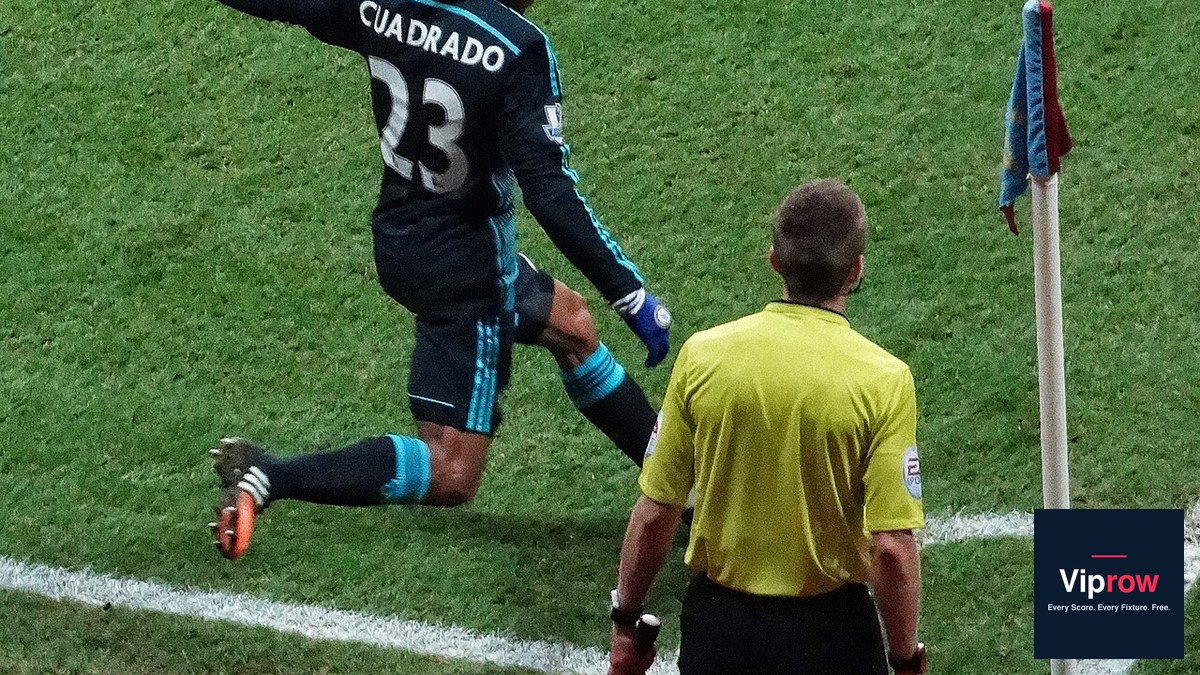
Law 11 lists three restarts with no offside offence at all. A player cannot be penalised for receiving the ball directly from a goal kick, a throw-in, or a corner kick. The word directly matters. The exemption covers the first receiver only, and normal rules return for the next pass.
A striker can stand behind the whole defence at a goal kick. If the ball reaches the striker directly, there is no offence. A long goal kick can find a forward high up the pitch. But the protection ends at once. If the striker lays the ball back and a team-mate then plays it forward, the usual test applies to that pass.
The same rule covers throw-ins and corners. A player can receive a throw-in while standing behind the last defender. At a corner, a player can stand beyond the defence and head the ball towards goal. After that touch, though, the law applies again. If the corner is cleared and then crossed back in, every attacker must be onside at the moment of the cross.
Free kicks are not on the list, and this point catches many people out. A player can be offside directly from a free kick, even a quick one. The same rule applies to a dropped ball. Only the goal kick, the throw-in, and the corner carry the exemption.
Deliberate play, deflections and saves
One more twist decides many goals. If an opponent deliberately plays the ball to an attacker who was in an offside position, that attacker is not penalised. A deliberate play is a controlled action, such as a pass or a clearance. That choice resets the offside phase.
A deflection is not a deliberate play. If the ball bounces off a stretching defender without control, the offside position still stands. The difference is control. A stretched leg that only deflects the ball does not reset anything.
A deliberate save is the one exception to the reset. If an opponent saves the ball, the offside attacker is still penalised if they play the rebound. A save is different. The keeper stopped a shot heading for goal, and that act does not give the offside attacker a free chance at the rebound.
What happens after the flag
When offside is given, the restart is an indirect free kick to the defending team, taken where the offence happened, even in the offending player’s own half. Offside is not a foul, and it is not misconduct. No card is shown for offside alone. The punishment is simply the loss of the attack.
At the top level, the assistant often delays the flag until the phase is complete, especially when a goal may follow. The delay lets VAR check the whole phase if needed. It can look strange, because play carries on for seconds after an obvious offside. Yet the delay protects goals, since an early flag could kill a legal attack.
How VAR checks an offside decision
VAR checks offside as a factual decision, not as a matter of opinion. For most fouls, VAR only steps in for a clear and obvious error. For offside, the check is about facts. Was the attacker ahead of the line at the moment of the pass? VAR can correct it, because the answer is either yes or no. If you want the wider picture of how video checks work, read our guide on how VAR works in football.
The VAR follows a set order. First, the VAR finds the moment of the pass, the kick point. Second, it places the line at the second-last opponent. Third, it checks the attacker’s furthest scoring body part. Fourth, it checks whether the player became involved. But if the player never touches the ball and never affects an opponent, there is no offence. VAR also checks the phase before a goal, since a goal after an offside offence in the same phase is ruled out.
Semi-automated offside and the daylight trial
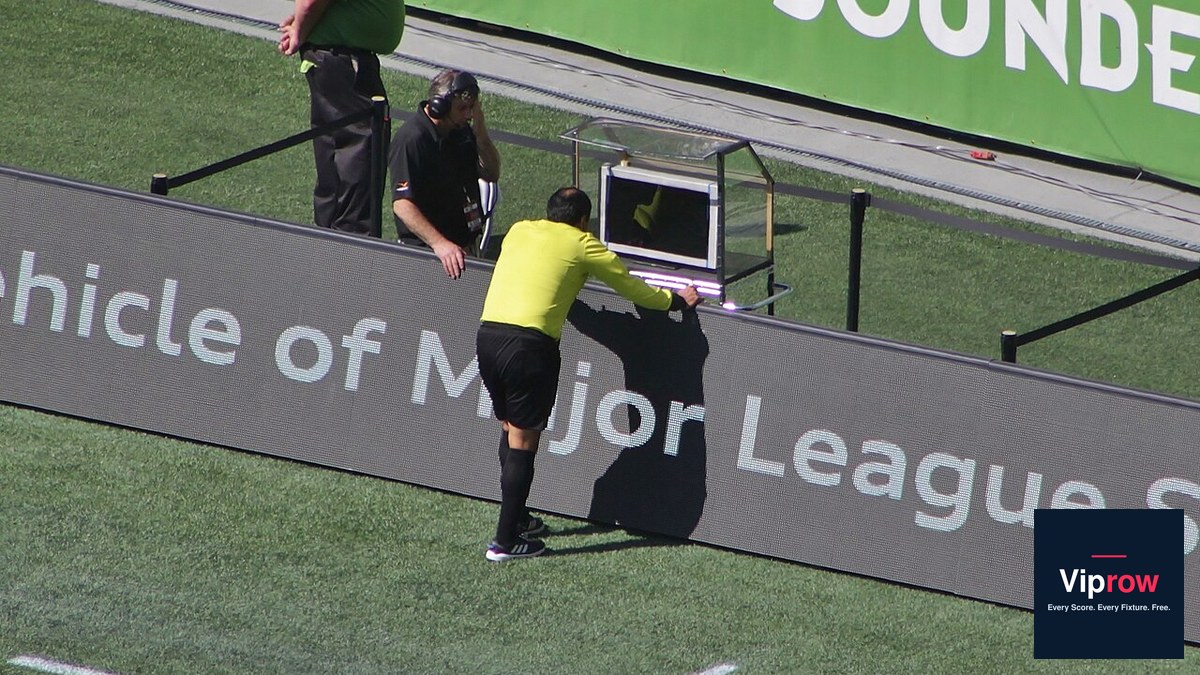
Semi-automated offside technology, often called SAOT, helps VAR draw the offside line faster and more steadily. It was first used at the 2022 World Cup in Qatar. The Premier League then brought it in during the 2024-25 season, starting from Matchweek 32 on 12 April 2025. Cameras around the stadium track the players and the ball, and the software draws the virtual lines and builds a graphic for fans. The Premier League uses 30 cameras in each stadium, working with PGMOL and Genius Sports.
The system does not decide on its own. A human VAR still reviews the image, confirms the kick point, and confirms whether the player became involved. It speeds up line drawing, which used to be done by hand. It does not change Law 11, and it does not change what counts as offside. A toe offside is still offside, and a level player is still onside. So the debate about toenail offsides is about the law, not the cameras.
The best-known proposal to change the law is the daylight idea, linked to Arsene Wenger, FIFA’s Chief of Global Football Development. Under it, an attacker would only be offside if their whole body was ahead of the second-last defender. Any scoring body part level with the defender would mean onside. There would need to be clear daylight between attacker and defender before the flag went up. The aim was to favour attacking play.
FIFA and IFAB approved a trial in the Canadian Premier League, starting on 4 April 2026. It was the first professional competition to test the idea across a full season. Reports said offside calls fell sharply and more goals were scored. Even so, the trial has not changed the law anywhere else. Reports in October 2026 said IFAB’s technical panels gave it little backing. As of now, Law 11 still applies everywhere. The daylight rule is a trial, not a change.
How to watch offside like a referee
Watch it in order to learn the rule. First, find the moment of the pass. Second, find the second-last opponent. Third, check the attacker’s furthest scoring body part. Fourth, ask whether the attacker touched the ball or affected an opponent. If not, play goes on. If so, the flag goes up.
Watch the passer, not the receiver. Look at the defender’s body, not their outstretched arm. Remember that a player behind the ball is always onside. Over time, the flag stops looking random, and tight VAR calls start to make sense.
Our Premier League table guide explains the points race, and our matchday guide helps you follow every game. When a goal is ruled out, check the football fixtures page for the next match, and read our Champions League explainer to see how the same law works in Europe.
For the official wording, read Law 11 in the Laws of the Game.