Formula 1 tyre strategy decides races. In fact, it often matters as much as raw speed. A fast car on the wrong tyre plan can lose a race. Meanwhile, a slower car on the right plan can gain places. Therefore, every team spends hours on tyre choices before a race starts.
This guide explains formula 1 tyre strategy in plain terms. You will learn about the compounds, pit windows, and the two-compound rule. You will also learn how teams use the undercut and the overcut. By the end, you will spot strategy calls as they happen.
What Is Formula 1 Tyre Strategy?
Tyre strategy is the plan for which tyres a car uses and when it changes them. Teams pick a start tyre. Then they pick a time to stop. After that, they pick the next tyre. In short, the plan links three things: grip, life, and timing.
Grip is how much stick the tyre gives. More grip means faster laps. Life is how long the tyre keeps working well. A tyre with high grip often wears out fast. On the other hand, a tyre with long life is often slower. So teams must find a balance. They trade speed now for speed later.
Teams plan with data. They test tyres in practice and run computer models, then they pick the best few plans. Weather and crashes can still change the plan. Qualifying sets the grid, and the grid shapes the tyre plan. If you want to understand the race weekend as a whole, start with how Formula 1 qualifying works, including Q1, Q2, Q3 and the sprint.
The Five Dry Compounds: C1 to C5
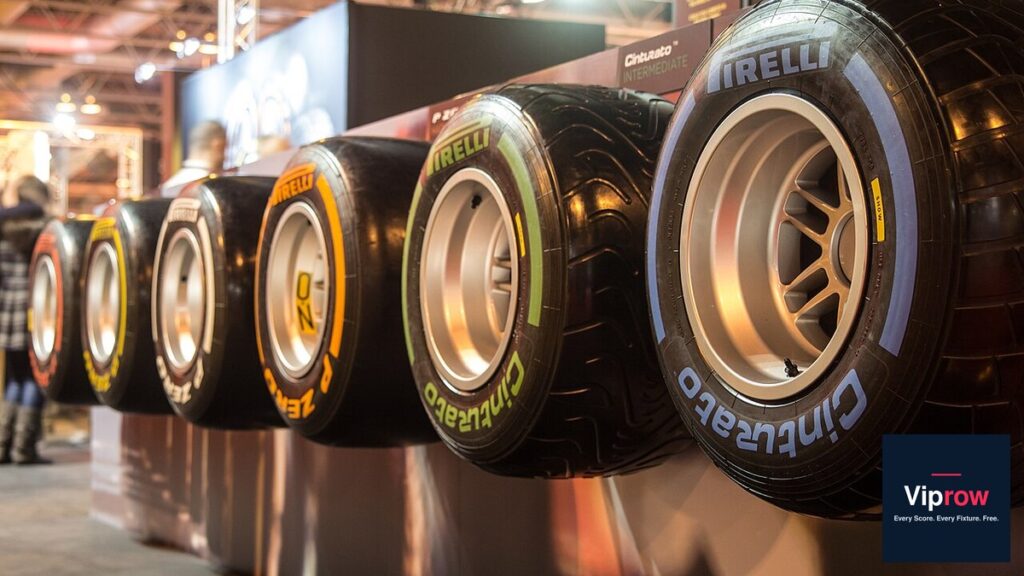
Pirelli supplies all the tyres, so every team uses the same tyres.
Pirelli makes five dry compounds, from C1 to C5. C1 is the hardest compound. C5 is the softest compound. In between sit C2, C3, and C4. Harder compounds last longer. Softer compounds give more grip. As a rule, softer means faster but shorter-lived. Harder means slower but longer-lived.
At each race, Pirelli picks three of the five compounds. The softest of the three becomes the soft tyre for that weekend. The middle one becomes the medium tyre. The hardest one becomes the hard tyre. So the labels change from race to race. Each track wears tyres in a different way, so Pirelli matches the range to the track.
The compounds use colour markings. Soft tyres have red markings. Medium tyres have yellow markings. Hard tyres have white markings. You can spot the colour on the sidewall, and it helps fans follow the strategy. For a closer look at how pit stops fit into the plan, read how Formula 1 pit stops work, from strategy and tyres to the two-second stop.
Soft, Medium and Hard: What Each Tyre Does
The soft tyre gives the most grip. It warms up fast. It also gives the best lap times. For that reason, teams use it in qualifying. In a race, it suits a short first stint or a late charge. However, it wears out fast, so a long run on soft tyres is risky.
The medium tyre sits in the middle. It gives good grip, and it also lasts a fair time. As a result, it is the most common race tyre. Many teams start on the medium. In short, the medium is the safe choice.
The hard tyre gives the least grip of the three, yet it lasts the longest. Teams use it for long stints. It suits tracks that wear tyres fast. The hard tyre may lose time each lap, but it gains time by needing fewer stops.
Temperature changes everything. Hot tarmac wears tyres faster. Cold tarmac makes warm-up harder. Therefore, teams watch the weather with care. A smooth track is gentle on tyres, while a rough track eats them.
Wet Weather Tyres: Intermediates and Full Wets

Rain changes tyre strategy at once. Dry tyres cannot work on a wet track, so Pirelli makes two wet tyres.
The intermediate tyre has green markings. Teams use it on a damp track. It clears some water, and it keeps decent grip. In light rain, it is the best choice. It wears out fast if the track dries, so teams must time the switch with care.
The full wet tyre has blue markings. Teams use it in heavy rain. It clears much more water, and it keeps the car stable in deep puddles. But it is slow on a drying track, and it also wears out fast on dry tarmac. As a result, teams use it only when rain is heavy. When the rain eases, teams switch to intermediates, then to dry tyres.
Wet races break the normal rules, because the two-compound rule does not apply when a race is declared wet. Rain rewards bold calls. For more on how the sport keeps drivers safe, see Formula 1 safety explained, from the halo and HANS to how the sport protects drivers.
The Two-Compound Rule Explained
The two-compound rule is a key part of formula 1 tyre strategy. In a dry race, each driver must use at least two different dry compounds. For example, a driver can start on soft tyres and finish on medium tyres. Or a driver can start on medium tyres and finish on hard tyres. Either way, two compounds must appear during the race.
This rule forces at least one pit stop in a dry race, so teams must plan a stop, pick the right lap, and pick the right second compound.
There is one big exception. The rule does not apply when the race is declared wet. If drivers use intermediate or full wet tyres at any point, the rule lifts. The race director declares wet conditions, then teams adjust their plans at once.
Pit Windows: When to Stop
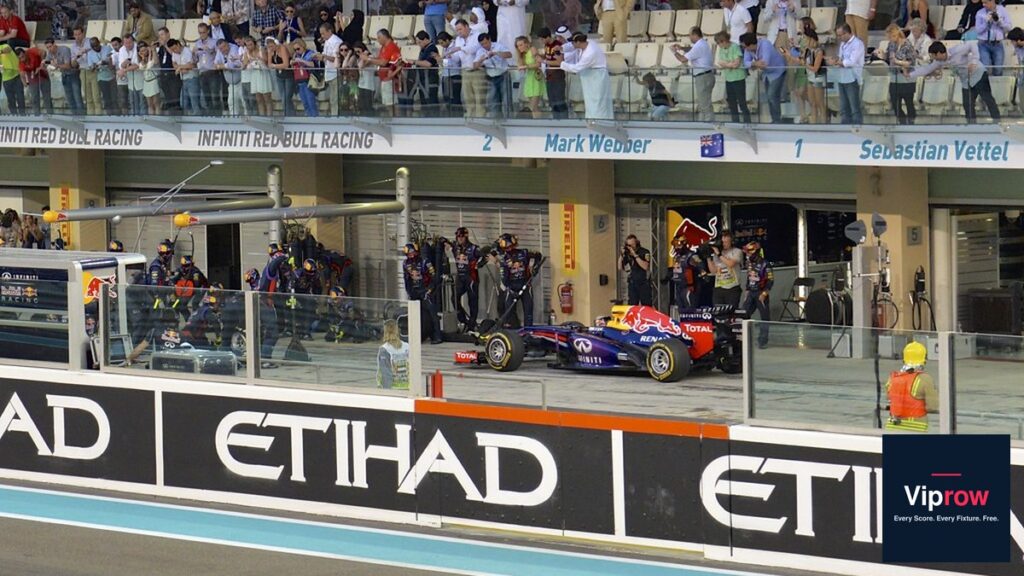
A pit window is the range of laps when a stop makes sense. It opens when the current tyres start to lose pace. It closes when the next tyre would not gain enough time. Teams watch lap times lap by lap. When the pace drops, the window opens. Then the team calls the driver in.
A soft tyre opens its window early, a medium tyre later, and a hard tyre latest of all. The window moves as the race unfolds.
Traffic affects the window too. A car that pits into traffic loses time, while a car that pits into clear air gains time. Therefore, teams watch the gaps and wait for clear air before they call the stop.
A safety car can cut the cost of a stop, because the field bunches up, so teams often pit then.
One Stop or Two Stops?
Most races use one or two stops. The choice depends on tyre wear and on the track.
A one-stop plan saves time in the pit lane. Each stop costs about twenty seconds or more. That time includes the drive through the pit lane and the stop itself. So fewer stops mean less lost time. However, a one-stop plan needs long tyre life. If the tyres fade, the car loses more time on track than it saved in the pits.
A two-stop plan uses fresher tyres. Each stint is shorter, so the car runs faster on each set. But it pays the pit lane cost twice. This plan suits tracks with high tyre wear. It also suits races where the soft tyre is much faster. In those races, fresh soft tyres gain more time than the stop costs. Teams pick a base plan before the race, then they stay ready to switch. A safety car can turn a two-stop plan into a one-stop plan.
The Undercut and the Overcut
The undercut is one of the best-known moves in formula 1 tyre strategy. A driver pits earlier than the rival ahead. The driver takes fresh tyres, then sets fast laps on clear track. When the rival pits later, the driver has already gained time. As a result, the driver jumps ahead. This move works best when fresh tyres give a big speed gain and the pit lane loss is small.
The undercut needs clean air, so teams check the gaps first. Timing is everything: a lap too early wastes tyre life, and a lap too late misses the chance.
The overcut is the opposite move. A driver stays out longer than the rival. The driver runs on old tyres, but the driver runs in clear air. Meanwhile, the rival pits and rejoins in traffic. The rival loses time behind slower cars. Then the driver pits later onto fresh tyres and rejoins ahead. This move works when the old tyres still have pace and traffic is heavy behind.
Both moves show why tyre strategy matters so much. A race is not just about speed. It is about timing. A smart call can beat a faster car, and a slow call can lose a race to a slower car.
Tyre Wear: Graining, Blistering and Heat

Tyres wear in several ways. Teams watch for graining, blistering, and thermal wear. Each type hurts grip. Each type has a cause, and each type needs a different fix.
Graining happens when small bits of rubber roll across the tyre surface. The tyre slides instead of gripping. Then rubber builds up in ridges, and the tyre loses grip. Graining often happens on a cold track. It also happens when a driver pushes too hard on cold tyres. The driver must slow down and let the tyre clean up, or the team must pit for fresh tyres. Graining often clears if the driver backs off for a few laps.
Blistering happens when heat builds up inside the tyre. Small bubbles form under the surface. Then chunks of rubber break away, and the tyre loses grip fast. Blistering often happens on a hot track. It also happens when a driver slides the car a lot. If blistering gets bad, the team must pit.
Thermal wear covers grip loss from heat over a stint. As a tyre runs, it heats up. The rubber softens, then grip falls away. This wear is normal. Every tyre loses pace over time. The question is how fast. Teams measure this drop in practice, and strategy follows it. Smooth driving saves tyres, while hard braking and sliding wear them fast. A car in clean air also saves its tyres.
How to Follow Tyre Strategy While You Watch
You can follow tyre strategy live with a few simple habits. First, note the start tyre of each driver. The TV graphic shows it. Soft means attack. Medium means balance. Hard means a long first stint. This one fact tells you the early plan.
Second, check the tyre graphic after each stop. The colour tells you the compound. Red means soft. Yellow means medium. White means hard. Green means intermediate. Blue means full wet.
The sprint weekend adds a twist. A sprint race is shorter than a full race. The short length limits the choices, yet a smart tyre call can gain places. To learn how the sprint weekend works, read how the Formula 1 sprint weekend works. Points also shape tyre calls. A team fighting for a win may try a bold two-stop plan. A team protecting a lead may play safe with a one-stop plan. If you want to see how points add up across a season, read how Formula 1 points and the championship work. You can read more at Formula 1.
Conclusion: Tyres Win Races
Formula 1 tyre strategy is a mix of science and instinct. Teams use data, models, and weather forecasts. Yet they also use judgment. A race can change in seconds. A safety car can appear. Rain can fall. A rival can try a bold move. The best teams adapt fast.
The key facts are simple. Pirelli supplies five dry compounds, C1 to C5. At each race, three become soft, medium, and hard. Soft tyres are fast but short-lived. Hard tyres are slow but long-lived. Medium tyres sit in between. Wet tyres handle rain. The two-compound rule forces at least one stop in a dry race. Pit windows open when tyres fade. The undercut and the overcut turn timing into places gained. Next time you watch a race, follow the tyres.
3 thoughts on “How Formula 1 Tyre Strategy Works: Compounds, Pit Windows and the Two-Compound Rule Explained”