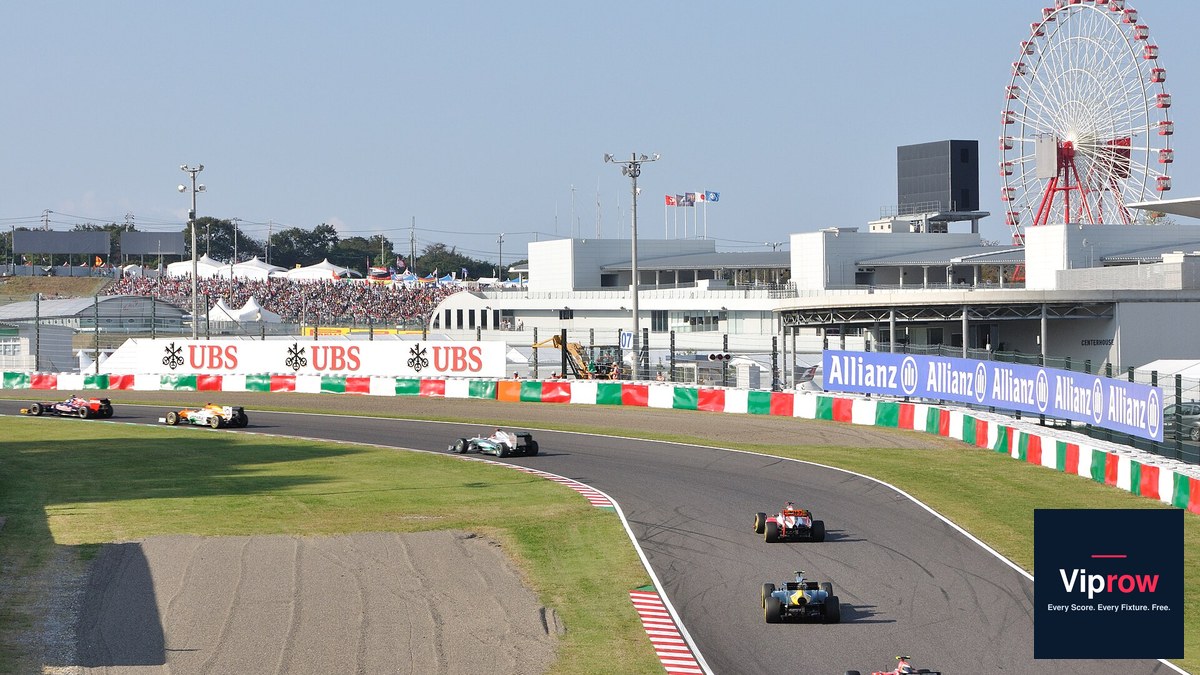
An F1 sprint race is a short, sharp Saturday race that pays championship points. It covers 100 kilometres, lasts about 30 minutes, and gives fans a real race on every day of the weekend. If you only know the Sunday grand prix, this guide explains the full sprint format in plain terms.
Formula 1 added the sprint in 2021 to give each day of a race weekend real meaning. The 2026 season runs six sprint weekends across a 24-race calendar. Formula 1’s own beginner’s guide to the F1 Sprint covers the same format.
1. What Is an F1 Sprint Race?
An F1 sprint race is a short race held on Saturday at selected grand prix weekends. It runs for 100 kilometres, which is about one third of a normal grand prix distance. As a result, the whole race usually takes around 30 minutes from lights out to the chequered flag.
The sprint is a real race, not a practice session. Drivers fight for position from the first corner, and the top eight score points under the usual racing rules.
Unlike a grand prix, an F1 sprint race has no mandatory pit stop. Drivers can choose any tyre compound, and most run the full distance on one set.
Only six weekends in 2026 use the sprint format. The other 18 follow the normal timetable.
2. Why Formula 1 Added the F1 Sprint Race
Before 2021, Friday and Saturday morning offered only practice sessions. Fans at the track paid full price, yet they saw no real racing until Saturday afternoon. So Formula 1 wanted competitive action on each day.
The sport also wanted more wheel-to-wheel racing on television. A short Saturday race gives broadcasters a second live event and fans a reason to watch from Friday onwards.
The first sprint took place at Silverstone in July 2021, and that season ran three sprint events. The number grew to six in 2023, and Formula 1 has changed the session order twice since then.
3. The F1 Sprint Weekend Timetable
A normal weekend gives teams three one-hour practice sessions, but a sprint weekend cuts that to just one hour. As a result, teams must learn the track fast.
Friday starts with that single practice session, known as FP1. Later on Friday, sprint qualifying sets the grid for the sprint race.
Saturday opens with the sprint in the morning, then grand prix qualifying takes place later that day.
Sunday stays the same, with the grand prix as the main event over the full race distance. Fans still get the big race they came for, plus an extra race the day before.

4. Friday: One Practice Session and Sprint Qualifying
FP1 is the only practice session of a sprint weekend, and it lasts 60 minutes. Engineers use it to test the setup and check tyre wear. Meanwhile, drivers must find the limit fast, because there is no second chance.
After FP1, sprint qualifying decides who starts where in the sprint. It follows the same knockout idea as normal qualifying, but each stage is shorter, so drivers get very little time to set a fast lap.
How SQ1, SQ2 and SQ3 Work
Sprint qualifying has three stages: SQ1 lasts 12 minutes, SQ2 lasts 10 minutes, and SQ3 lasts eight minutes. After SQ1, the six slowest drop out, and after SQ2, six more drop out. Then the ten fastest fight for sprint pole.
Tyre choice is fixed: new medium tyres in SQ1 and SQ2, then soft tyres in SQ3. Each driver can use only one set per stage, so most get just one flying lap.
5. Saturday Morning: The F1 Sprint Race Itself
Saturday morning starts with a standing start, just like a grand prix. Twenty-two cars launch off the grid, and the first corner often decides the race. After that, drivers push flat out.
The sprint has no planned pit stops and no slow build-up. Instead, drivers attack from the first lap, and overtakes happen through the whole race.
How Long Is an F1 Sprint Race?
An F1 sprint race covers 100 kilometres, about one third of a grand prix. The lap count changes with the circuit, so in practice that means roughly 17 to 24 laps.
The race usually lasts about 30 minutes, but the rules set a maximum of one hour. That limit can stretch to 90 minutes if the race is stopped and restarted.
Most drivers finish on the same tyres they started on, and they stop only for damage, a puncture, or wet tyres if rain arrives.
Safety car rules work as in a grand prix. If a car crashes or the track turns unsafe, the safety car bunches the field up again. Our guide to how Formula 1 safety cars work explains the full procedure.
6. Saturday Afternoon: Grand Prix Qualifying
After the sprint, grand prix qualifying begins. It follows the normal format, with Q1 lasting 18 minutes, Q2 lasting 15 minutes, and Q3 lasting 12 minutes.
Grand prix qualifying sets the grid for Sunday’s race, and nothing else decides it. Many new fans assume the sprint sets the Sunday grid, but in fact the two grids come from two separate sessions.
Why the Sprint Result Does Not Set the Sunday Grid
The F1 sprint race has been a standalone race since 2023, so its result never decides the Sunday grid. A driver can win the sprint on Saturday morning and still start tenth on Sunday.
This split keeps the two races fair and separate: the sprint rewards Saturday speed, while qualifying rewards one-lap pace. To see the normal session in detail, read our guide to how Formula 1 qualifying works.

7. F1 Sprint Race Points: Who Scores and How Much
Points in an F1 sprint race go to the top eight finishers. The winner scores eight points, second place scores seven, and the total drops by one point per place down to one point for eighth: 36 points in all.
Those points count towards both championships, just like grand prix points. A sprint win helps a driver in the title race and the team in the constructors’ standings.
A grand prix pays more, with 25 points for the winner and points down to tenth place. Even so, eight sprint points can change a championship fight. For the full scoring system, see our guide to how Formula 1 points and the championship work.
There is no extra point for the fastest lap in a sprint. The top three receive a plaque in parc ferme, but they do not stand on an official podium.
8. Parc Ferme on an F1 Sprint Weekend
Parc ferme is the rule that locks a car’s setup once competitive running starts. After that point, teams cannot change the suspension, wings, or other key parts.
On a sprint weekend, the lock works in two separate windows. That split is one of the biggest differences from a normal weekend.
What Teams Can and Cannot Change
The first parc ferme window starts with sprint qualifying on Friday and covers the sprint race. However, the lock lifts after the sprint ends.
That break gives teams a rare chance to fix their setup before grand prix qualifying. Then the second parc ferme window starts with qualifying on Saturday and runs through the Sunday race.
9. Tyres, Pit Stops and Strategy in an F1 Sprint Race
Tyre rules in a sprint are simple and free. Drivers can start on any compound, and there is no rule that forces them to use two compounds. In addition, there is no mandatory pit stop.
Most drivers pick one set of tyres and run it flat out for 100 kilometres. Soft tyres give the best grip at the start, while medium tyres last longer.
Teams get fewer dry tyres on a sprint weekend: 12 sets instead of the usual 13, split into two hard, four medium, and six soft sets.
Strategy in a sprint is mostly about track position, since overtaking matters more than pit timing. To see how stops work in a full race, read our guide to how Formula 1 pit stops work. For the compounds in detail, see our guide to how Formula 1 tyre strategy works.
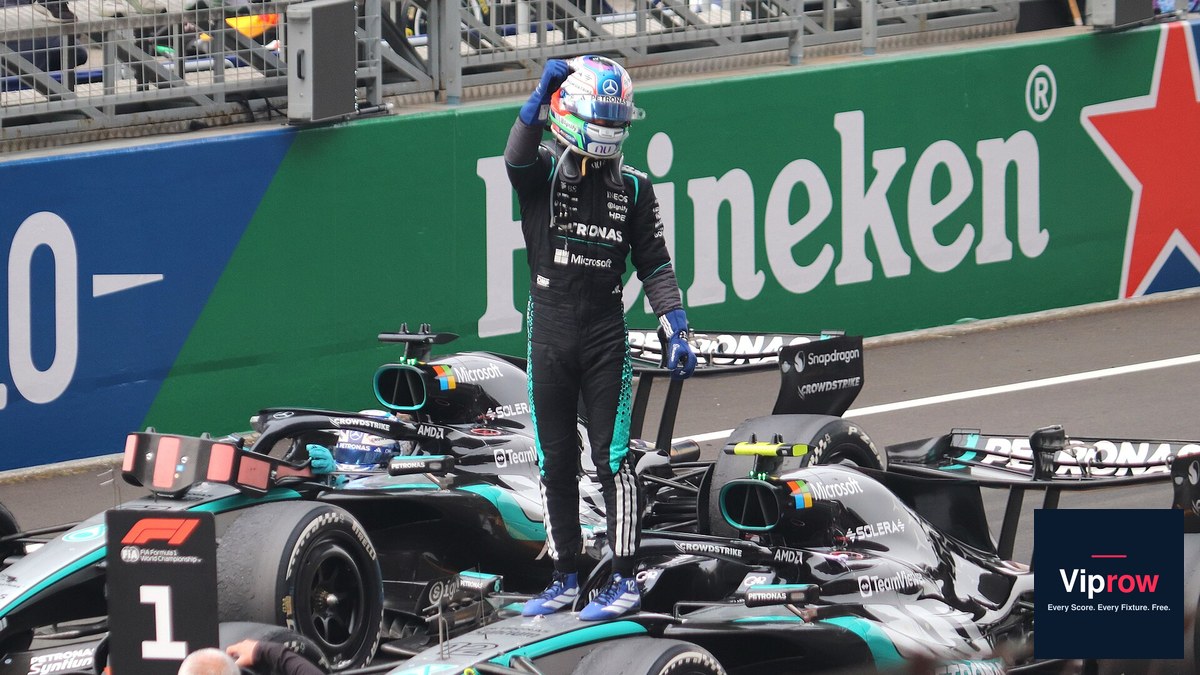
10. DRS and Overtaking in an F1 Sprint Race
Overtaking in sprints worked through DRS for many years. A chasing driver could open the rear wing flap in a marked zone if they crossed the detection point within one second of the car ahead. From 2024, race control could enable DRS after just one lap.
That rule suited the sprint, because the race is short and drivers cannot wait for chances. As a result, DRS helped to keep the field close and the racing sharp.
What Changed for 2026: Active Aero and Overtake Mode
Formula 1 dropped DRS for the 2026 season, when the new technical rules arrived. The new cars use Active Aero, which cuts drag on straights, and Overtake Mode, which gives a chasing driver extra electrical energy. The one-second test still applies.
To learn the old system in full, read our guide to how Formula 1 DRS works.
11. How an F1 Sprint Race Changes the Championship Fight
An F1 sprint race adds real points to the championship, so it can change a title fight in half an hour. A rival who wins the sprint gains eight points, while a rival outside the top eight gains none.
Midfield teams value sprint points just as much. A single point for eighth place can lift a team in the constructors’ standings, and that place can be worth millions in prize money.
The 33-Point Maximum Weekend
A driver who sweeps a sprint weekend can score 33 points in total: eight for the sprint win plus 25 for the grand prix win. In other words, a perfect sprint weekend pays eight points more than a normal weekend.
Across six sprint weekends, those extra points add up fast. A driver who scores well in sprints can build a gap, while a driver who ignores them can fall behind.
12. The Fan Debate: The Case For and Against F1 Sprint Races
Fans still argue about the sprint, and both sides have fair points. Some fans love the extra racing, while others think it weakens the main event.
What Fans Love About the F1 Sprint Race
Fans who support the sprint point to the action first. Every day of the weekend has a session that matters, so a Friday ticket feels worth the money. In addition, the short race creates bold overtakes.
Smaller teams also get a real chance to score. A midfield driver can fight for sprint points on merit, and that gives fans of every team something to cheer.
What Critics Say About the F1 Sprint Race
Critics say six extra races dilute the grand prix. They argue that the Sunday race feels less special when fans have already seen a race on Saturday. On top of that, a crash in the sprint can ruin a team’s Sunday.
Others say the sprint can feel like a repeat, with the same cars in the same order. For that reason, Formula 1 has kept the format at six weekends, not more.
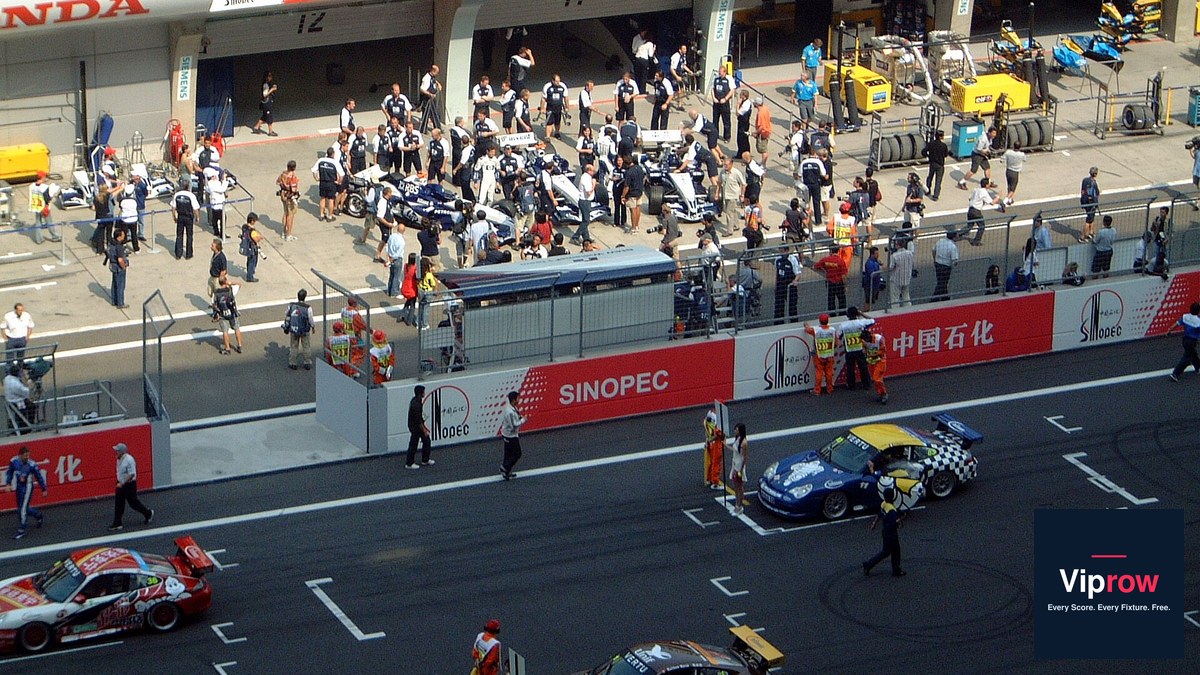
13. How to Follow an F1 Sprint Weekend
The first step is to check whether the weekend is a sprint weekend. If it is, Friday holds practice and sprint qualifying, Saturday holds the sprint and grand prix qualifying, and Sunday holds the race.
Check the session times early, because sprint qualifying moves to Friday afternoon. Many fans miss it, since normal qualifying runs on Saturday.
The 2026 F1 Sprint Calendar
Formula 1 runs six sprint weekends in 2026. They are China at Shanghai from 13 to 15 March, Miami from 1 to 3 May, Canada at Montreal from 22 to 24 May, Britain at Silverstone from 3 to 5 July, the Netherlands at Zandvoort from 21 to 23 August, and Singapore from 9 to 11 October.
Three of those venues host a sprint for the first time: Montreal, Zandvoort, and Singapore. Silverstone returns for the first time since the first sprint in 2021, while China and Miami keep their places for a third straight year.
You can follow live timing, results, and the championship picture on Viprow through the weekend. In short, a sprint adds a second race to six weekends a year.