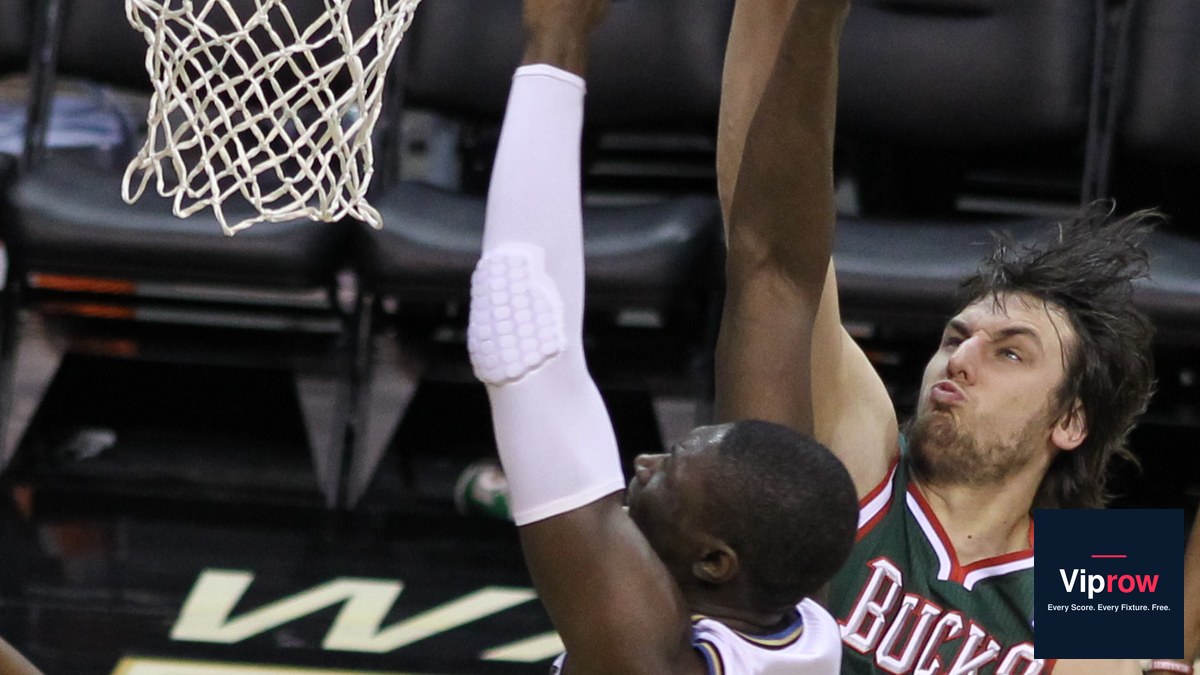
An NBA block is one of the most exciting plays in basketball. A defender jumps, reaches high, and knocks a shot away before it can reach the basket. The crowd roars, and the whole game can change in a single second. Yet a block is also one of the most misunderstood plays in the sport. So this guide explains the play in plain terms, from the basic rule to the records.
What an NBA Block Is
An NBA block happens when a defensive player legally deflects a field goal attempt to prevent a score. In simple terms, the defender touches the ball while it is still a live shot and stops it from going in. As long as the touch was legal, the result is the same. The shot does not count, and the shooter is charged with a missed field goal attempt.
A block is a defensive statistic as well as a highlight. The NBA has recorded blocks as an official statistic since the 1973-74 season. That fact matters when you compare players from different eras, because the great shot blockers of the 1950s and 1960s have no official career totals.
How an NBA Block Works in Real Time
A block starts long before the defender leaves the floor. First, he reads the shooter, watching the feet, shoulders, and eyes. Then he stays low and waits for the shot to leave the shooter’s hands. If he jumps too early, the shooter can fake him into the air and drive past him. To see what the defender is trying to stop, read our guide on how NBA shooting works.
Next, the defender jumps straight up and reaches for the ball at the highest point he can reach. The best shot blockers do not swing wildly. Instead, they stay vertical, keep their body under control, and meet the ball on its way up.
Reading the Shooter
Good shot blockers study shooters before the game starts. They learn who shoots quickly, who pump fakes often, and who prefers one side of the floor. A shooter who dips the ball low gives an early warning. So the defender must watch the ball, not the shooter’s eyes, because eyes can lie and the ball cannot.
The Rules Behind a Legal NBA Block
Rule 11 of the official NBA rulebook covers goaltending and basket interference. You can read the full rulebook at the official NBA rulebook. In short, a defender may block a shot while the ball is on its way up, or while it is at the top of its arc. However, he must not make illegal contact with the shooter’s body.
There is one more basic test. A deflected shot that still goes in does not count as a block at all. Likewise, if a shooting foul is called on the play, no block can be awarded, even if a different player from the one who fouled made the deflection. The block only counts when the play is clean from start to finish.
NBA Block vs Goaltending: The Line That Matters
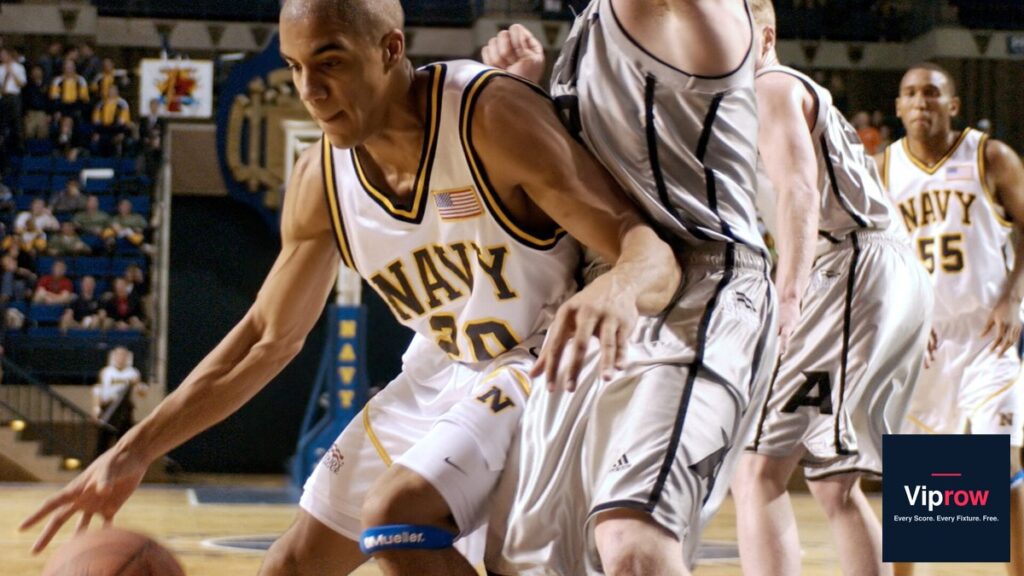
The line between an NBA block and goaltending is the flight of the ball. A legal block happens while the ball is still rising toward the basket. Goaltending happens after the ball has started its downward flight toward the basket, while it is above the rim and still has a chance to score. All three conditions must be true for the call.
There is also a special NBA rule about the backboard. Once a shot has touched the backboard above the level of the rim and still has a chance to score, a player may not touch it. Once the ball has hit it, the defence must leave it alone.
The Downward Flight Test
Watch the ball. Is it still going up? Then a touch is usually a legal block. Has it started to come down toward the basket? Then a touch is usually goaltending. Referees must also judge whether the ball had a real chance to go in.
Defensive Goaltending Explained
Defensive goaltending punishes the defence for touching a shot too late. Under Rule 11, a defender commits goaltending when he touches the ball on its downward flight above the rim with a chance to score. He also commits it by touching the ball inside the imaginary cylinder above the rim.
The penalty is simple and severe. The shooting team is awarded the points at once, as if the shot had gone in. A two-point shot counts for two points, and a three-point shot counts for three. For that reason, a late swat can be worse than no defence at all. To learn how fouls work when contact is involved, read our guide on how NBA fouls work.
Offensive Goaltending and Basket Interference
Offensive players can commit goaltending too. Offensive goaltending happens when an attacking player touches the ball while it is on the rim, directly above the basket inside the cylinder, or after it has hit the backboard on a downward path toward the rim. The basket is waved off at once, and the ball goes to the defence.
Basket interference is a close cousin of goaltending, and fans often mix the two up. Touching the ball on the rim or reaching up through the net counts as basket interference. Once a shot has a fair chance to score, neither side may reach in and change its fate by hand.
What Offensive Players Cannot Do
Offensive players often want to tip a missed shot back in, and that is legal when the ball is clearly off the rim and outside the cylinder. They cannot touch it while it rests on the rim, and they cannot hang on the rim to guide the ball through the net. If they break these rules, the basket is cancelled and their team loses the ball.
NBA Block vs Foul: When a Block Becomes a Foul
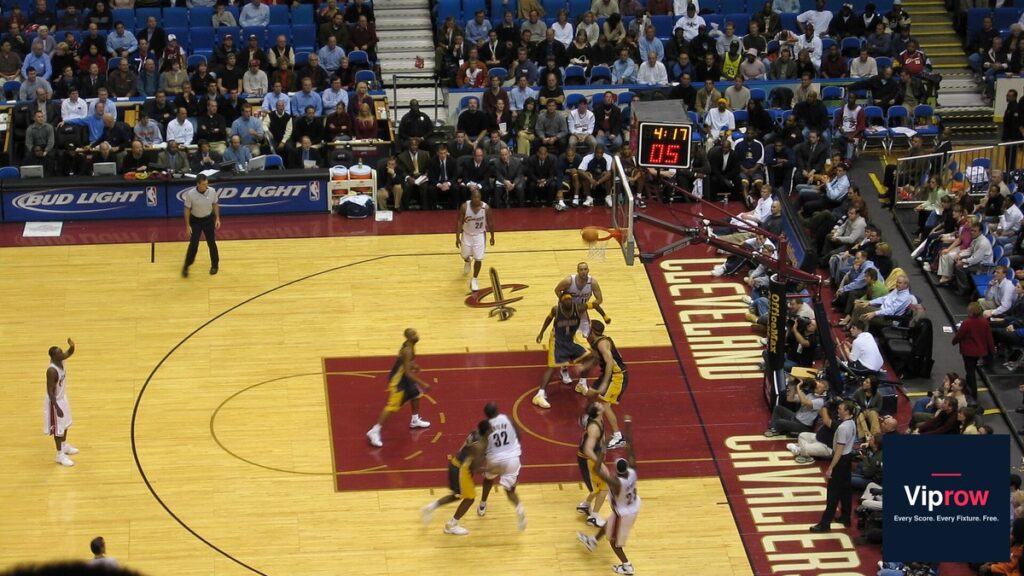
A block becomes a foul when the defender makes illegal contact with the shooter. The most common mistake is hitting the shooter’s arm or hand. The rule allows contact with the hand only when the defender is also in contact with the ball. If the defender hits the hand first, or hits the arm or body, the referee will call a shooting foul, and the block does not count.
A defender who jumps into the shooter or pushes him off balance has committed a foul, even if he also touched the ball. Good defenders jump straight up and keep their bodies vertical. Yet the best shot blockers know that a foul wipes out the block and gives the offence free points.
Types of NBA Blocks
Not all blocks look the same, and each type needs a different skill. The most common type is the on-ball block, where the defender guarding the shooter rises and meets the shot. Then there is the help-side block, where a defender leaves his own man to protect the rim.
The chase-down block is the most famous type of all. It happens when a defender sprints back on a fast break and blocks the layup attempt from behind. It needs speed, timing, and a fearless jump. If the defender mistimes the chase, he may foul the shooter or arrive too late and commit goaltending. To see how team defence sets up these plays, read our guide on how NBA defence works.
The Chase-Down Block
A chase-down block starts with effort, not with jumping. The defender must sprint the full length of the court while the attacker is already ahead. He must stay behind the play without fouling, and he must time his jump so that he meets the ball at its peak. A team-mate must then secure the loose ball.
The Help-Side Block
A help-side block comes from team defence, not from one-on-one skill. The help defender watches the ball while guarding his own man, and he slides toward the basket as the driver attacks. This type of block protects the rim when the first defender is beaten.
What Happens After an NBA Block
A block does not end the play. If the ball stays in bounds, either team can grab it, and the team that wins the loose ball gains a huge edge. A blocked shot often leads to a fast break. For that reason, smart defenders try to block the ball toward a team-mate, rather than swatting it into the crowd.
If the ball goes out of bounds off the defender, the offence keeps the ball. The shot clock is a key part of this moment, because the offence may have only a few seconds left to shoot again. To understand that pressure, read our guide on how the NBA shot clock works. A blocked shot also counts as a missed field goal attempt for the shooter.
How NBA Blocks Are Counted as a Statistic
The NBA counts a block when a defensive player legally deflects a field goal attempt. The scorer records the block, and the shooter is charged with a missed attempt. However, there are limits. A deflected shot that still goes in is not a block. A block on a play where a shooting foul is called is not a block either. These rules keep the statistic honest.
Blocks per game is the most common way to compare shot blockers. A player who averages 2.5 blocks per game is an elite rim protector. Fans should look at both numbers together. One shows peak power, and the other shows lasting value.
The Greatest Shot Blockers in NBA History
The greatest shot blockers in NBA history share three traits: length, timing, and fearlessness. They were tall, they jumped at the right moment, and they never backed away from a challenge at the rim.
Hakeem Olajuwon leads the list by a wide margin. He finished his career with 3,830 blocks in 1,238 games, an average of 3.09 blocks per game. He led the league in blocks three times, in 1990, 1991, and 1993. He played most of his career with the Houston Rockets, and he finished with the Toronto Raptors. He waited, read the shooter, and struck at the perfect moment.
Hakeem Olajuwon
Olajuwon is the NBA’s all-time leader in blocks, and his total of 3,830 is 541 more than the next player on the list. He combined quick feet with long arms and a calm mind. He also won two NBA Defensive Player of the Year awards, in 1993 and 1994. He rarely jumped on fakes, and he rarely fouled.
Mark Eaton
Mark Eaton holds the single-season record for blocks, and his mark has stood for decades. In the 1984-85 season, he blocked 456 shots in 82 games for the Utah Jazz, an average of 5.56 blocks per game. He led the league in blocks four times, and he finished his career with 3,064 blocks, fourth on the all-time list.
How Teams Use Shot Blocking in Defence
Teams use shot blocking as a weapon, not just as a highlight. A strong shot blocker lets his team-mates defend more aggressively, because help waits near the rim. Shooters drive less often, settle for jump shots more often, and rush their attempts when they do attack the basket.
However, shot blocking has a cost. A defender who chases every block may leave his man open, give up offensive rebounds, or pick up fouls. Good coaches teach their players to pick their moments. They want blocks that stay in play and lead to fast breaks. The best teams balance aggression with discipline. To see how this fits with the wider game, read our guide on how NBA rebounding works.
How to Watch and Understand NBA Blocks as a Fan
Watching blocks is more fun when you know what to look for. First, watch the defender’s feet before the shot. If he stays on the floor until the shooter rises, he has a real chance. Next, watch the ball at the moment of contact. Is it still rising? Then the block is probably legal. Is it falling toward the basket? Then goaltending is likely. A clean block ends with the defender on balance and ready to run.
You should also watch how shooters react to a great shot blocker. They may pump fake more often or shoot from further out. That fear is the hidden value of a block. The best way to judge a shot blocker is to watch a full game, not just the highlights. If a game goes to extra time, the same rules apply, so read our guide on how NBA overtime works to complete the picture.