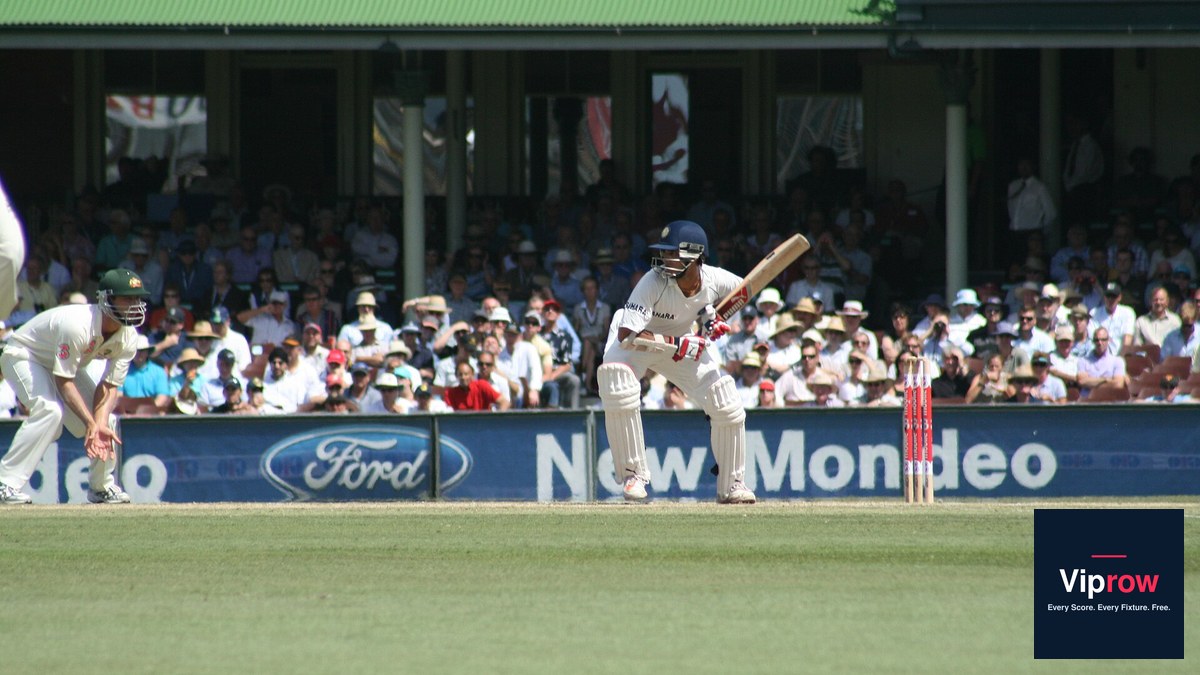
A cricket test match is the longest form of the game. It can last up to five days. Each team bats twice, with no clock on an innings: a team bats until it loses ten wickets or its captain ends the innings. As a result, one side can lead by a huge margin on day two and still lose on day five. In this guide, you will learn how the format works, from the toss to the final hour.
What Is a Cricket Test Match?
A cricket test match is an international match between two national teams. Only twelve teams hold Test status from the International Cricket Council, or ICC. The first Test was played in 1877. Players wear white clothes. They use a red ball. The match is played over five days. Each team gets two innings. In other words, each team bats twice and bowls twice. To win, a team must score more runs than the other side. In addition, it must dismiss the other side twice. If it cannot do both before time runs out, the match ends in a draw. In a Test, there is no limit on how long an innings can last.
How Long Does a Cricket Test Match Last?
A cricket test match is scheduled for five days. On each day, about six hours of play are scheduled. The teams must bowl at least 90 overs on most days. On the last day, the target is lower. The teams must bowl at least 75 overs before the final hour. Then they must bowl at least 15 overs in that last hour. Umpires can check close calls with TV replays; read our guide to how cricket umpiring and DRS work. The final hour is often the most tense part of the whole match. A team close to a win must take the last wickets fast. Meanwhile, the batting side fights to survive until the clock runs out.
Two Innings in a Cricket Test Match
Each team bats twice in a cricket test match. The two innings are played in turn. First, Team A bats. Then Team B bats. After that, Team A bats again. Finally, Team B bats last. An innings has no over limit. It ends in one of three ways. First, the batting side can lose all ten wickets. Second, the captain can declare. Third, the time for the match can run out. Each team picks eleven players. Ten wickets must fall to end an innings. Batters can be out in many ways, such as being bowled, caught, or out leg before wicket. For the full list of shots and ways to get out, see our guide to how cricket batting works.
A Day in a Cricket Test Match
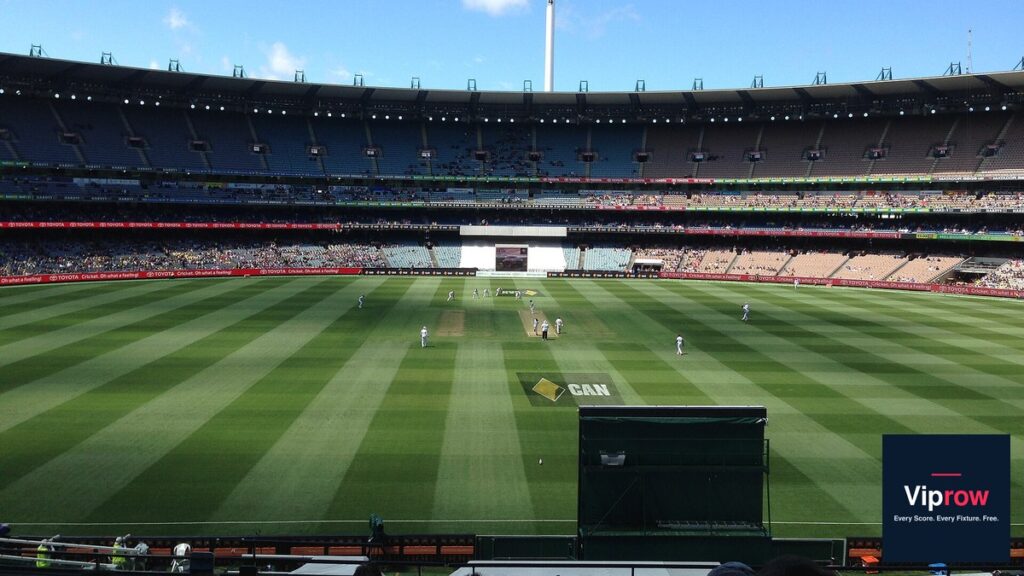
A day of Test cricket has a clear rhythm. It is split into three sessions. There are breaks for lunch and tea in between. Each session lasts about two hours. Lunch usually lasts 40 minutes. Tea usually lasts 20 minutes. The day starts fresh each morning. The pitch may play a little differently as the match goes on. Early on, the surface is often good for batting. Later, it can wear down.
The Morning Session
The morning session sets the tone for the day. The ball is often new. It can swing in the cool air. Batters must watch it closely. A wicket in the first hour can change the whole day.
The Afternoon Session
The afternoon session is often the longest grind. The sun is high. The ball is older. It does not move as much. Batters can settle in and build big scores.
The Evening Session
The evening session brings the day to a close. The light can fade. The ball can swing again in the gloom. A wicket at the end of the day can lift a whole team overnight.
The Toss and the First Decision
Every cricket test match starts with a toss. The two captains meet in the middle. One captain flips a coin. The other captain calls heads or tails. The winner of the toss then makes a big choice. He can choose to bat first or bowl first. The toss takes place no more than 15 minutes before the scheduled start. On a fresh pitch, many captains bat first to score big runs while the surface is at its best. On a green pitch, or under cloudy skies, a captain may choose to bowl first. A team still has to bat well, bowl well, and catch well over five days.
How a Team Wins a Cricket Test Match
To win a cricket test match, a team must do two things. First, it must score more runs in total than the other side. Second, it must bowl the other side out twice. A team can score 600 runs and still fail to win. If it cannot take twenty wickets, the match will end in a draw. The winning margin is counted in two ways. It depends on which team bats last. If the team that bats last passes the target, it wins by wickets. If the team that fields last bowls the other side out first, it wins by runs.
Winning by Runs
The fielding side bowls the other side out before it reaches the target. For example, bowling the other side out for 250 when it needs 300 means a win by 50 runs.
Winning by Wickets
The chasing side passes the target before losing all ten wickets. For example, reaching 200 with six wickets down means a win by four wickets. The batters must stay calm and build small partnerships.
What Is a Draw in a Cricket Test Match?
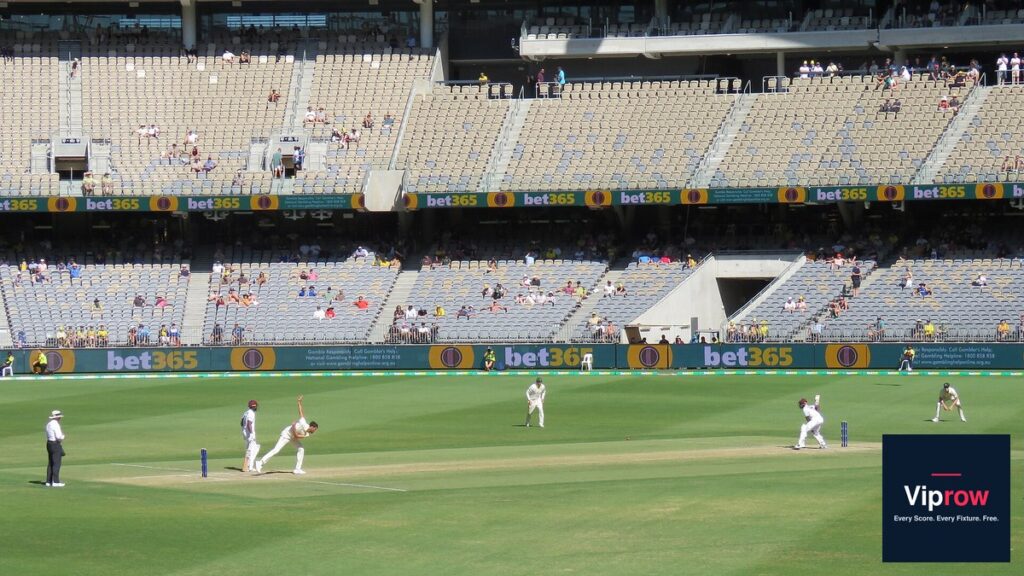
A draw is one of the most common results in a cricket test match. It happens when time runs out before a winner is found. First, the team batting last may survive to the end of day five. It has not reached the target, yet it still has wickets left. In that case, the match is drawn. Second, rain or bad light may take away so much time that neither side can force a result. The team that is behind will try to save the match. Its batters block the ball and leave good balls alone. Meanwhile, the fielding side tries everything to take ten wickets. If the last pair survives, the draw is safe. A draw is not a tie. A tie happens only when the scores finish level and the side batting last is all out.
The Follow-On Rule in a Cricket Test Match
The follow-on is one of the most famous rules in a cricket test match. It gives the team that bats first a strong option. Here is how it works. Team A bats first and scores a big total. Then Team B bats and scores far fewer runs. If Team A leads by 200 runs or more, its captain has a choice. He can make Team B bat again at once. That is called enforcing the follow-on.
Team B must then bat its second innings straight away. Its batters must face the same bowlers again. However, the rule has a risk. If Team B bats well the second time, it can save the match or even set a target. For that reason, some captains choose not to enforce the follow-on. They prefer to bat again and build a huge lead. In short, the follow-on is a gamble. It can bring a quick win, but it can also hand the match back.
Declarations and Bold Captaincy
A declaration is a captain’s choice to end his own team’s innings early. There is no rule that says a team must bat until it is all out. The captain can stop the innings at any time. He does this to give his bowlers enough time to win the match. For example, a team on 450 runs may declare and give its bowlers two full days to take twenty wickets. However, a declaration is also a risk. If the captain declares too soon, the other side may chase the target down. If he declares too late, there may not be enough time left to take all the wickets. Good captains read the pitch, the weather, the clock, and the state of their bowlers. The best declarations leave enough runs on the board and enough time on the clock.
The New Ball and the Bowlers’ Day
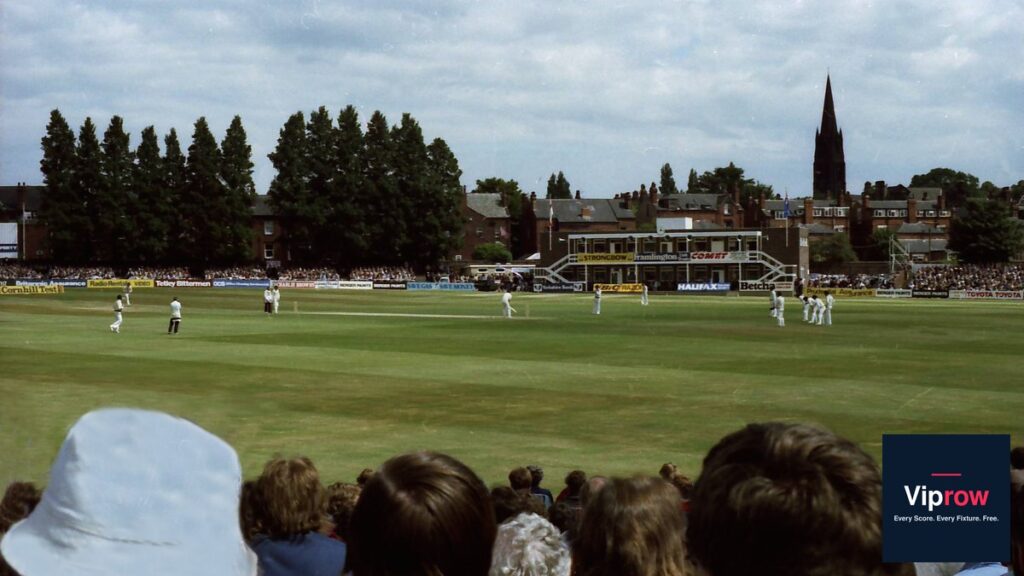
The ball is a key part of a cricket test match. Each innings starts with a new ball. The fielding captain can take another new ball once 80 overs have been bowled. A new ball is hard and shiny. It swings in the air. Fast bowlers love it. They use it to attack the batters early. As the ball gets older, it gets softer and stops swinging. However, an old ball can still help spin bowlers on a worn pitch. Some captains delay the new ball when the old ball is still moving well. Unlike in short formats, there is no limit on how many overs a bowler can bowl in a Test. For the full guide to pace, spin and swing, see our article on how cricket bowling works.
Pace Bowlers
Pace bowlers use speed and swing to take wickets. They run in fast and hit the pitch hard. With a new ball, they can move it both ways in the air. They often bowl in short, sharp spells to stay fresh.
Spin Bowlers
Spin bowlers use turn and flight to take wickets. They bowl slower and make the ball spin off the pitch. As the match goes on, the pitch wears down. A good spinner can take many wickets on days four and five.
Day-Night Cricket Test Matches
A day-night cricket test match is played under floodlights. It starts in the afternoon and ends late at night. The players use a pink ball, which is easier to see under lights. The breaks are also different. Dinner replaces lunch, and tea stays in place. The first day-night Test was played at Adelaide Oval in November 2015. Australia played New Zealand. Australia won by three wickets inside three days. The pink ball can behave in its own way. It can swing more under lights in the evening. Batters often find the twilight period the hardest time to bat. As a result, captains often try to bowl their best bowlers at that time. They want wickets when the batters struggle most.
The World Test Championship
The World Test Championship gives the cricket test match a league table. It was launched by the ICC in 2019. Nine teams take part in each cycle. Each cycle lasts about two years. Every team plays six series in a cycle, three at home and three away. The top two teams at the end of the cycle play in a final. The winner of that final is crowned the world Test champion.
South Africa won the 2025 final. The points system is simple. A win earns 12 points. A tie earns 6 points. A draw earns 4 points. Teams play different numbers of matches, so the table ranks them by the percentage of points they have won. The final is played over five days. The championship adds meaning to every series, so teams fight hard for every point. You can read the ICC’s own answers about the format on its World Test Championship FAQ page.
How to Follow a Cricket Test Match
A cricket test match rewards patient watching. The story builds slowly over five days. Look at the runs, the wickets, the overs left, and the lead. The lead tells you who is ahead. A lead of 200 or more puts the batting side in a strong place. A lead of less than 100 keeps the match open. Next, watch the pitch: a turning pitch helps spinners, while a flat pitch helps batters. In addition, watch the weather. Rain can save a team that is behind.
It can also ruin a team that is close to a win. There is no Super Over in a Test, so a tied match stays tied. There is also no Duckworth-Lewis calculation to set a new target after rain. Lost time is simply lost. If you are new to the game, start with the scorecard and the match summary. Over time, you will learn to read the match like a story.
Reading the Scorecard
A scorecard shows runs, wickets, overs, and extras. It shows who scored what and who took the wickets. Learn to read it, and you can follow a whole Test without watching a single ball.