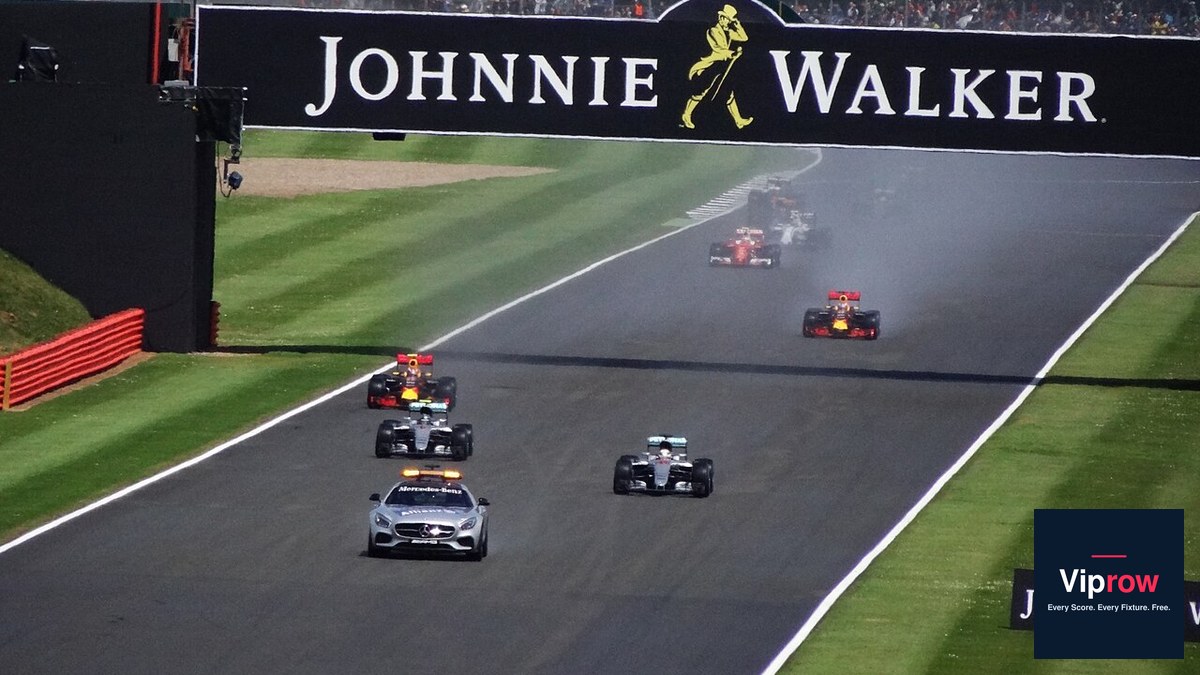
A Formula 1 safety car can change a race in a few seconds. One moment, a driver leads by ten seconds. Next, the field bunches up behind a road car, and the lead is gone. Fans often ask why this happens, who makes the call, and what the rules allow.
This guide answers those questions in plain terms. It explains the job of the Formula 1 safety car, the rules that control it, and the moments when it has shaped results. It also covers the Virtual Safety Car, restarts, and why teams see a safety car period as a chance to gain places.
What Is a Formula 1 Safety Car?
A Formula 1 safety car is a high performance road car that leads the field at a controlled speed during a race. It comes out when the track is not safe for full speed racing. Marshals may need to clear debris, move a stopped car, or help a driver after a crash. In wet weather, it can lead the field while race control checks grip and visibility.
Its job is simple: slow the field, protect the people on track, and keep the race order fair until normal racing can resume. The car carries bright lights, radio links to race control, and screens that show the position of every car. It does not race the field. Instead, it sets a pace that keeps tyres and brakes warm, yet slow enough to keep everyone safe.
Why the Safety Car Comes Out
Race control sends out the safety car when a hazard needs time and space to clear. A crash can leave carbon fibre across the track, and a stopped car can sit in a risky spot. Heavy rain can cut visibility to a few metres, so drivers cannot see a hazard ahead. In each case, full speed racing would put drivers and marshals at risk.
Yellow flags alone may not be enough, since drivers still race at high speed in other parts of the track. The safety car solves that problem by gathering the whole field into one slow pack. Marshals can then work with a clear gap behind the pack, and recovery vehicles can reach a stricken car with less risk.
Who Decides to Deploy the Safety Car?
The race director decides when to deploy the safety car, with support from the clerk of the course and race control. Marshals report hazards from posts around the track, and cameras give race control a clear view of each incident. The team weighs the size of the hazard, the time needed to clear it, and the risk to people on track.
If the hazard is small and quick to clear, a yellow flag or a Virtual Safety Car may be enough. When the hazard is larger, the full safety car comes out. The message goes to every team through the official messaging system, and the safety car joins the track from the pit lane. Drivers must then slow down and form up behind it. No team or driver can ask for one. The call rests with race control alone.
What Happens When the Safety Car Leads the Field
When the safety car joins the track, it picks up the race leader first. Every other car then lines up behind it in race order. Gaps that took laps to build vanish in a few corners, since the whole field now runs at the pace of one car. Drivers must stay behind the safety car and keep a safe distance from the car ahead.
They weave gently to keep heat in their tyres, and they brake in short bursts to keep their brakes warm. Pit crews watch the screens and work out new plans in seconds. Engineers check fuel, tyre life, and the gap to rivals, while drivers ask for updates on the hazard ahead.

No Overtaking and the Rules Drivers Must Follow
Overtaking is banned while the safety car is on track. A driver may pass another car only in a few set cases, such as when a car ahead has a clear problem or has left the track. If a driver passes the safety car by mistake, the stewards can punish the move. Drivers must also stay within ten car lengths of the car ahead, unless race control tells them otherwise.
That rule keeps the pack tight and stops drivers from dropping back to build a gap for a restart. Cars that are a lap down stay in their place until race control allows them to unlap, which this guide covers later. The safety car period ends only when race control sends the message that it will come in at the end of the lap. Until that message arrives, every driver must hold position and follow the pace car.
Pit Stops Under the Safety Car
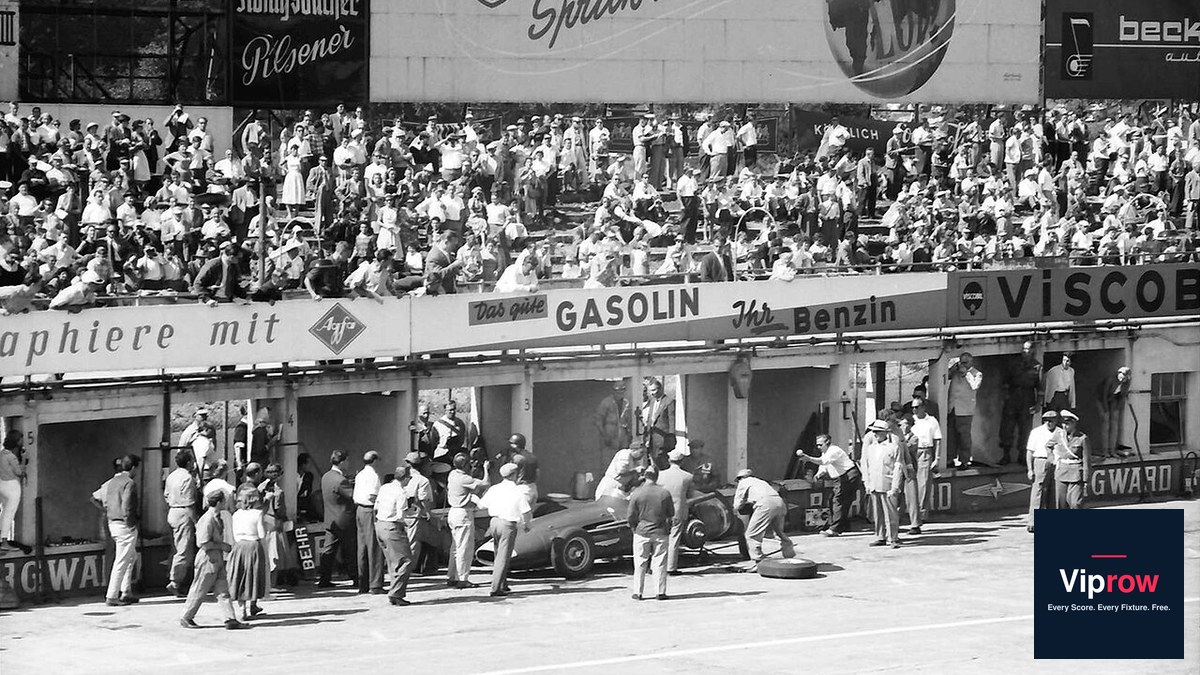
A pit stop under the safety car costs far less time than a stop at full racing speed. At racing speed, a driver who pits drops well behind the pack. Under the safety car, the whole field moves slowly, so a driver can stop, change tyres, and rejoin without losing as many places.
Timing matters, though. A team must decide fast, since the pit lane may be busy and the safety car period may end soon. Some drivers stay out to keep track position, while rivals stop for fresh tyres. To learn how pit work fits into race plans, read our guide to how Formula 1 pit stops work.
Why a Cheap Stop Changes Strategy
A stop under the safety car can change the tyre plan for the rest of the race. Fresh tyres give grip and speed, while old tyres give track position. Teams weigh both sides before they call a driver in.
Lapped Cars and Unlapping
A lapped car sits between the leader and other lead lap cars, and it can block a fight at the restart. To fix that, race control can let lapped cars pass the safety car and the lead lap cars. The message reads LAPPED CARS MAY NOW OVERTAKE, and it goes to every team at the same time. Those cars then drive past the field, catch up at the back, and rejoin in their true race order.
The process takes time, since the cars must lap the track and form up again. It also keeps the restart clean, because the leader faces rivals on the same lap, not cars a lap down. Race control allows this move only when it is safe to do so. If the track is still busy with marshals, the lapped cars stay where they are until the next chance.
The 2021 Abu Dhabi Grand Prix and the Rule Change
The 2021 Abu Dhabi Grand Prix showed why the unlapping rule needed a clear fix. Lewis Hamilton led Max Verstappen in the final laps when a crash brought out the safety car. Five lapped cars sat between the two title rivals, while three other lapped cars sat further back. Race control first said lapped cars would not unlap, then changed course and let only the five cars between Hamilton and Verstappen pass.
The safety car then came in at once, and Verstappen passed Hamilton on the final lap to win the race and the title. Fans and teams argued about the call for months, since the old rule used the word any. For 2022, the FIA changed the rule so that all lapped cars must unlap before a restart when the move is allowed. That change removed the doubt, and it still shapes restarts today.
What Is the Virtual Safety Car?
The Virtual Safety Car, known as the VSC, slows the field without putting a car on track. Race control uses it when a hazard is small and quick to clear, such as a stopped car near a marshal post. Drivers see VSC on their dash, and they must slow to a set delta time in each marshalling sector.
Gaps between cars stay close to what they were, so the VSC does not bunch the field. The VSC came into use in 2015, after the FIA looked for a stronger way to slow cars for hazards that did not need a full safety car.
How the Delta Time Works
The delta time is the key to the Virtual Safety Car. Each driver sees a number on the steering wheel display that shows how their pace compares with the target time. They must stay above the minimum time in each sector, so they drive slower than normal there. A driver who goes too fast can face a time penalty.

How a Race Restarts After the Safety Car
The restart starts with a clear message from race control. When the track is clear, teams see SAFETY CAR IN THIS LAP on the official system. The safety car then leads the field for one more lap and turns into the pit lane at the end of that lap. The race leader takes over the pace at that point and controls the speed until the start line.
Drivers behind the leader cannot overtake until they cross the start line, so the leader picks the moment to go. Some leaders speed up early to catch rivals off guard, while others hold a slow pace and then sprint for the line. The field behind must react in a split second, and a slow start can cost places at once. To see how grid order shapes the first laps, read our guide to how Formula 1 qualifying works.
Safety Car or Red Flag: How Race Control Chooses
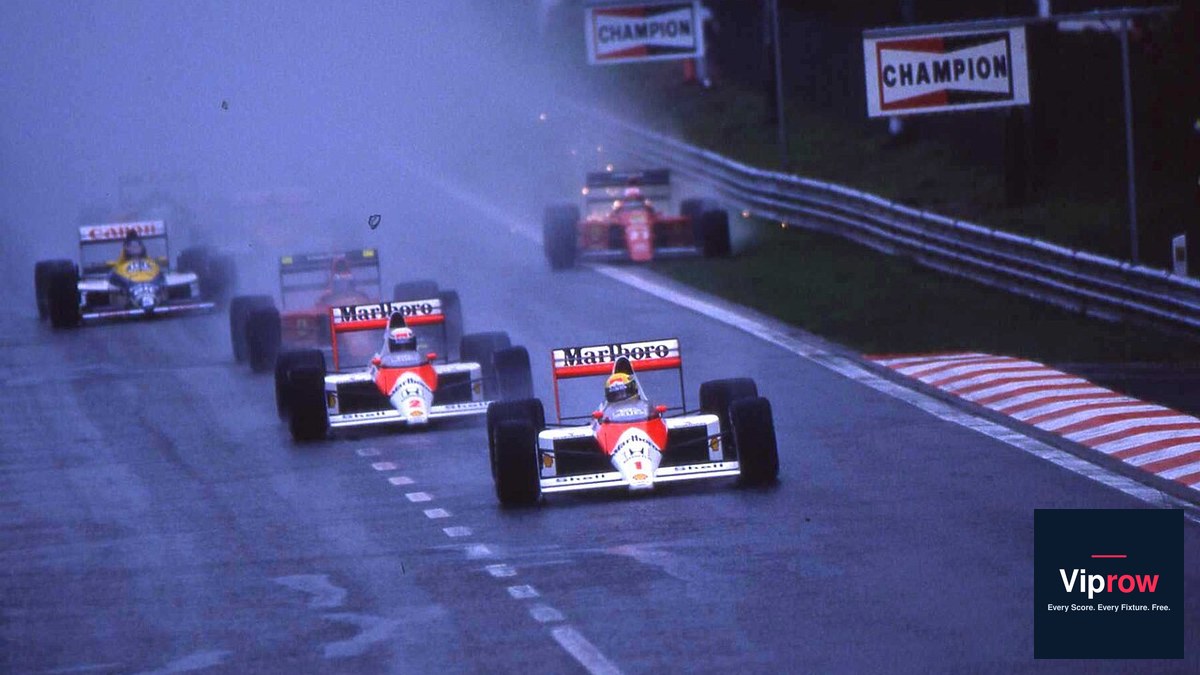
Race control picks a red flag when the track is too risky for any running, even behind a safety car. A heavy crash can block the track, a barrier may need repair, or rain may make driving unsafe at any speed. In that case, the race stops, cars return to the pit lane, and teams wait for the track to clear. A safety car fits a smaller hazard, such as debris or a car that marshals can move in a few laps.
The choice also depends on time, since a red flag can take much longer to clear than a safety car period. Fans can tell the difference at once, because a red flag stops the cars in the pit lane, while a safety car keeps them moving on track. Both tools share one aim: protect people first, then let racing resume when it is safe to do so.
The Safety Car Driver and the Car Itself
Bernd Maylander has driven the Formula 1 safety car since 2000. He is a former racer, and his job needs pace, calm, and a sharp feel for grip. He must keep the F1 cars warm, yet lead them safely through a hazard. A passenger sits beside him, an FIA official who stays in touch with race control.
In recent seasons, the Mercedes-AMG GT Black Series and the Aston Martin Vantage shared safety car duties. For 2026, Mercedes is the sole supplier, and the current car is the Mercedes-AMG GT 63 PRO 4MATIC+, which Formula 1 introduced at the 2026 Hungarian Grand Prix.
Inside the Safety Car
The safety car looks like a road car outside, but inside it is a mobile race control post. Screens show lap times and car positions. A spare waits at the track, and it proved its worth at Monza in 2024, when Maylander crashed the safety car in a test run and walked away unhurt.
Famous Safety Car Moments That Changed Races
Safety car periods have shaped some of the best known races in recent years. At the 2021 Abu Dhabi Grand Prix, the late safety car set up a final lap fight for the title, and the rule change that followed still guides restarts. At the 2023 Singapore Grand Prix, a safety car for Logan Sargeant sent most leaders into the pits, and a later VSC let Mercedes stop for fresh tyres.
Carlos Sainz held on to win for Ferrari, with clever use of DRS to help Lando Norris defend second place. To see how those points add up, read our guide to how Formula 1 points and the championship work.
Tyre choice matters too, so read our guide to how Formula 1 tyre strategy works, and our guide to how Formula 1 DRS works. For a recent race shaped by safety car timing, see our Las Vegas Grand Prix 2026 race result.
1 thought on “How Formula 1 Safety Cars Work”