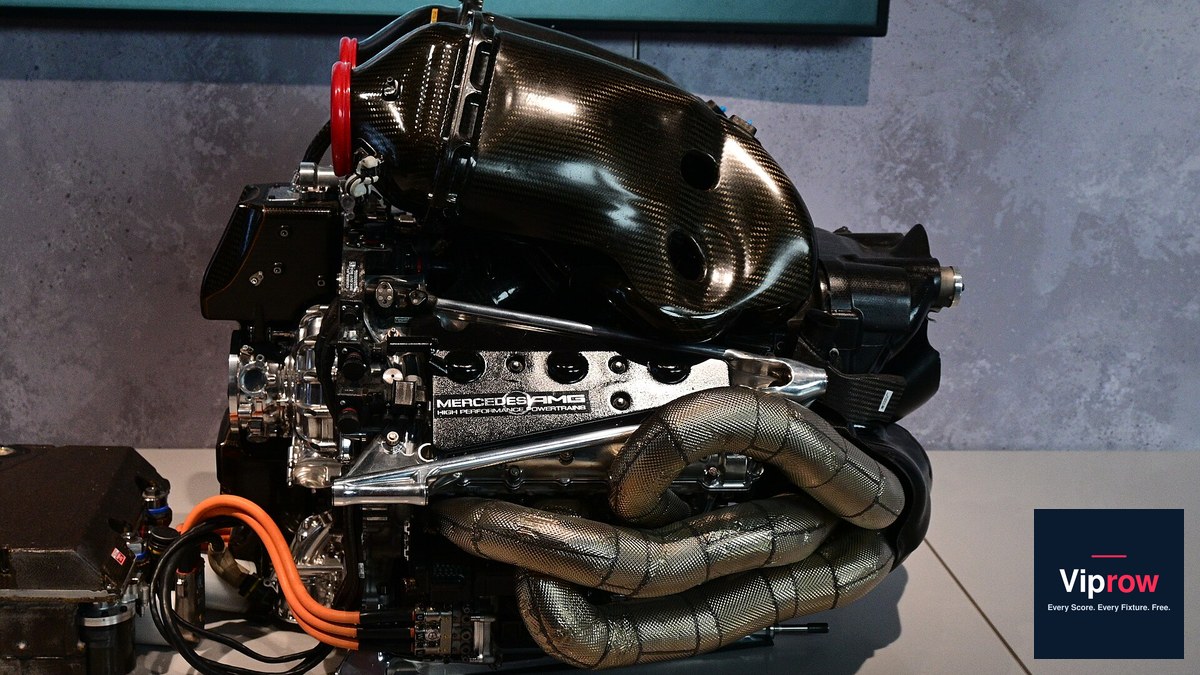
A Formula 1 car does not have a simple engine. Instead, it has a power unit: a complete hybrid system that joins a small petrol engine with electric motors, a battery, and smart control software.
The current hybrid rules began in 2014. As a result, the modern power unit makes more than 1,000 horsepower from a 1.6-litre engine. This guide explains each part, the fuel rules, engine modes, grid penalties, and the 2026 changes.
What Is a Formula 1 Power Unit?
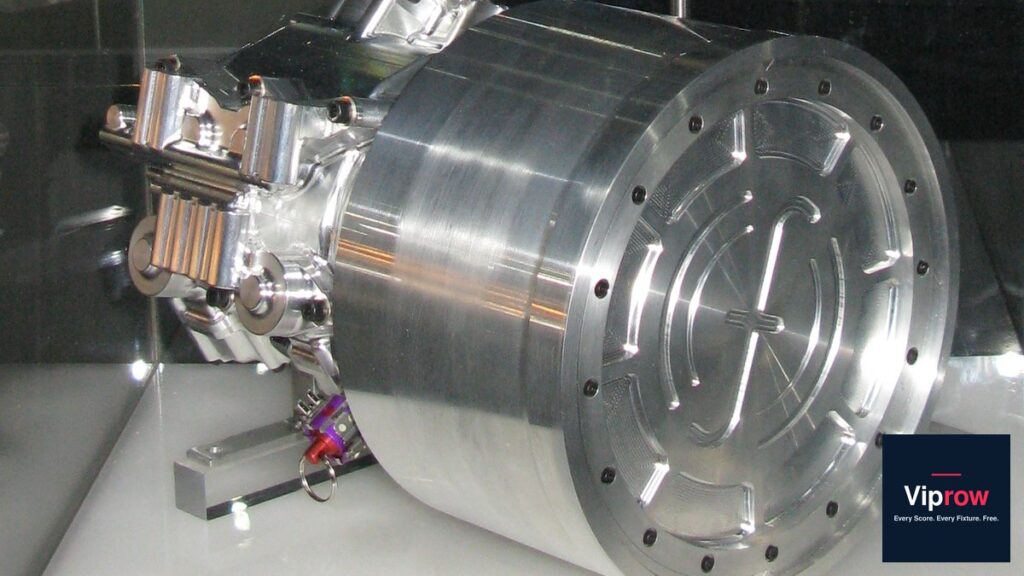
A Formula 1 power unit is the full propulsion package of the car, not just the engine block. It includes every part that makes power and moves it to the wheels. The rules count each part as a separate element, so teams must track each part they use.
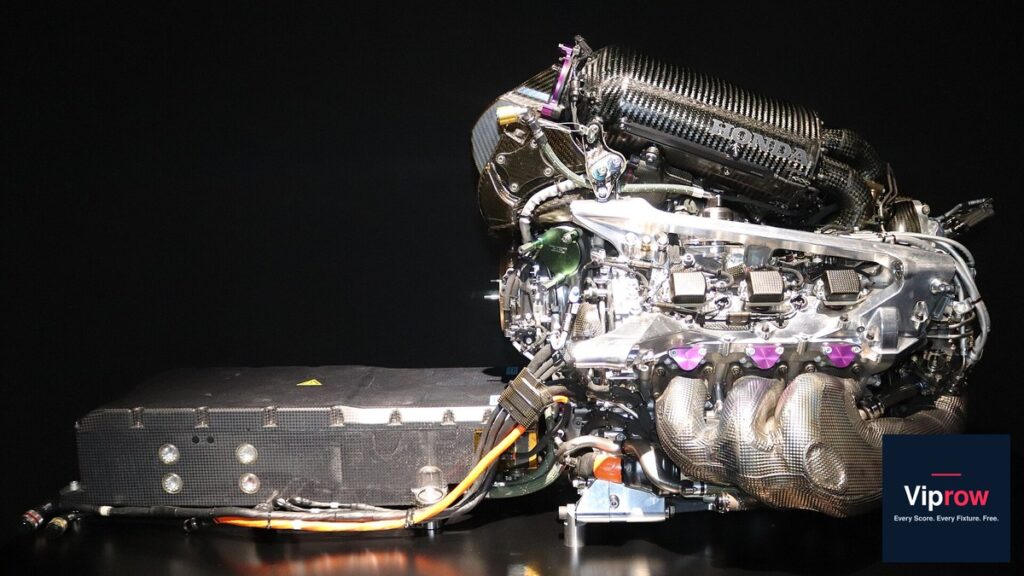
The power unit has six main parts: the internal combustion engine (ICE), a single turbocharger, the Motor Generator Unit-Kinetic (MGU-K), the Motor Generator Unit-Heat (MGU-H), the Energy Store (the battery), and the Control Electronics.
Each part has a clear job, but none of them works alone. The turbo feeds air to the engine, the two MGUs harvest energy, the battery stores it, and the control electronics decide when to save it and when to spend it.
The Six Parts at a Glance
The six parts fall into two groups: one burns fuel, and the other handles electricity.
The Combustion Side
The combustion side has two parts: the ICE and the turbocharger. The ICE burns fuel and turns it into motion. The turbocharger pushes more air into the engine, so it can burn fuel better and make more power.
The Electrical Side
The electrical side has four parts: the MGU-K, the MGU-H, the Energy Store, and the Control Electronics. The two motor generator units recover energy. The Energy Store holds that energy in a lithium-ion battery. The Control Electronics act as the brain.
The Internal Combustion Engine
The internal combustion engine, or ICE, is the heart of the power unit. It is a 1.6-litre V6 engine. However, the F1 engine revs to a limit of 15,000 rpm. Therefore, it can burn fuel very fast and make huge power from a small size.
The engine has six cylinders in a V shape, set at 90 degrees. It uses direct fuel injection, which sprays fuel straight into each cylinder at high pressure.
The ICE alone makes most of the power: roughly 850 to 900 horsepower through 2025. The electric system adds up to about 160 horsepower on top, so the total passes 1,000 horsepower. The best F1 engines turn more than 50 percent of the fuel energy into useful work.
The Turbocharger and the MGU-H
The turbocharger, or TC, is a single unit mounted on the engine, with two halves on one shaft. Hot exhaust gas spins the turbine, which drives the compressor. The compressor pushes fresh air into the engine at high pressure. More air lets the engine burn more fuel, so power rises without a bigger engine.
Turbochargers have one old weakness: lag. When the driver lifts off, exhaust flow falls and the turbo slows down. When the driver presses the throttle again, the turbo takes time to spin back up. The MGU-H sits on the turbocharger shaft and recovers energy from the exhaust gas.
When exhaust flow is strong, the MGU-H acts as a generator and turns spare energy into electricity. It can also act as a motor, spinning the turbo up to speed even when exhaust flow is low.
How the MGU-H Cuts Turbo Lag
Turbo lag matters most at corner exits. The MGU-H keeps the turbo spinning during braking and cornering, so full boost is ready the moment the driver needs it.
The MGU-K: Power From Braking
The MGU-K, or Motor Generator Unit-Kinetic, is the second electric motor in the power unit. It connects to the crankshaft. Its job is to recover energy from braking and give it back as extra power, much like regenerative braking in a hybrid road car.
When the driver brakes, the MGU-K acts as a generator, turning motion into electricity. When the driver accelerates, it switches to motor mode and adds up to 120 kilowatts, about 160 horsepower, to the drivetrain.
The rules limit the MGU-K to 2 megajoules of recovery per lap and 4 megajoules of deployment per lap. These limits force smart choices about where on the lap the extra power helps most. Tyre grip also shapes the choice, because extra power is useless if the tyres spin, so teams study how Formula 1 tyre strategy works alongside the energy plan.
The Energy Store and Control Electronics
The Energy Store, or ES, is the battery of the power unit, a lithium-ion pack. It stores electricity from the MGU-K and the MGU-H, then releases it for a power boost. The rules set its weight between 20 and 25 kilograms.
The battery needs the Control Electronics, or CE, the brain of the electrical system. The CE moves energy between the battery, the MGU-K, and the MGU-H. Therefore, a fault here can stop the whole hybrid system, even if the engine still runs.
Cooling matters a great deal for both parts, because batteries and electronics lose power when they get too hot.
How Harvesting and Deployment Work on a Lap
Harvesting and deployment form a cycle that repeats every lap. The car harvests energy when it slows down, then deploys it when the driver needs speed. However, the balance changes at every circuit, so teams build a new plan for each one.
When the Car Harvests
Harvesting happens in two main ways. First, the MGU-K harvests under braking, and the harder and longer the braking zone, the more energy it collects. Second, the MGU-H harvests from the exhaust whenever the turbo has more than the engine needs.
When the Car Deploys
Deployment happens when the driver presses the throttle. The MGU-K adds its electric power to the engine power. It works with the drag reduction system, so fans should also read how Formula 1 DRS works to see how the two aids combine. However, deployment is limited. Once the 4 megajoules per lap are spent, the extra boost runs out, and the car relies on the engine alone until more energy is harvested.
Fuel Flow Limits and the 100 kg/h Rule
Fuel is the other limit that shapes the power unit. From 2014 to 2025, the rules set two fuel limits. First, a car could use no more than 110 kilograms of fuel in a race, up from 100 kilograms in 2014. Second, fuel could flow into the engine at no more than 100 kilograms per hour, and the FIA checks this with fuel flow sensors.
The flow limit is the more important of the two, because it caps power at any moment. With it, the engine must stay efficient all the time. As a result, engineers chase thermal efficiency, so every drop of fuel becomes motion, not waste heat. This is why the engines passed 50 percent thermal efficiency, up from around 44 percent in 2014.
Fuel saving also shapes race strategy. A driver may lift off the throttle early on a straight to save fuel, a move called lift and coast. It costs a little time now but saves fuel for later. In addition, a team may plan a pit stop around fuel load, because a lighter car is faster, so the crew studies how Formula 1 pit stops work as part of the same plan.
Engine Modes and the Party Mode Story
Engine modes are the settings that control how the power unit runs. Before 2020, teams could use a special high-power mode only in qualifying, called “party mode”, a term coined by Lewis Hamilton in 2018. It gave extra revs, maximum fuel flow, and full electrical deployment for one fast lap.
Mercedes used party mode well, and rivals asked the FIA to act. The FIA agreed that the rules were hard to police when modes changed so often. Therefore, it issued a technical directive in August 2020. From the Italian Grand Prix at Monza that year, drivers had to use the same basic engine mode for qualifying and the race.
What Changed in 2020
The 2020 change did not remove engine modes. Drivers can still turn the engine down for real reliability reasons, but they cannot switch back to a faster mode. The main effect was fairness: qualifying and the race now use the same core mode. To see the session where party mode once mattered most, read how Formula 1 qualifying works.
Allocation Limits and Grid Penalties
Formula 1 limits how many power unit parts each driver can use in a season, to control costs and reward reliability. This rule makes durability as important as speed.
In 2025, each driver could use four of each of these parts without a penalty: the ICE, the turbocharger, the MGU-H, and the MGU-K. The Energy Store and Control Electronics were tighter, at two each, and the exhaust allowed eight sets. Across a 24-race season, each ICE had to last about six races on average.
The penalty system is simple but harsh. The first time a driver goes over the limit for any part, they take a 10-place grid penalty. Each further extra part costs five more places, and penalties at the same event add up. If the total is more than 15 places, the driver must start at the back of the grid. As a result, teams plan part changes with care.
Reliability and Failures
A power unit failure can end a race in seconds. An engine may lose oil pressure, a turbo may fail, or a battery may overheat. Sometimes the car stops on track. Then the marshals must clear it, and the race may be neutralised, so it helps to know how Formula 1 safety cars work when a stricken car stops on the circuit.
Reliability also shapes the season. A team with a fragile power unit faces hard choices: turn the engine down to protect it and lose speed, or push hard and risk a failure and a penalty. Therefore, the best power units are not only the most powerful. They are also the ones that finish races again and again.
The New 2026 Power Unit Rules
The 2026 rules bring the biggest power unit change since 2014. The engine keeps its 1.6-litre V6 turbo layout and its 15,000 rpm limit. However, the electrical side changes: the MGU-H is removed, the MGU-K becomes far more powerful, and the fuel becomes fully sustainable.
The MGU-K will rise from 120 kilowatts to about 350 kilowatts, around 470 horsepower of electrical power, or almost three times the old figure. The ICE will make about 400 kilowatts. Together, the power unit should still make more than 1,000 horsepower. The fuel flow limit also changes, from 100 kilograms per hour to 3,000 megajoules of fuel energy per hour. Formula 1 aims for around 70 kilograms of fuel per Grand Prix, down from 110 kilograms.
The allocation also changes for 2026. Each driver may use four ICEs, four turbochargers, and four exhaust sets, plus three MGU-Ks, three Energy Stores, and three Control Electronics units. For full detail, see the official Formula 1 guide to the 2026 engine regulations.
What Stays the Same in 2026
Some things do not change. The engine is still a 1.6-litre V6 turbo, the rev limit stays at 15,000 rpm, and the MGU-K still recovers energy under braking. The core idea also stays the same: speed must come from efficiency, not from burning more fuel.
What Fans Will Notice First
Fans may notice two things first. The cars may sound different, because the MGU-H helped shape the exhaust note. In addition, turbo lag may return in some corners, because no electric motor now spins the turbo. As a result, energy plans will shape races even more.
What the Power Unit Means for Fans
The power unit is the hidden heart of Formula 1. Fans see the cars, the overtakes, and the pit stops. However, the power unit decides much of what happens. It sets top speed and acceleration, and it decides when a driver can attack and when they must save energy.
The rules make the story richer. Fuel limits force efficiency, allocation limits force reliability, and engine mode rules force fairness. The 2026 changes will force every manufacturer to learn again. When a race turns on a late overtake, a fuel save, or a grid penalty, the power unit is often the reason. The flags that follow those moments also matter, so keep how Formula 1 flags work close by when you watch the next Grand Prix.