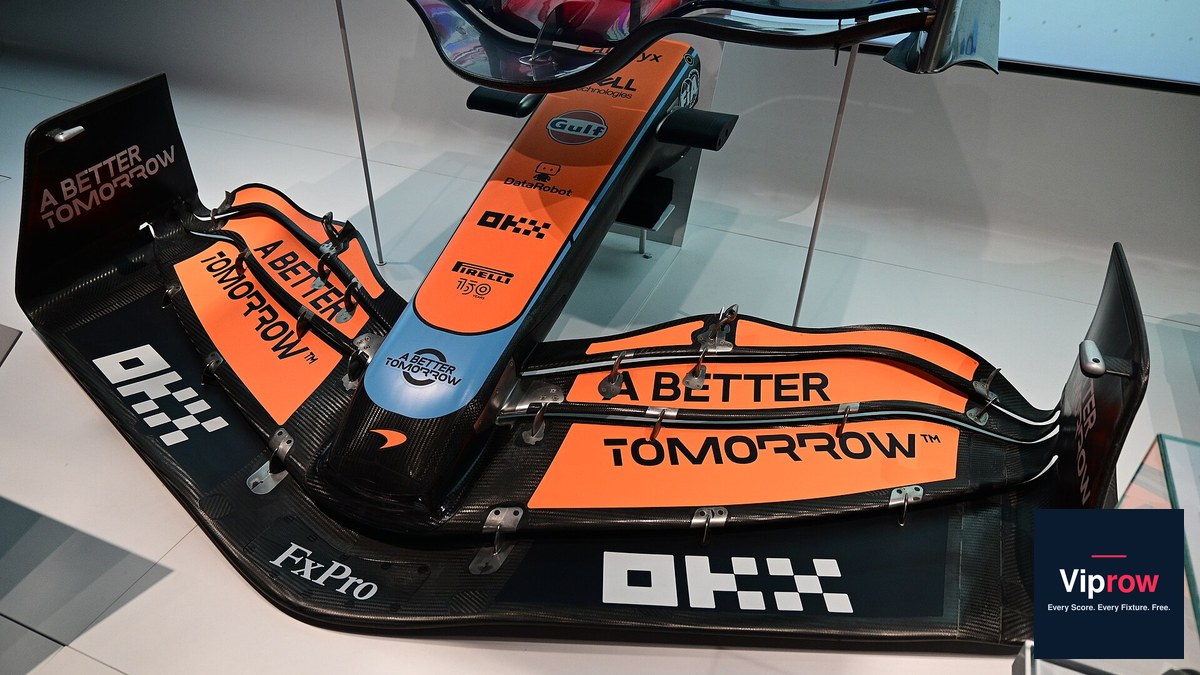
A Formula 1 car looks fast even when it stands still. Aerodynamics studies how air moves around the car. In Formula 1, it decides how fast a car can corner, how quickly it can brake, and how easily it can overtake. This guide explains downforce, wings, ground effect, drag, DRS, dirty air, wind tunnels and the new active aero rules for 2026, in plain English.
What Is Formula 1 Aerodynamics?
Aerodynamics means the science of air in motion. When a Formula 1 car moves, air flows over, under and around it. The shape of the car controls that flow. Some shapes push air up, some push it down, and some push it aside.
An F1 car has two main aero jobs. First, it must create downforce, which pushes the car onto the track. Second, it must keep drag low, because drag slows the car down. These two jobs fight each other. More downforce usually means more drag. So the whole sport searches for the best balance between the two.
What Is Downforce and Why Does It Matter?
Downforce pushes the car down onto the track as a vertical aerodynamic force. It works in the opposite direction to lift. When an F1 wing creates downforce, it pushes the car down. The extra push presses the tyres harder into the track, and that gives the car more grip.
The numbers are huge. The 2022 to 2025 generation of cars produced downforce equal to their own weight at around 150 km/h. For a clear official explanation, read the F1 guide to downforce and wings, which explains how McLaren aero specialist Emel Cankaya describes the force.
Wings That Work Upside Down
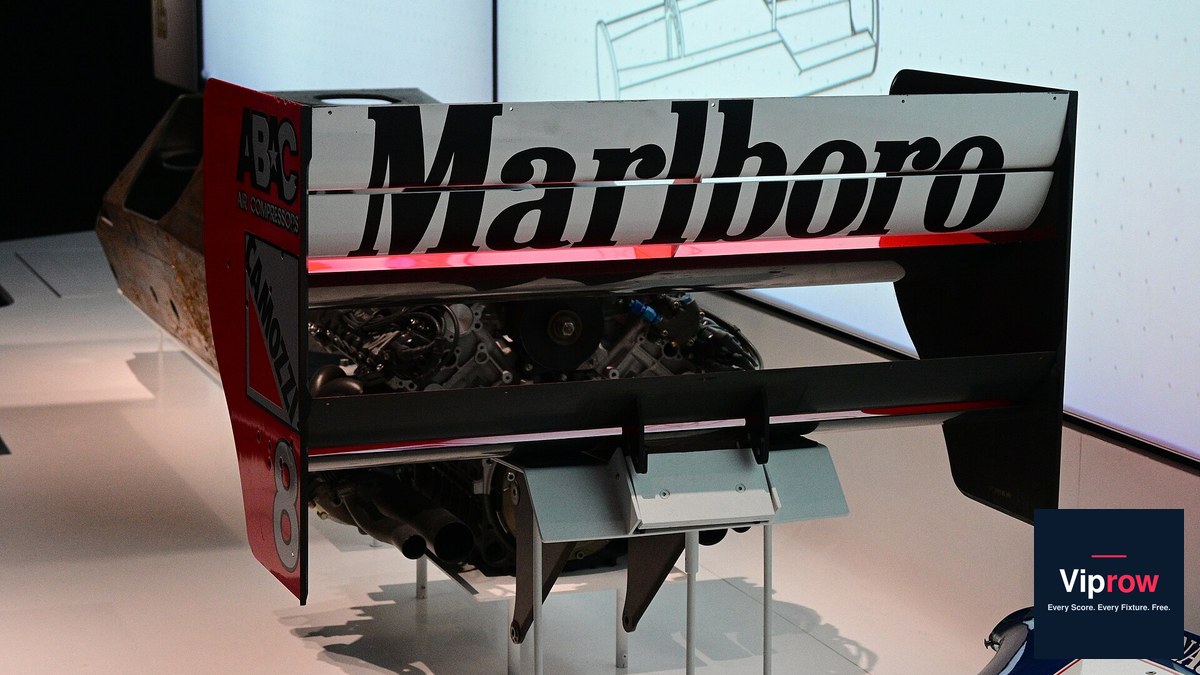
The wings on an F1 car stand out as the most visible aero parts. They work like aeroplane wings turned upside down. Engineers shape an F1 wing so air moves faster underneath it. That creates low pressure below the wing and high pressure above it. The difference pushes the wing, and the car, down onto the track.
The front wing and the rear wing do different jobs, but they must work as a pair. If the front makes too much downforce and the rear makes too little, the back of the car slides. If the rear makes too much and the front makes too little, the front slides wide.
The Front Wing
The front wing meets the air first. It creates downforce at the front, and it also shapes the airflow for the rest of the car.
The Rear Wing
The rear wing sits at the back of the car, high above the diffuser. Teams change the rear wing angle for each circuit. A steep angle gives more downforce for twisty tracks, while a flat angle gives less drag for fast tracks.
The Floor and the Diffuser
The floor forms the flat underside of the car, and it ranks among the most important aero parts. Air speeds up as it passes under the floor, and fast-moving air has lower pressure. The low pressure under the car sucks it down toward the track.
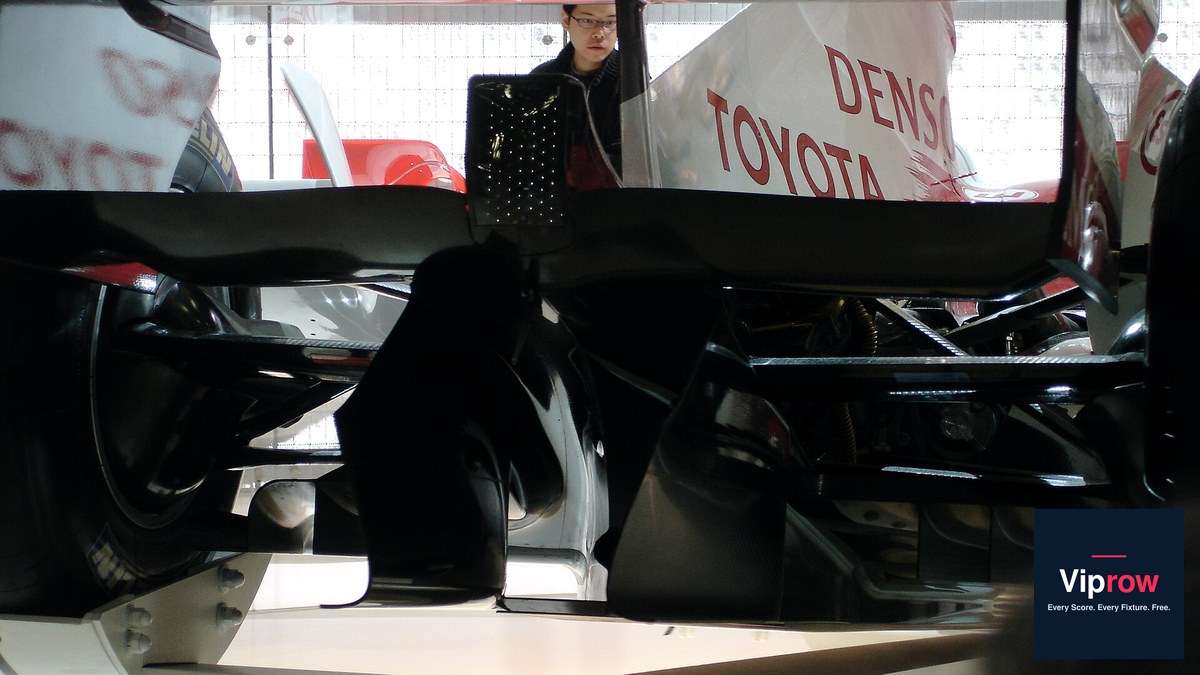
The diffuser sits at the rear of the floor. It works as a shaped tunnel that widens toward the back of the car. As air leaves the floor through the diffuser, it slows down and its pressure rises back to normal. However, ride height affects the floor a lot. If the car runs too low, it can hit the track. If it runs too high, the suction weakens.
Ground Effect: The Suction Under the Car
Ground effect names the suction created between the floor and the track. It works because of a simple rule: when air speeds up, its pressure drops. Engineers shape the floor of an F1 car like a venturi tunnel, narrow in the middle and wider at the ends. Air enters at the front, speeds up in the narrow part, and creates a low-pressure zone under the car.
Ground effect works efficiently. It creates a lot of downforce with less drag than wings do. That explains why the 2022 rules brought ground effect back after many years away. The 2026 rules reduce the role of ground effect. For the full picture of the new cars, read the 2026 Formula 1 rules explained.
Drag: The Price of Downforce
Drag means the air resistance that pushes back against the car. Every aero part that creates downforce also creates drag. Drag grows fast with speed, so it forms the main limit on top speed.
The trade-off forms the heart of F1 aero. More downforce gives more grip in the corners, but it also gives more drag on the straights. Less downforce gives less drag and a higher top speed, but the car corners more slowly. Teams must choose the right balance for each track. A twisty track rewards downforce, while a track with long straights rewards low drag. The power unit matters too: read how Formula 1 power units work.
Low-Drag and High-Downforce Set-Ups: Monza vs Monaco
Monza and Monaco stand as the two extremes of F1 set-up, and they show the downforce and drag trade-off better than any other tracks. Monza, in Italy, ranks as the fastest circuit on the calendar. It has long straights and few corners, so teams run a low-drag set-up there.
Monaco runs the opposite way. Its streets run narrow, twisty and slow, with almost no straights. Top speed hardly matters there, but grip matters a lot. Teams run a high-downforce set-up, with the biggest, steepest wings they have. As a result, the same car can look very different at Monza and Monaco. However, a small change in wing angle can cost or gain a tenth of a second per lap, and that can decide how Formula 1 qualifying works.
Dirty Air and Why Following Is Hard
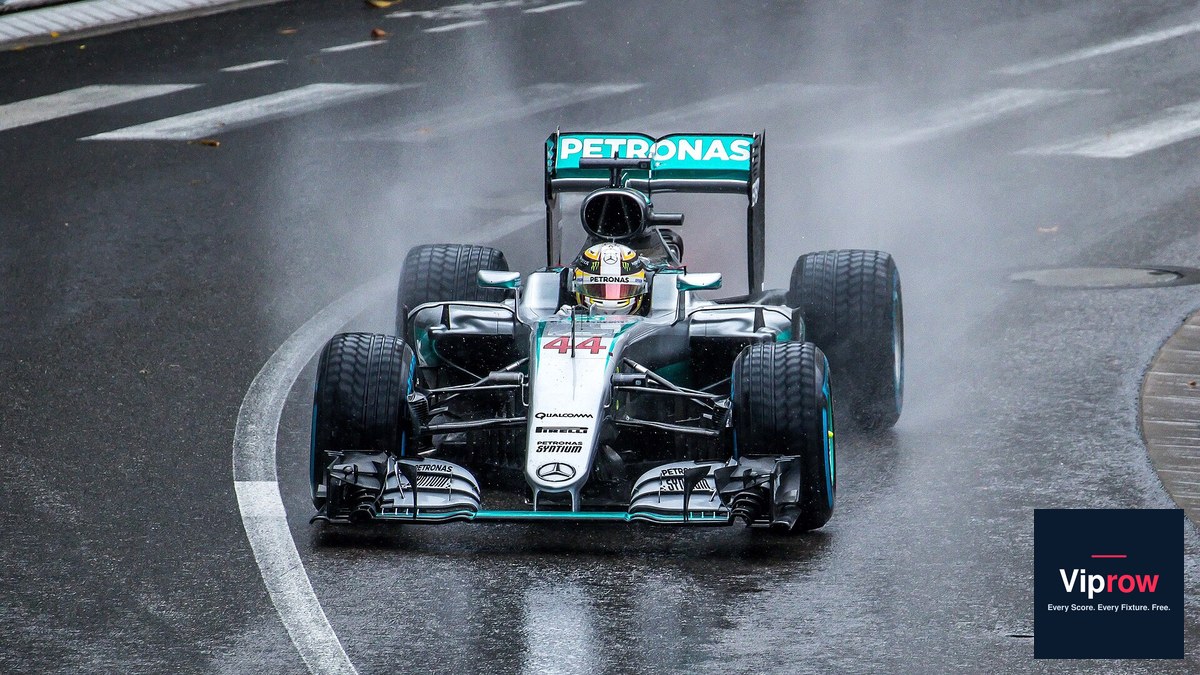
Dirty air means the messy, turbulent air that comes off the back of a car. A leading car disturbs the air as it passes, and the car behind must drive through that disturbed air. The problem comes when the following car’s wings and floor need smooth, clean air to work well. In dirty air, they make less downforce.
The loss runs large. By the end of the 2022 to 2025 rules cycle, a following car kept only about 70 percent of its downforce when it ran close behind another car. That made overtaking very hard, because the chasing car lost grip exactly when it needed it most, in the corners before a straight.
Why Tyres Suffer in Dirty Air
Dirty air hurts the tyres as well as the wings. When the car loses downforce, the tyres slide more across the track surface. Sliding creates heat, and too much heat wears the tyres out fast.
DRS: The Old Overtaking Aid
DRS stands for Drag Reduction System. Formula 1 used it from 2011 to 2025. It worked as a flap in the rear wing that could open on set straights, called DRS zones. When the flap opened, air passed through the wing instead of pushing on it. Drag fell, downforce at the rear fell too, and the car gained top speed. For the full rules, zones and detection points, read how Formula 1 DRS works.
DRS helped overtaking, but it had limits. It only changed the rear wing, so the aero balance shifted when it opened. Also, only the chasing car could use it, and only in set zones. The 2026 rules finally ended the debate by replacing DRS with a new system.
The 2026 Rules: Active Aerodynamics
The 2026 rules bring active aerodynamics to Formula 1 for the first time. The driver switches between two modes: a high-downforce mode for corners and a low-drag mode for straights. The front and rear wings move together, so the aero balance stays stable.
The system uses two main modes, which Formula 1 calls Corner Mode and Straight Mode. In Corner Mode, the wing flaps sit closed and angled for maximum grip. In Straight Mode, the flaps flatten out to cut drag and raise top speed. The driver activates Straight Mode with a button on the steering wheel, in set activation zones around the lap.
Corner Mode (Z-Mode)
Corner Mode serves as the default state of a 2026 car. The front wing uses its full two-element set-up, and the rear wing sits at its maximum angle with three elements. Both wings make as much downforce as the rules allow.
Straight Mode (X-Mode)
Straight Mode gives the low-drag setting for straights. The driver presses a button in a set zone, and both wings flatten out. Drag falls, and top speed rises. Unlike DRS, any driver can use Straight Mode, not only a driver chasing the car ahead. No one-second gap rule applies.
Overtake Mode
Overtake Mode gives the new boost for passing. When a driver sits within one second of the car ahead, they can use a manual override button to deploy extra electrical energy from the MGU-K, up to 0.5 megajoules. The leading car cannot use the same boost to defend.
Less Downforce, Less Drag in 2026
The 2026 cars make less downforce than the cars they replace. The FIA set a target of about 30 percent less peak downforce and about 55 percent less drag than the 2022 to 2025 cars. The cars are also smaller and lighter. The wheelbase is shorter, the width is narrower, and the minimum weight fell from 800 kg to 768 kg.
The change is deliberate. The FIA wanted cars that can follow each other more closely. The target is for a following car to keep about 90 percent of its downforce at 20 metres behind the car ahead, up from about 70 percent at the end of the old rules.
Wind Tunnels and CFD: How Teams Test Aero
Teams cannot test aero ideas on the track whenever they like. Testing is limited, so most aero work happens in wind tunnels and on computers. A wind tunnel is a large tube with a powerful fan. Engineers place a scale model of the car, usually at 60 percent size, in the tunnel and blow air over it.
CFD stands for Computational Fluid Dynamics. It is software that simulates airflow on a computer. Engineers build a digital model of the car and run millions of sums to predict how air will flow around it. Together, wind tunnels and CFD let teams test hundreds of aero ideas before they build a single real part.
Wind Tunnel Limits
The rules limit wind tunnel time. Each team gets a set number of runs, based on where they finished in the previous championship. The team that finished last gets the most time, and the champions get the least. This rule, called the Aerodynamic Testing Restriction, helps smaller teams catch up.
CFD Limits
CFD is limited in the same way. Each team gets a set amount of computer time, again based on championship position. Engineers therefore plan their CFD runs like a budget, spending it on the ideas most likely to work. This system keeps costs down and stops the richest teams from testing without end.
What Aerodynamics Means for Fans
Aerodynamics may sound technical, but fans can see it in every race. Watch the wings change between Monza and Monaco, and you will see the downforce and drag trade-off in action. Watch a driver struggle in dirty air, and you will see why following is hard. Watch the 2026 cars switch modes on the straights, and you will see active aero at work.
Aero also shapes safety. When a car loses downforce suddenly, it can spin or leave the track at high speed. Fans who want the full picture should read how Formula 1 safety cars work. Then check how Formula 1 points and the championship work to see how each result shapes the title fight.