Rain can turn a great cricket match into a puzzle in minutes. One moment both teams play a full game, and the next moment dark clouds cut overs from the chase. Fans then ask a simple question: what score should the chasing team need now? The duckworth lewis method gives the answer, and it has done so in international cricket for more than 25 years.
This guide explains the method in plain English: why rain breaks cricket, what the old rules got wrong, and how overs and wickets shape a fair target. You will see what a par score means, how the rules differ in ODIs and T20s, and how to follow a revised target live.
Why Rain Breaks a Cricket Match
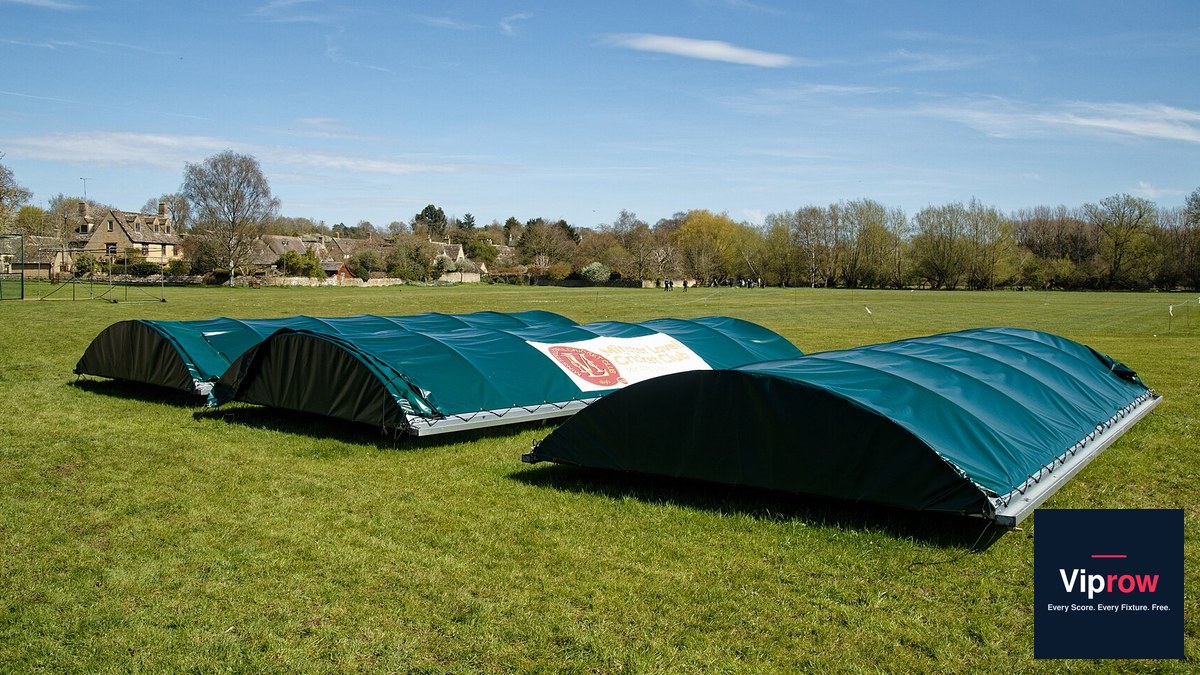
Cricket is an outdoor game, so weather can stop play at any time. Rain makes the pitch wet, the ball slippery, and the outfield unsafe for fielders. As a result, umpires take the players off the field until conditions improve.
A short delay may cost only a few overs. A long delay can cut a large part of the match. The team batting first may then have faced 50 overs, while the chasing team gets only 30 overs. That gap creates an unfair contest unless the target changes too.
What Is the Duckworth Lewis Method?
The duckworth lewis method is the official system for setting revised targets in rain-hit limited-overs cricket. It applies when rain or another delay cuts the overs in a one-day or T20 match. The International Cricket Council, known as the ICC, uses it in international cricket.
The method does not guess a target. Instead, it uses a formula built from scoring patterns in past matches. Officials feed the match state into the official calculator, which returns a revised target. The ICC explains the Duckworth-Lewis-Stern method on its own website.
The Full Name Is Duckworth-Lewis-Stern
Today the full name is the Duckworth-Lewis-Stern method, often shortened to DLS. Frank Duckworth and Tony Lewis, two English statisticians, created the original method. Later, Australian statistician Steven Stern updated it for modern scoring, so his name joined theirs in November 2014.
The 1992 Match That Changed Everything
The story starts at the 1992 Cricket World Cup semi-final in Sydney. England batted first and scored 252 runs. South Africa then chased the target, and with 13 balls left they needed 22 runs to win.
Then rain stopped play for about 12 minutes. When play resumed, two overs had been lost from the chase. Under the rule in use at that time, South Africa now needed 21 runs from just one ball. That target was almost impossible, because the most a batter can score from one legal ball is six runs. England won, yet the finish felt wrong to almost everyone, and cricket leaders soon asked for a fairer system.

What Came Before the Duckworth Lewis Method?
Before the duckworth lewis method arrived, cricket tried two simpler systems. Both looked fair, yet both failed in real matches. Their flaws explain why a better method was needed.
The Average Run Rate Rule
The average run rate rule was the first system cricket used. It set the chasing target from the first team’s run rate, then multiplied that rate by the overs left for the second team.
This rule ignored wickets completely. A team that had lost eight wickets faced the same target as a team with all ten wickets in hand. In practice, that made no sense, because a side with few wickets left cannot score as fast. Therefore the rule often gave the chasing team an unfair target.
The Most Productive Overs Rule
The most productive overs rule replaced the average run rate method for the 1992 World Cup. It cut the target by the runs scored in the first team’s least productive overs. If the chase lost two overs, the rule removed the two lowest-scoring overs from the first innings total.
It also ignored wickets, and it had a second flaw. It punished the chasing team for good bowling by the first team. In the 1992 semi-final, England’s two least productive overs had produced only one run between them. As a result, South Africa’s target fell by just one run even though they lost two overs.
The Big Idea Behind the Duckworth Lewis Method
The duckworth lewis method rests on one big idea: a batting team uses two resources to score runs, not one. Those resources are the overs left to face and the wickets still in hand.
Think of resources like fuel in a car. Overs are the distance left to travel, while wickets are the engine power still available. When rain takes overs away, it takes resources away, so the method measures what each team had and sets a target that gives both teams a fair share.
Overs and Wickets: The Two Resources
Every limited-overs innings starts with a fixed amount of resources. In a 50-over match, a team starts with 50 overs and ten wickets, and the method counts that full innings as 100 percent of resources. As the innings goes on, the team spends resources with every over bowled and every wicket lost.
Overs matter because each over gives batters six balls to score from. Wickets matter because each wicket lost removes a batter and brings in a weaker partner, so a team that loses early wickets must bat with care and scores more slowly.
Why Wickets Matter as Much as Overs
Imagine two teams chasing the same total with 10 overs left. One team has nine wickets in hand, while the other has only two left. The first team can attack freely, yet the second must protect its last batters. Their chances are clearly different, even though the overs left are the same.
How the Duckworth Lewis Method Calculates a Target
The official calculation uses a computer program, so fans cannot work out the target by hand. Even so, the steps behind it are easy to follow. First, officials record the score, overs, and wickets at each stoppage. Next, the calculator works out the resources each team had and used. Then it compares those shares and sets a revised target.
If the chasing team has fewer resources than the first team had, its target comes down. On the other hand, if the first innings was cut short and the chasing team has more resources, its target goes up. That case surprises many fans, yet it is fair.
The Target Formula in Plain Terms
In simple terms, the revised target equals the first team’s score multiplied by the chasing team’s resources, divided by the first team’s resources, plus one run. The extra run matters, because the chasing team must pass the first team’s score to win. Officials use resource tables built from past matches to find each share.
What Is a Par Score in the Duckworth Lewis Method?
A par score is the score the chasing team should have reached at a given moment for the match to be exactly level. It moves after every ball, because each run and each wicket changes the balance.
If rain ends the match during the second innings, the par score decides the result. A team ahead of par wins, while a team behind par loses. If the scores match par exactly, the match is a tie.
Fans confuse par score with the revised target, yet the two ideas are not the same. The par score is a live checkpoint, while the revised target is the final total the chasing team must reach to win.
A Simple Worked Example of the Duckworth Lewis Method
A worked example makes the duckworth lewis method much clearer. Suppose Team A bats first in a 50-over match and scores 269 runs for eight wickets. Team A has used its full share of resources, so its resource figure is 100 percent.
Now suppose rain cuts Team B’s innings to 30 overs before it starts. The official tables give Team B a smaller share of resources for 30 overs with ten wickets in hand.
If that share were 75 percent, the maths would be 269 times 75, divided by 100, plus one run. That gives a revised target of 203 runs. In a real match, officials use the exact share from the tables for the overs and wickets at that moment.

The Duckworth Lewis Method in ODIs and T20s
The duckworth lewis method works in both main limited-overs formats, yet the formats shape how it feels in practice. An ODI gives each team 50 overs, so a rain break can still leave a long chase. A T20 gives each team only 20 overs, so losing even five overs changes the match a great deal.
In ODIs, teams can rebuild after early wickets because many overs remain. In T20s, every over carries more weight, and a wicket can swing the resource share fast. For that reason, T20 targets often jump or fall sharply after a short delay. Fans who follow how one-day cricket works and how T20 cricket works will see why the same rain break hits each format in a different way.
Minimum Overs and No Result in the Duckworth Lewis Method
The duckworth lewis method cannot decide every rain-hit match. For a result to stand, the chasing team must have had a fair chance to bat. In an ODI, the second team must have had the chance to face at least 20 overs. In a T20 international, that minimum falls to five overs.
If rain stops play before those minimums, the match ends as a no result. Neither team wins, and the points are shared. The only exception is when the chasing team has already passed its target before the rain ends play.
Reserve Days and Extra Time
Big tournaments often add a reserve day for knockout matches. If rain ruins the scheduled day, play can continue on the reserve day instead of ending as a no result.
Umpires also use extra time where the rules allow it, and they check the pitch and outfield before they restart play. For more on those calls, see our guide to how cricket umpiring works. Safety comes first, because wet outfields can cause injuries.
Famous Rain-Affected Matches and Lessons
The 1992 semi-final remains the most famous rain-affected match in cricket history. It showed how a bad rule can ruin a great contest, and it pushed the sport to find a fairer answer.
The method first appeared in international cricket on 1 January 1997, in an ODI between Zimbabwe and England. Zimbabwe won that match by seven runs under the new system. In 1999, the ICC adopted the method as the standard for rain-shortened one-day matches.
Myths, Limits and How to Follow a Duckworth Lewis Method Target Live
Many fans misunderstand the duckworth lewis method, so myths spread on social media. The most common myth says the method is guesswork. In fact, it is a tested formula built from real scoring data.
Another myth says the method always helps the chasing team, yet the target can rise as well as fall. A tie can lead to a super over, as explained in our guide to how cricket super overs work.
Common Myths About the Duckworth Lewis Method
Some fans think the method ignores wickets, yet wickets sit at the heart of the formula. Others think it only applies after the second innings starts, yet it also handles rain in the first innings. Some claim a team can work out the target from run rate alone, yet that shortcut fails.
How to Follow a DLS Target Live
When rain stops play, check the live scorecard first. It will show the revised target, the par score, and the overs left. Next, watch the wickets column, because each wicket changes the par score even when no runs are scored.
Then compare the current score with par to see who would win if play ended now. Powerplays also shape the chase after rain, so it helps to know how cricket powerplays work before the restart. Finally, remember that a dismissal hurts a chasing team twice, since it costs a wicket and lowers resources, so how cricket LBW works matters too.