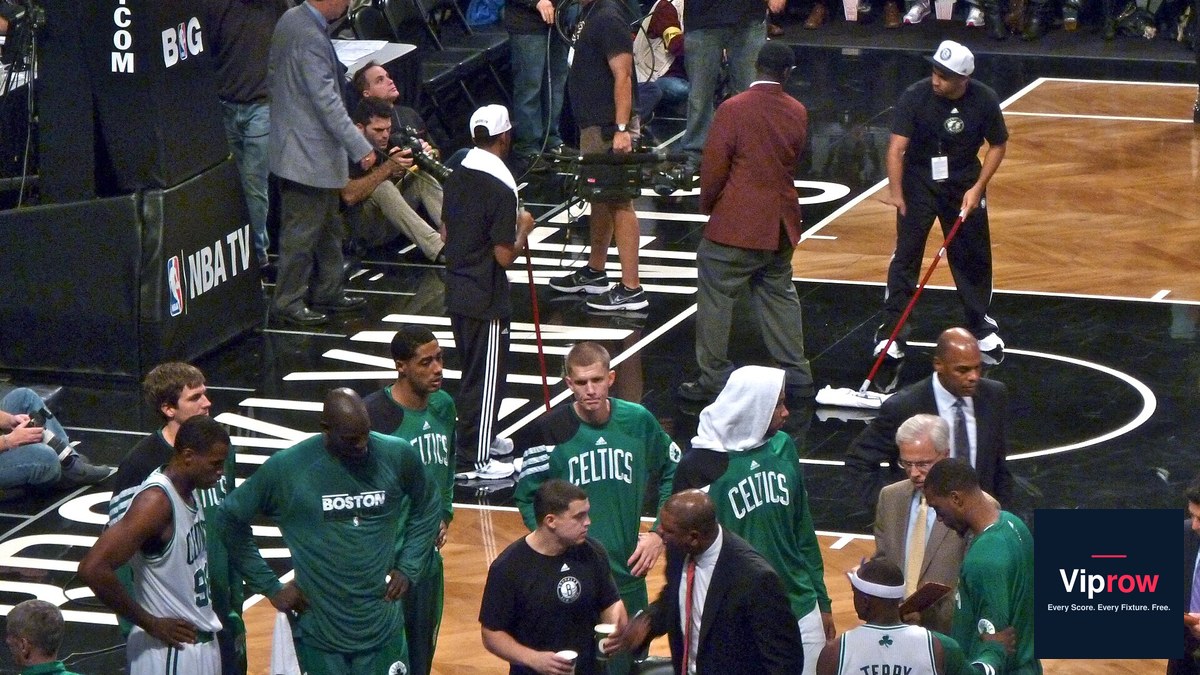
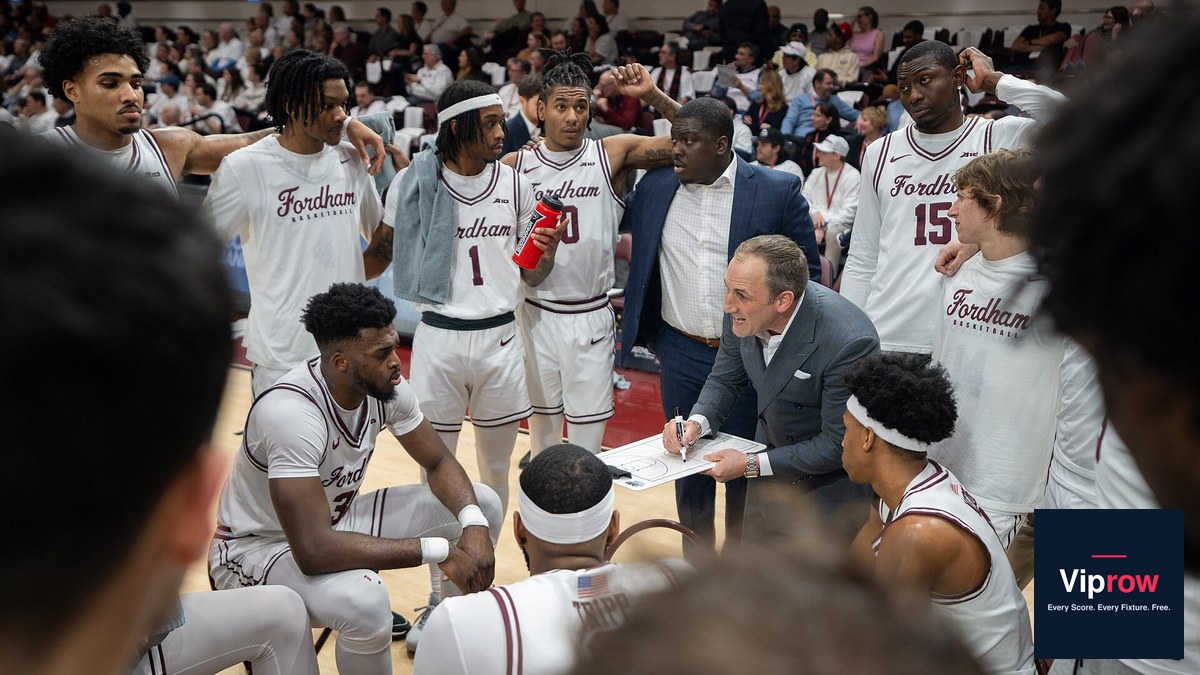
An NBA timeout stops play for a short break, and it gives a team time to rest, talk, and plan the next play. Fans see coaches gather players in a tight huddle, and they often wonder why the break lasts so long.
In this guide, we explain the NBA timeout rules in plain English. You will learn how many timeouts each team gets, how long each break lasts, and how coaches use them to win close games.
What Is an NBA Timeout?
An NBA timeout is a short break in play that a team requests during a game. A coach or a player on the court asks the referee for the break, and the game clock stops at once. Then the players walk to the bench, the coach talks through the next play, and the team gets a quick rest.
Meanwhile, the other team also uses the pause to adjust its plan. In short, a timeout turns a fast, noisy game into a short team meeting. It can calm nerves, fix a mistake, or set up one perfect shot.
Fans can follow the count on the arena scoreboard, which shows how many timeouts each team has left. Broadcasters also show the count on screen, so viewers at home can see when a coach is running low.
How Many NBA Timeouts Does Each Team Get?
Each NBA team gets seven timeouts during regulation play. That number covers the full 48 minutes, which means four quarters of 12 minutes each. Once a team uses a timeout, it is gone for the rest of regulation.
So coaches must spend them with care. A team that burns timeouts early may have none left when the game gets tight. On the other hand, a team that saves too many may waste a useful tool.
How the Seven NBA Timeouts Are Shared Across the Game
There is no fixed number of timeouts for each quarter, apart from the fourth-quarter limit explained below. A coach can use several timeouts in the first half, or save most of them for the second half. However, the choice carries a clear trade-off, because early breaks help fix problems while late breaks decide close games.
How Long Does an NBA Timeout Last?
A standard team timeout lasts 75 seconds, which is one minute and 15 seconds. That is the normal length for a timeout that a team calls for itself. The players huddle, the coach draws a play, and the team returns to the court.
Yet some timeouts last longer. The first two timeouts in any quarter last 2 minutes and 45 seconds for local games, and 3 minutes and 15 seconds for national TV games. These longer breaks give broadcasters time for adverts, and they give players a longer rest.
During any timeout, players grab water, catch their breath, and listen to the coach. Trainers can also check a knock or tape an ankle, while the coach speaks to one player alone about a matchup. Then the horn sounds, the huddle breaks, and both teams return to the court for the next play.
Full Timeouts vs 20-Second Timeouts: What Changed?
Older fans may remember two kinds of NBA timeout: full timeouts and 20-second timeouts. The short ones gave a team a quick word on the sideline, while the full ones allowed a proper huddle. That split no longer exists in the modern game.
Since the 2017-18 season, the NBA has treated every team timeout the same way. Each team now gets seven timeouts, and each standard timeout lasts 75 seconds. Before that change, teams had nine timeouts in total, and the league cut the number to speed up games and reduce long stoppages.
When Can a Team Call an NBA Timeout?
A team can call an NBA timeout when the ball is dead, or when one of its players has clear control of the ball during live play. For example, a point guard can call one after a rebound, or a coach can call one after a whistle stops play.
Still, the timing has limits. A team cannot call a timeout when the other team has the ball, and it cannot call one during a live loose ball. Therefore, coaches watch the ball closely and shout at the right moment.
Who Can Call an NBA Timeout?
Only the head coach or a player on the court can request the break. Assistant coaches cannot call one, and players on the bench cannot call one either. The referee must hear the request, so coaches often use a clear hand signal as well as their voice.
Mandatory NBA Timeouts and TV Breaks
Every quarter must include two mandatory timeouts, which are also known as TV timeouts. These breaks exist so broadcasters can show adverts, and they happen even if neither coach wants a break. As a result, every NBA game has a steady rhythm of pauses.
If neither team has called a timeout by the 6:59 mark of a quarter, the official scorer calls a mandatory timeout at the next dead ball. That break is charged to the home team.
Then, if no second timeout has been taken by the 2:59 mark, another mandatory timeout is called and charged to the team that was not charged before. On the other hand, if both teams have already taken two timeouts between them in the quarter, no extra mandatory break is needed, because the requirement is already met.

NBA Timeout Rules in the Fourth Quarter
The fourth quarter has its own limits, because this is when games are won and lost. Each team can use no more than four timeouts in the fourth quarter. That cap stops coaches from freezing the game with break after break.
In addition, each team is limited to two timeouts after the later of two points: the three-minute mark of the fourth quarter, or the end of that quarter’s second mandatory timeout. Any extra timeouts above that limit are lost, so a team cannot carry a full set of timeouts into the final minutes.
NBA Timeouts in Overtime
Overtime brings a fresh start for timeouts, but only a small one. Each overtime period lasts five minutes, and each team receives two timeouts for that period. Unused timeouts from regulation do not carry over, so the count resets.
For that reason, a team that saved timeouts in regulation gains no edge in overtime. The two fresh timeouts must cover the whole five minutes, which makes each one precious. If the game goes to a second overtime, each team gets two more timeouts for that period too. You can read more about the extra period in our guide to how NBA overtime works.
The Advance-the-Ball Rule After an NBA Timeout
The advance-the-ball rule is one of the most useful parts of the NBA timeout rules. In the final two minutes of the fourth quarter or overtime, a team that calls a timeout can choose to inbound the ball from the frontcourt. That spot is the 28-foot hash mark on the sideline, much closer to the basket than the backcourt.
However, the option only applies in clear cases. The ball must be out of bounds in the backcourt, or the team must have just secured it from a rebound or a change of possession without advancing it first.
If the ball has already been dribbled or passed up the court, the team needs a second straight timeout to keep the advance option. The head coach must also tell the officials about the choice before the timeout is reported to the scorers.

Timeout Strategy: How Coaches Use the Pause
A timeout is more than a rest. It is a coaching tool, and the best coaches use it at the right moment for the right reason. Below are the three most common uses, and each one can change a game.
Stopping an Opponent’s Run With an NBA Timeout
When the other team scores several baskets in a row, the mood can swing fast. A smart coach calls an NBA timeout to break that rhythm, calm the players, and change the defence. The pause also lets the crowd settle, which can cool down a loud home arena.
Drawing Up a Final Play
Coaches often save a timeout for the last shot. During the break, they draw a play on the clipboard, assign each player a job, and pick the shooter. Then the team returns with a clear plan instead of a rushed shot. This is why you often see a timeout right before a final possession, and why how the NBA shot clock works matters so much in those moments.
Icing the Free-Throw Shooter
Some coaches call a timeout just before an opponent shoots free throws. The idea is simple: make the shooter wait, think, and feel the pressure. It does not always work, and some shooters even welcome the rest. Yet coaches keep trying it in big moments, because a single missed free throw can decide a game. Free throws are a key skill, as our guide to how NBA shooting works explains.
NBA Timeouts and the Coach’s Challenge
Timeouts and the coach’s challenge are closely linked, because a challenge costs a timeout. Each team starts a game with one challenge, and the head coach must call a timeout and twirl an index finger to ask for a review. Without a timeout left, a coach cannot challenge at all.
If the first challenge succeeds, the team keeps its timeout and earns a second challenge. If it fails, the timeout is gone. A second challenge always costs a timeout, even when it succeeds, so coaches save it for a call that truly matters. The full rules sit in the NBA’s official rulebook, which you can check through the NBA’s official rulebook.
What a Coach Can Challenge With an NBA Timeout
Only three kinds of calls can be challenged: a foul called against the challenging team, an out-of-bounds violation, or goaltending or basket interference. A coach cannot challenge a call that the referees never made. Since the 2024-25 season, a review of an out-of-bounds call can also look at whether a foul close to that play should have been called.
What Happens When a Team Has No NBA Timeouts Left?
A team with no timeouts left must play on without a safety net. It cannot stop the clock for a rest, it cannot set up a final play from the bench, and it cannot challenge a call. That is why coaches guard their last timeout so fiercely in close games.
Trying to call a timeout that does not exist brings a penalty. The referees assess a technical foul, and the other team gets a free throw plus possession of the ball. So a desperate call can turn a bad moment into a worse one. Fouls carry their own set of rules, which our guide to how NBA fouls work covers in full.
The Excess Timeout Penalty in Plain Terms
An excess timeout is simply a timeout request made with none left. The penalty is swift: one technical free throw for the other team, then the ball goes to that team as well. For that reason, players are taught to check the count on the scoreboard before they shout for a break.

NBA Timeout FAQs
Fans ask the same questions about NBA timeouts again and again, so here are the short answers. First, can a player call a timeout while the ball is in the air? No, because the team must have clear control of the ball or the ball must be dead.
Second, does a timeout stop the shot clock? A timeout pauses play, but teams still face the same pressure to shoot quickly once play resumes, which is why the 24-second clock shapes every late-game plan. Third, do timeouts carry over to the next game? No, because each game starts fresh with seven timeouts per team.
Finally, can a coach call two timeouts in a row? Yes, and coaches sometimes do exactly that in the final minute. The second timeout can preserve the advance-the-ball option, or it can give the team one more look at a play.
That is also why the NBA playoffs feel so tense, since every late timeout can swing a series. And when a team wins the rebound after a missed shot, the chance to call a timeout starts there, as our guide to how NBA rebounding works shows.