The football handball rule confuses more fans than any other law in the game. One week a defender blocks a shot with an outstretched arm and wins a penalty against his team. The next week a similar touch goes unpunished. This guide explains the rule in plain English.
The rule comes from Law 12 of the Laws of the Game, written by the International Football Association Board (IFAB). Referees apply the same law at every level, from a Sunday league match to a World Cup final. However, the law gives referees room to judge each incident on its own facts, so two handballs can look alike yet lead to different calls.
What the Football Handball Rule Actually Says
Law 12 covers fouls and misconduct, and it holds the full text of the football handball rule. The law states that not every touch of the ball with a hand or arm is an offence. Instead, a player commits an offence in three clear cases.
First, the player deliberately touches the ball with a hand or arm. Second, the player touches the ball when the hand or arm has made the body unnaturally bigger. Third, the player scores directly from the hand or arm, or immediately after it touches the hand or arm. You can read Law 12 in full in the IFAB Laws of the Game.
This short list explains most decisions you see on television. Referees work through the three cases in order.
Where the Arm Ends and the Shoulder Begins
The football handball rule draws a clear line on the body. For handball, the arm starts at the bottom of the armpit. Everything below that line counts as the arm, and everything above it counts as the shoulder. Therefore a ball that strikes the shoulder is not handball.
Referees use the armpit line because it gives them a fixed point to judge. As a result, slow-motion replays freeze the frame at the moment of contact to show whether the ball hit the arm or the shoulder.
The Armpit Line in Practice
Picture a defender who jumps to head a cross, with arms raised for balance, as the ball clips his upper arm near the shoulder. The referee must decide if the contact point sits below the armpit line, and then check the other tests.
Deliberate Handball: The Clearest Offence
A deliberate touch is the easiest handball to spot. The player moves a hand or arm towards the ball on purpose. For instance, a defender may reach out to stop a pass, or a striker may guide the ball past a keeper with a hand. The intent is plain to see, and the referee blows for a foul at once.
Under the football handball rule, distance does not matter when the touch is deliberate. A player who swats the ball away from one metre out commits the same offence as one who does it from ten metres. The only question is whether the player chose to use the hand.
Accidental Handball and the Natural Silhouette
Most handball arguments involve accidental contact. The ball strikes a hand or arm, yet the player never meant to touch it, so the referee asks if the hand or arm made the body unnaturally bigger. If the arm sat in a natural spot for the movement, play goes on.
The test depends on the exact situation, since a sliding player holds the arms in a different place from a standing player. Similarly, a player who turns away from a shot may lift an arm for balance. Referees judge the position against the movement, not against a fixed pose.
What “Unnaturally Bigger” Means in Practice
Think of the body as a shape. When a player spreads the arms wide, the shape grows, and the ball has more body to hit. The football handball rule treats that extra size as a risk the player chose to take.
Handball by the Goalscorer
The football handball rule is strictest for the goalscorer, and it leaves no room for debate. If the ball goes into the goal directly from a player’s hand or arm, the goal cannot stand, whether the touch was deliberate or accidental. The same result follows when a player scores immediately after the ball touches the hand or arm.
Notice the word immediately. The rule covers the touch that leads straight to the goal, so a shot that deflects off an arm and flies in counts. However, a handball much earlier in the move does not cancel the goal on its own.
When a Team-Mate Handles Before a Goal
The law changed on this point in 2021, and many fans missed the change. Before that year, any accidental handball in the build-up could wipe out a goal. Now an accidental touch by a team-mate no longer cancels the goal, and only the goalscorer faces the strict test.
This change keeps the game flowing. A small accident far from goal should not erase a fine team move. If the team-mate handles the ball on purpose, the referee stops play for the foul. For a wider look at how officials judge attacking play, read our guide to the offside rule in football.
Handball in the Penalty Area
A handball inside the penalty area brings a penalty kick. The location decides the punishment, not the type of touch, so a deliberate handball and an accidental handball with an unnaturally big arm both lead to the spot. The defending team faces a direct shot from twelve yards.
One touch can change the score and the whole match, so referees take extra care with handball decisions near goal. They check the arm position before they point to the spot.
When a Handball Also Brings a Card
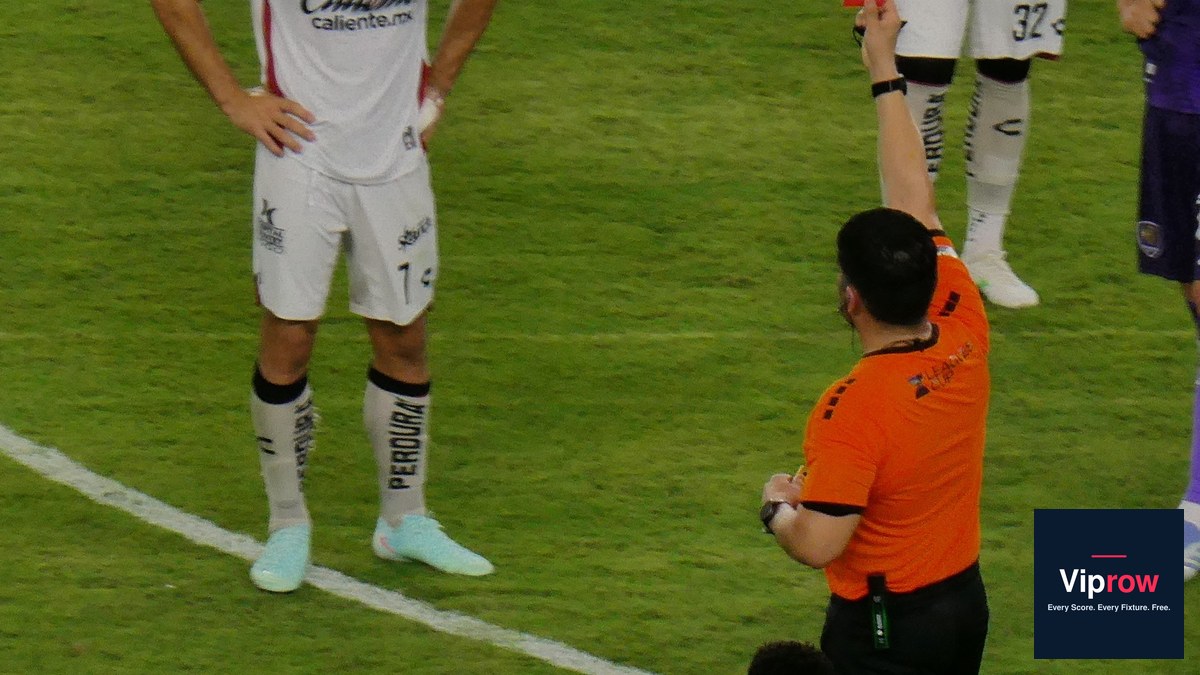
A handball can also bring a card. The referee shows yellow when the touch stops a promising attack. A red card follows when the handball denies an obvious goal or a clear goal-scoring chance, so a defender who bats away a goal-bound shot must leave the pitch. If you want the full picture on spot kicks, read our guide to how penalty shootouts work.
Handball Outside the Penalty Area
Outside the box, a handball brings a direct free kick to the other team. The kick is taken from the spot where the offence happened. The attacking team can shoot at goal from the free kick, so a handball near the box is still costly. In addition, the defending team must set up a wall in seconds.
A free kick for handball follows the same rules as any other direct free kick. The opponents must stay at least ten yards from the ball, and the referee may also show a card if the handball stopped a promising attack. Our guide to football free kicks explains direct and indirect kicks, the wall, and the ten-yard rule in full.
A handball can also change the next restart. If the ball crosses the goal line off a defender after a handball, the attacking team may win a corner, as our guide to football corners explains.
Handball by the Goalkeeper
Goalkeepers live under different rules inside their own penalty area. They may catch, hold and punch the ball, and no handball offence applies. The freedom ends at the edge of the box. Once a keeper steps outside the area, the same football handball rule applies to them as to any outfield player.
Inside the area, the keeper still faces limits. A keeper cannot pick up a deliberate back-pass from a team-mate, and cannot handle the ball twice after a restart before another player touches it. When a keeper breaks one of these rules, the other team wins an indirect free kick.
The Back-Pass Rule and the Second Touch
The back-pass rule is simple. A team-mate may not pass the ball back with the foot for the keeper to pick it up. If the keeper does pick it up, the referee gives an indirect free kick. The same restart follows when the keeper handles the ball a second time after a goal kick or free kick. Our guide to football goal kicks explains that restart in full.
How VAR Checks a Handball Decision
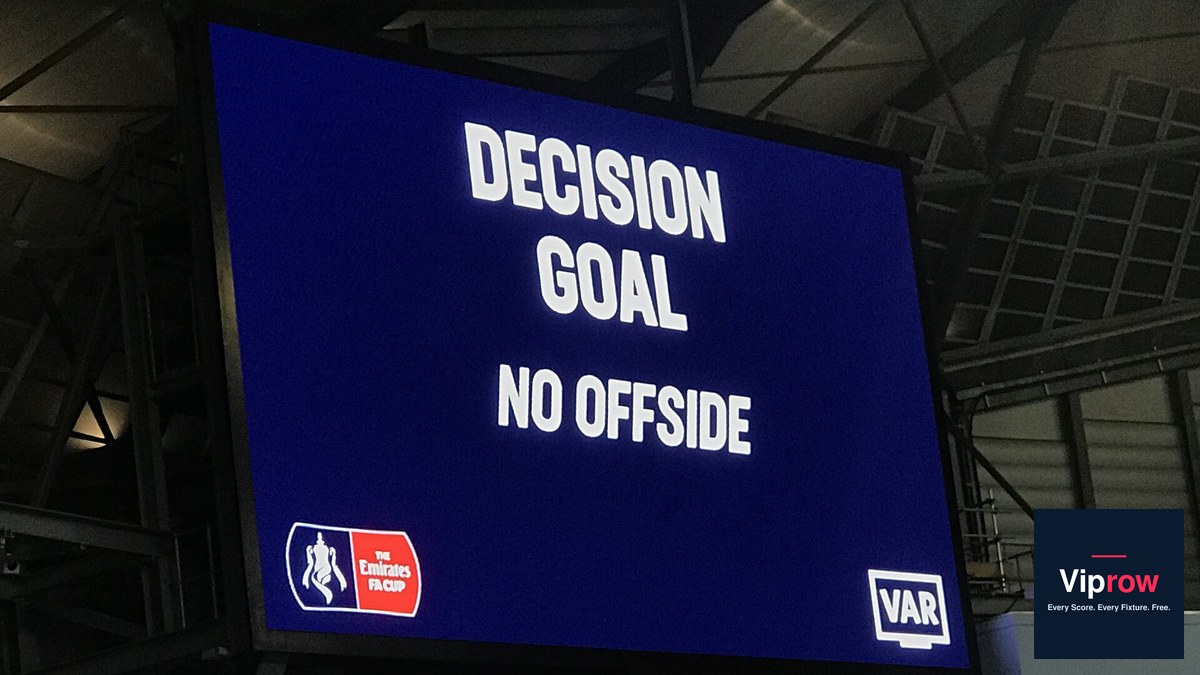
VAR checks every handball that leads to a penalty, a goal or a red card. The video officials watch the incident from several angles and freeze the frame at the moment of contact. They check the armpit line first, then the arm position, and then the timing.
VAR cannot fix every argument, though. The system only steps in for clear and obvious errors, so a close call often stays with the on-field referee. In addition, VAR cannot judge intent, because the video shows movement yet cannot prove what the player planned. Our guide to how VAR works in football explains the checks and the monitor in full.
What VAR Can and Cannot Change
VAR can overturn a penalty, disallow a goal, or send a player off after a review, and it can also confirm the referee’s call. However, VAR cannot rewrite the law or make a subjective call objective. Two referees can watch the same replay and reach different views on arm position.
Famous Handball Controversies and What They Changed
Handball has shaped football history more than once. The most famous case came at the 1986 World Cup, when Diego Maradona punched the ball into the England goal in a quarter-final. The referee missed it, the goal stood, and Argentina went on to win the tournament. Maradona later called it the Hand of God.
A second famous case came in 2009, when Thierry Henry handled the ball in the build-up to the goal that sent France to the 2010 World Cup ahead of the Republic of Ireland. The officials missed it, and the goal stood. The outcry pushed football towards video help, and within a few years goal-line technology arrived, then VAR.
Two Incidents Every Fan Should Know
These two incidents teach the same lesson. A single missed handball can decide a tournament and damage trust in the game, so lawmakers rewrote the rule several times after 2019. The new wording on accidental handball and the goalscorer rule came straight from these debates.
Common Myths About the Football Handball Rule
Myth one says any touch of the hand is handball. It is not, because the law only punishes deliberate touches, unnaturally big arms, and goals scored from a hand. Myth two says the ball must travel a long way for a foul. It does not, because distance never decides the call on its own.
Myth three says a ball that hits a hand from close range is always legal. It is not, because a deliberate touch is an offence at any distance. Myth four says the shoulder counts as the arm. It does not, because the arm ends at the bottom of the armpit. Myth five says VAR always gets handball right. It does not.
The Myth That Causes the Most Arguments
The biggest myth is that referees apply the rule at random. In truth, they follow the same three tests in every match: deliberate touch, unnaturally bigger body, and the goalscorer rule. Fans see different results because the facts differ, not because the law changes.

How to Read the Next Handball Call Like a Referee
Watch the arm first, not the ball. Ask yourself three quick questions when the whistle blows. Did the player move the hand towards the ball? Was the arm bigger than the movement needed? Did the ball go in off the hand or straight after the touch? If the answer to any question is yes, the referee has a case for a foul.
Next, check where the incident happened. Inside the box, a foul means a penalty, while outside the box the restart is a direct free kick. Then watch the referee’s signal. A quick point to the spot means the referee saw the offence clearly, while a long pause or a trip to the monitor means the call was close.
Handball will always spark debate, because the law asks referees to judge intent and body shape in a split second. Yet the rule itself is clear. Then the football handball rule will feel like common sense.