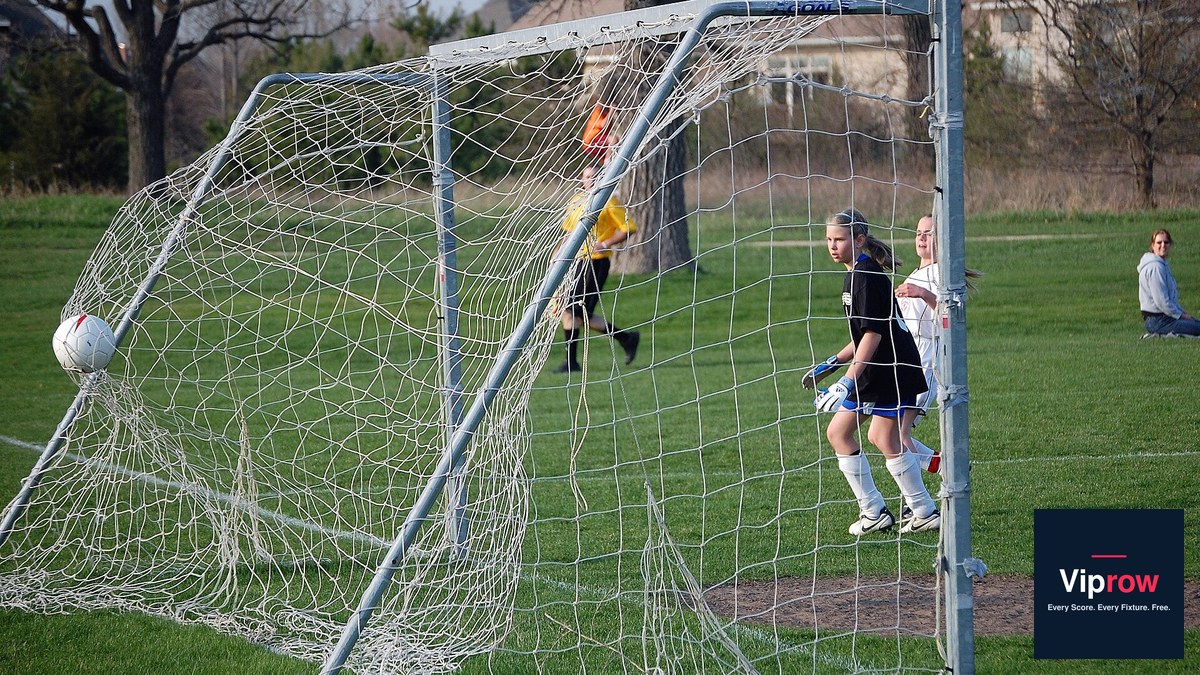
Picture this. A striker shoots. The ball hits the post, bounces down, and the goalkeeper grabs it. Did it cross the line? For years, nobody in the stadium could be sure. Today, goal-line technology answers that question in less than a second.
In this guide, we explain how it works. You will learn about the cameras, the magnetic-field system, the referee’s watch, and the rules behind it all. You will also see where it is used, when it cannot help, and how it differs from VAR.
What Is Goal-Line Technology?
Goal-line technology is an electronic system that checks one thing only. Did the whole ball cross the whole goal line? That is its full job. It does not judge fouls. It does not judge offside. It does not pick the scorer. It answers a single yes-or-no question about the goal line.
The system works in real time. As soon as the ball crosses the line, it sends a signal to the referee. The referee then awards the goal. Fans in the ground may not even notice the check. In fact, that is the point. The game keeps flowing, and the correct call still gets made.
The One Rule Behind It All: The Whole Ball Must Cross
Law 10 of the Laws of the Game sets the rule. A goal counts only when the whole ball passes over the goal line, between the posts and under the crossbar. Note the word whole. If even a small part of the ball still hangs over the line, it is not a goal.
The goal line itself is narrow. Under Law 1, lines on the pitch may be no more than 12 cm wide. The ball is about 22 cm across. So the margin between goal and no goal can be tiny. Cameras fix that problem because they measure the ball in three dimensions.
The same line also shapes restarts. If the ball crosses the line but no goal is scored, play restarts in another way. For example, if the ball goes over the goal line last touched by an attacker, the restart is a goal kick.
Why Football Needed Goal-Line Technology
For most of football’s history, the referee and the assistant referee judged the goal line by eye. But some moments were too fast or too close to call. A ball can cross the line and bounce back out in a split second. From 30 metres away, even a good official can miss it.
Two famous incidents pushed the debate forward. The first came in the 1966 World Cup final between England and West Germany. Geoff Hurst’s shot hit the crossbar and bounced down near the line. The goal was given. Fans still argue about it today, almost 60 years later.
The second incident came at the 2010 World Cup in South Africa. England played Germany in Bloemfontein. Frank Lampard hit a shot that clearly crossed the line on television replays. Yet the goal was not given. Pressure for change then grew fast, and approval followed within two years.
How Goal-Line Technology Works, Step by Step
The system follows the same basic steps in every stadium. First, it watches the goalmouth all the time. It does not wait for a shot. Next, it works out the ball’s exact position. Then it checks that position against the goal line. Finally, it tells the referee what it found.
A goal can come from open play or from a set piece such as a free kick. The system treats every shot the same way. It does not care who shot or how hard the shot was. It only cares about the ball and the line.
The Cameras Watch the Goal
In a camera system, high-speed cameras sit high in the stadium, often under the roof. They point down at the goalmouth from different angles. Each camera films the ball many times per second. Because the cameras sit in different spots, they see the ball from different sides.
The Computer Builds a 3D Picture
Software takes the pictures from all the cameras and combines them. It uses triangulation, which means it compares the ball’s position in two or more pictures to fix its place in space. When the whole ball passes the line, it sends the signal at once.
Hawk-Eye: The Camera System
Hawk-Eye is the best-known camera system in football. It uses seven high-speed cameras per goal, which means 14 cameras in total across the stadium. The cameras mount high up, often on the roof or on the gantry. They track a normal match ball, so no chip or sensor goes inside the ball.
The system builds a live 3D picture of the goalmouth. It knows exactly where the posts, the crossbar, and the line sit. Even if players block some cameras, the rest can still fix the ball’s position. That overlap is deliberate.
Hawk-Eye first proved itself in tennis and cricket, where it tracked balls for line calls and reviews. The Premier League installed it at all 20 grounds for the 2013-14 season. Since then, it has become the standard goal-line technology system in England and in many top competitions.
GoalRef: The Magnetic-Field Alternative
GoalRef works in a different way. It does not use cameras at all. Instead, it uses a magnetic field around the goal. Coils sit inside the goalposts and the crossbar. They create a weak, low-frequency magnetic field across the goalmouth.
When the ball crosses the line, it disturbs the magnetic field. Sensors pick up that change. Software then works out the ball’s exact position and decides if the whole ball crossed. The answer travels to the referee’s watch in the same way as a camera system.
How the Magnetic Field Works
Think of the magnetic field as an invisible curtain across the goalmouth. As the ball passes through the curtain, the system reads the change and checks the ball against the line. The German Fraunhofer Institute helped develop this system. It was one of the first two systems approved by IFAB in 2012, along with Hawk-Eye.

The Referee’s Watch: The Signal in Under One Second
The Laws demand speed. The system must confirm its answer within one second of the ball crossing the line. That speed matters because play never stops. The referee needs the answer while the action is still live.
The signal goes to the referee’s watch. The watch vibrates and shows the word GOAL on its screen. The assistant referees receive the same signal on their watches. Only the match officials get it.
What the Referee Does Next
The watch is an aid, not a judge. The referee still makes the final call. When the watch says GOAL, the referee points to the centre spot and awards the goal. When the watch stays silent, play goes on.
Testing and Approval: The FIFA Quality Programme
No system can be used in a match just because its maker says it works. Every system must pass the FIFA Quality Programme. An independent testing institute checks the system in a laboratory first. Then it tests the same system inside a real stadium.
Each stadium installation must be tested too, before a tournament starts. The system must meet one of three standards: FIFA Quality PRO, FIFA Quality, or IMS, which stands for International Match Standard. Only certified systems may be used in competition matches. You can read the official rules on FIFA’s goal-line technology page.
The Pre-Match Test
Before every match, the referee tests the system. The referee walks to each goal and checks that the watch receives the signal. This test is short, but it is vital. If any part fails, the referee reports it to the proper authority.
Where Goal-Line Technology Is Used Today
Goal-line technology is now standard at the top of the game. It is used in the Premier League, the Champions League, and the World Cup. It also appears in many other top leagues and major tournaments around the world.
Its first test in a FIFA event came at the Club World Cup in Japan in December 2012. The trial went well, and the Premier League adopted Hawk-Eye for the 2013-14 season. After that, the 2014 World Cup in Brazil became the first World Cup to use the system. There, the German GoalControl system ran 14 cameras across 12 stadiums.
Lower leagues often go without it. The reason is simple. The system needs cameras, software, trained staff, and regular testing. Small grounds may not have a roof or a gantry to hold the cameras. As a result, the system remains a top-flight tool for now.

Goal-Line Technology vs VAR: What Is the Difference?
Many fans mix up goal-line technology and VAR. They are not the same thing. The system answers one question: did the whole ball cross the line? It does so in under a second, with no video review and no stop in play. VAR is much wider. It checks goals, penalties, red cards, and mistaken identity. A goal can still be ruled out for offside, even after the ball has crossed the line.
The two systems also arrived at different times. IFAB approved goal-line technology in July 2012. VAR came later. It was written into the Laws of the Game in March 2018 and first used at a World Cup in Russia that same year. To learn more, read our guide on how VAR works in football.
When Goal-Line Technology Cannot Help
The system is strong, but it is not perfect. A camera system needs a clear view of the ball. If every camera is blocked at the key moment, the system cannot decide. In June 2020, in the first Premier League match after the pandemic restart, Aston Villa played Sheffield United at Villa Park. The goalkeeper carried the ball over his own line. All seven cameras were blocked, so no signal was sent and no goal was given.
The Blocked-Camera Problem
A goalmouth scramble is the hardest test for the cameras. Bodies pile up on the line. In that mess, the ball can vanish from view for a split second. Seven cameras cut the risk, but they cannot remove it fully. If the ball is fully hidden from every angle, the system stays silent. That silence is honest: it means the system could not see enough.
What Happens When the System Fails
When the system fails, the Laws have a clear answer. The referee must not use it. The officials go back to judging the line with their own eyes. The referee reports the failure after the match. Yet a system that admits it cannot see is safer than one that guesses.
What Fans See on TV and in the Stadium
Fans rarely see the system itself. The cameras sit high in the roof, out of sight. The referee’s watch is small. What fans do see is the result. On television, broadcasters often show a 3D replay after a close call. The replay shows the ball, the line, and the goal frame from above. It also watches every goalmouth scramble, from corners to close-range shots.
In the stadium, the moment can feel strange. A shot hits the post and the crowd roars, but the referee waves play on. Or a scramble ends and the referee points to the centre spot at once. The speed is the clue. When a goal is given fast after a tight scramble, goal-line technology has often done its work.
What Goal-Line Technology Means for Football
Goal-line technology changed football in a quiet way. It did not change the rules. It simply made one call more accurate. The whole ball must cross the whole line. Now a machine checks that fact in less than a second, and the referee still makes the final call.
The story also shows how football adopts change. A clear mistake at the 2010 World Cup led to testing. Testing led to approval by IFAB in July 2012. Approval led to trials at the Club World Cup, then to the Premier League in 2013-14, and then to the World Cup in 2014.
Goals decide matches, titles, and penalty shootouts. A single wrong line call can end a team’s season. The system removes that risk in the games that use it. But on the one question it asks, it gives a fast, fair, and clear answer. For a sport built on goals, that is a change worth keeping.
1 thought on “How Goal-Line Technology Works in Football”